Soft Shoe
Also known as: Song and dance
- Origin
- United States
- Era
- 1860–Present
- Rhythm
- Easy lilting 4/4
- Tempo
- Slow to moderate
- Character
- Smooth, light, relaxed
History & Cultural Context
The soft shoe is an easygoing, gliding tap style danced at a relaxed, lilting tempo, historically associated with the 'song and dance' acts of minstrelsy and vaudeville and sometimes performed on a sand-strewn floor for a brushed sound. Its smooth, understated phrasing is foundational to later tap styling.
Cultural Significance
Soft shoe is a direct line back to the vaudeville and minstrel-era roots from which American tap emerged.
Characteristic Movement & Technique
Smooth gliding steps, brushes and slides, low volume and easy swing rather than percussive force.
Dance Lineage
Soft Shoe Music & Tempo
Drawn from 15 Soft Shoe tracks in the LODance music library.
Example tracks at practice tempo
- While Strolling In The Park - (Soft Shoe - Steady 4/4) — Guy Dearden105 BPM
- Bell Bottom Blues — Guy Dearden110 BPM
- Tea For Two - (Soft Shoe - Steady 4/4) — Guy Dearden105 BPM
- Ain't Misbehavin' — Guy Dearden100 BPM
- That's All - (Soft Shoe - Steady 4/4) — Guy Dearden105 BPM
- Bobbing Along — Guy Dearden92 BPM
Soft Shoe on screen
Films and television where Soft Shoe appears, with the sequences worth watching for.
 Chicago (2002)1 sequence indexedMister Cellophane · 01:09:40 · chor. Rob Marshall; John DeLuca (choreographic supervisor)
 Singin' in the Rain (1952)1 sequence indexedYou Were Meant for Me · 00:41:30 · chor. Gene Kelly; Stanley Donen
 The Band Wagon (1953)1 sequence indexedI Guess I'll Have to Change My Plan · 01:24:15 · chor. Fred Astaire (staged duet); Michael Kidd (film choreography)
 Top Hat (1935)1 sequence indexedNo Strings reprise: the sandman soft-shoe · 00:15:00 · chor. Fred Astaire (uncredited); Hermes Pan
Poster artwork from TMDB.
 This site uses TMDB and the TMDB APIs but is not endorsed, certified, or otherwise approved by TMDB.
Sources & Further Reading
Cultural & Historical Context
Soft Shoe emerged from United States during the 1860s—present day. Understanding the cultural roots, musical traditions, and social circumstances of this era enriches appreciation for the dance's characteristics and significance.
Primary Source Documents
The Library of Dance contains public-domain primary sources for dance history. Copyrighted modern syllabi are indexed with purchase links to their respective copyright owners. Search by dance name or codifier to discover primary source documents.
Last reviewed: September 2026 — This dance profile synthesizes historical research, cultural documentation, and contemporary practice knowledge to provide authoritative context.
More in Tap Dance
Rhythm Tap (Hoofing)
The grounded, weighted, jazz-rooted tap style in which the dancer is a percussive musician improvising complex syncopation 'into the floor.'
Broadway Tap
The lighter, more upright, presentational tap style of musical theater, oriented to line, travel, and choreography for the proscenium stage.
Buck-and-Wing
A fast, vernacular late-19th-century precursor of modern tap, combining flat-footed 'buck' rhythms with springing 'wing' steps on the minstrel and vaudeville stage.
Tap Dance in art
Browse the gallery →Works from the wider Tap Dance tradition — we have not yet identified enough that depict Soft Shoe specifically.
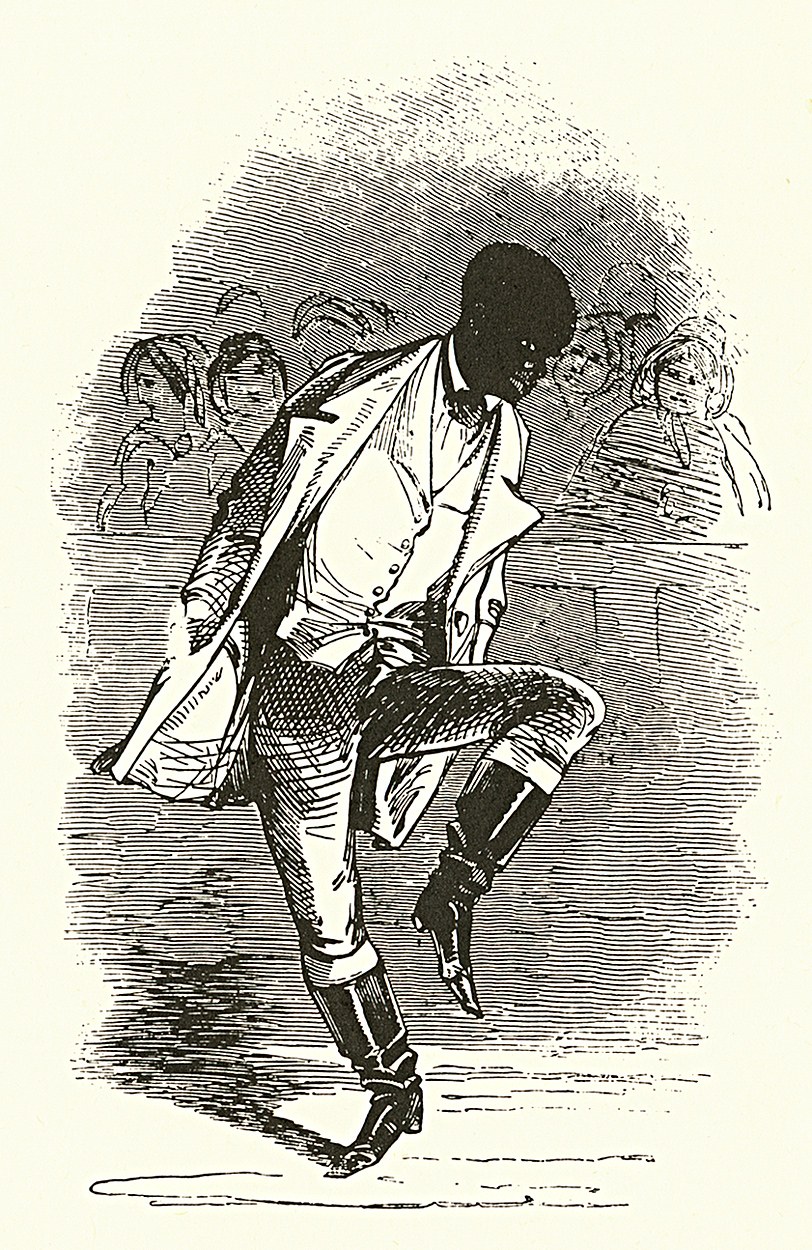
Master Juba
Hans Nathan · 1848
Public Domain
Continue Exploring
Lineage of Dance
500 years of dance evolution
Champions of Dance
Winners of marquee national & world titles
Language of Dance
161 dance terms & translations
Listening of Dance
Tempo, timing & musicality tools
Gallery of Dance
5,700+ artworks from museum collections
Attire of Dance
Evolution of dance dress across eras
Keep the thread going
Dance history, technique, and the occasional rabbit hole — in your inbox. Thoughtful, infrequent, unsubscribe anytime.
Free. No spam. One click to leave.