Buck-and-Wing
Also known as: Buck dancing
- Origin
- United States
- Era
- 1880–1920
- Rhythm
- Brisk 4/4
- Tempo
- Fast
- Character
- Vigorous, springy, vernacular
History & Cultural Context
Buck-and-wing was a vigorous solo step dance of the late-19th- and early-20th-century minstrel and vaudeville stage, blending flat-footed buck dancing (African American clog-and-jig rhythm) with springing 'wing' steps. It is one of the vernacular forms that fed directly into modern tap dance.
Cultural Significance
Buck-and-wing belongs to the contested minstrel-and-vaudeville commercial history through which Black vernacular dance reached wider stages.
Characteristic Movement & Technique
Flat-footed buck rhythms combined with springing, winging steps performed at speed.
Signature Figures
- James McIntyre
- King Rastus Brown
Buck-and-Wing Music & Tempo
Drawn from 15 Buck-and-Wing tracks in the LODance music library.
Example tracks at practice tempo
- Pine Apple Rag — Scott Joplin, Joshua Rifkin174 BPM
- Elite Synchopations (1902) — Scott Joplin, Joshua Rifkin200 BPM
- Maple Leaf Rag — Scott Joplin, Joshua Rifkin190 BPM
- The Cascades - A Rag — Scott Joplin, Joshua Rifkin180 BPM
- On the Fourth of July (4_4-Faster Tempo) — Kimbo Children's Music
- Swingin' at the Apollo (4_4-Faster Tempo) — Kimbo Children's Music
Legends of Buck-and-Wing
Dancers, choreographers and teachers whose work shaped this style.
Sources & Further Reading
Cultural & Historical Context
Buck-and-Wing emerged from United States during the 1880s—1920s. Understanding the cultural roots, musical traditions, and social circumstances of this era enriches appreciation for the dance's characteristics and significance.
Formative Influences
Signature Movement Vocabulary:
James McIntyre, King Rastus Brown
Primary Source Documents
The Library of Dance contains public-domain primary sources for dance history. Copyrighted modern syllabi are indexed with purchase links to their respective copyright owners. Search by dance name or codifier to discover primary source documents.
Last reviewed: September 2026 — This dance profile synthesizes historical research, cultural documentation, and contemporary practice knowledge to provide authoritative context.
More in Tap Dance
Soft Shoe
The smooth, light, low-volume tap idiom—historically sometimes danced on a sanded floor—that precedes and underlies both rhythm and Broadway tap.
Rhythm Tap (Hoofing)
The grounded, weighted, jazz-rooted tap style in which the dancer is a percussive musician improvising complex syncopation 'into the floor.'
Broadway Tap
The lighter, more upright, presentational tap style of musical theater, oriented to line, travel, and choreography for the proscenium stage.
Tap Dance in art
Browse the gallery →Works from the wider Tap Dance tradition — we have not yet identified enough that depict Buck-and-Wing specifically.
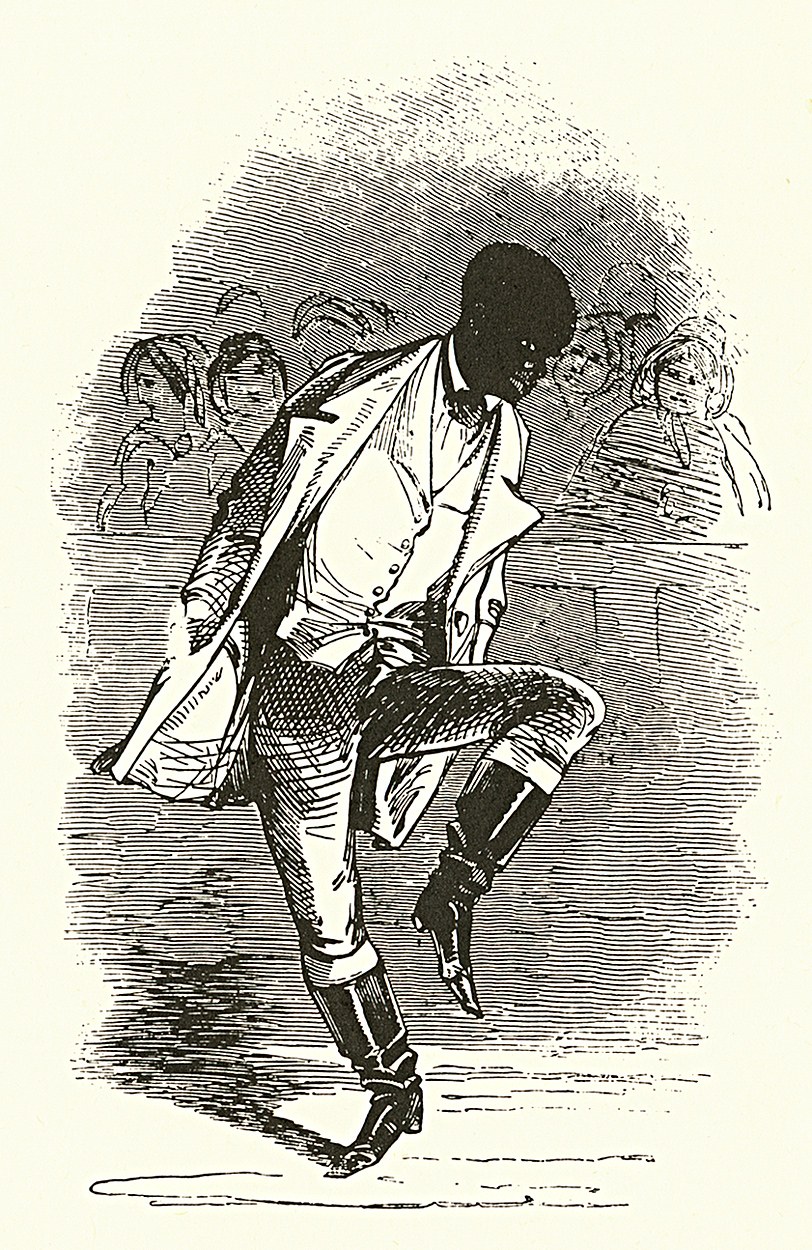
Master Juba
Hans Nathan · 1848
Public Domain
Continue Exploring
Lineage of Dance
500 years of dance evolution
Champions of Dance
Winners of marquee national & world titles
Language of Dance
161 dance terms & translations
Listening of Dance
Tempo, timing & musicality tools
Gallery of Dance
5,700+ artworks from museum collections
Attire of Dance
Evolution of dance dress across eras
Keep the thread going
Dance history, technique, and the occasional rabbit hole — in your inbox. Thoughtful, infrequent, unsubscribe anytime.
Free. No spam. One click to leave.