49 works in this view — arrow keys or swipe to move between them.
Dance in Art
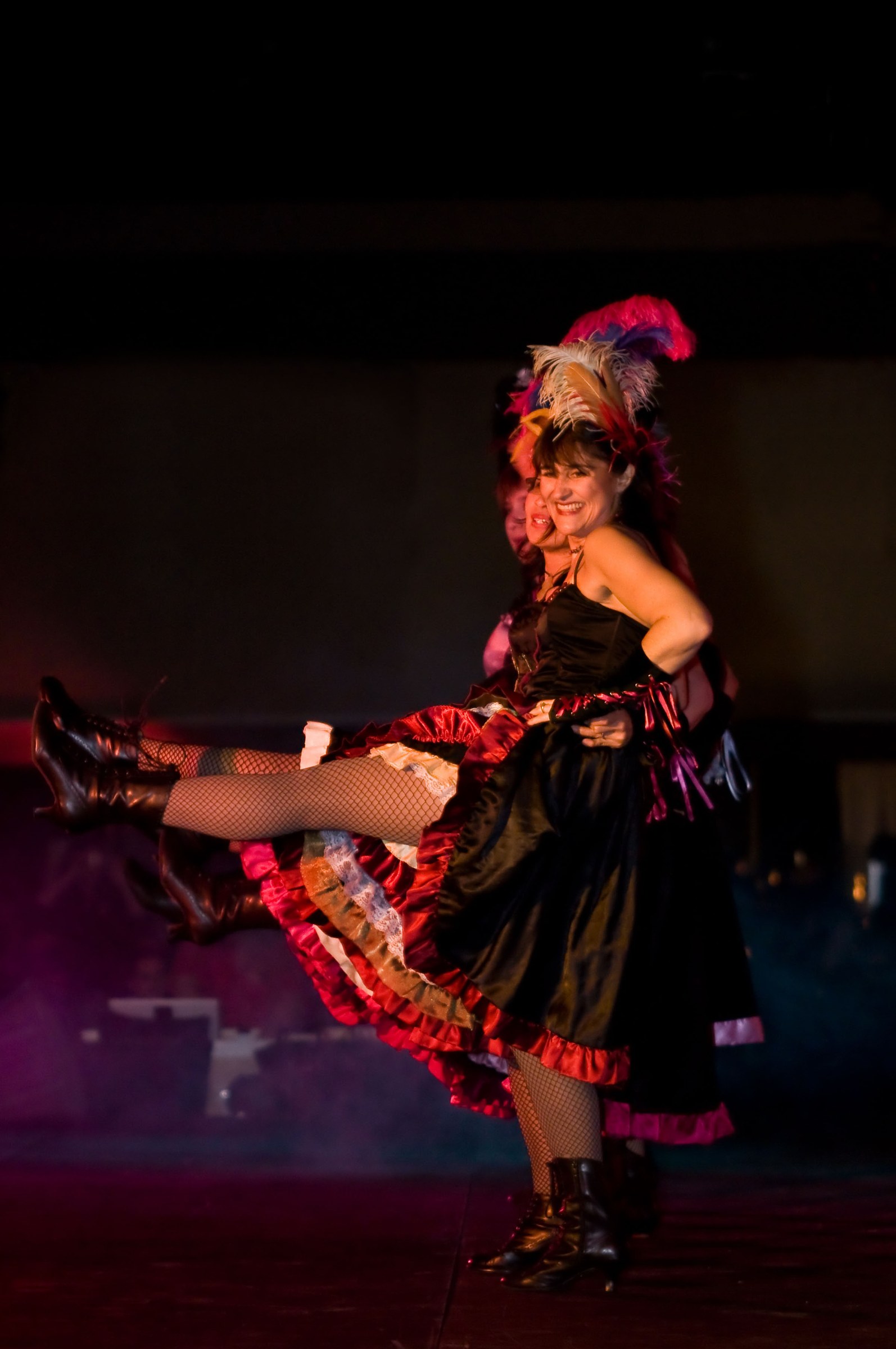
The Can Can - Flickr - Dance Photographer - Brendan Lally
Brendan from Vancouver , Canada
- Source:
- Wikimedia Commons
- Rights:
- Reusable with conditions: credit the creator. Source record ↗
- Recorded as:
- cc by 2.0
This photograph documents neo-burlesque as a living, skilled performance tradition at a moment when it was experiencing a major revival in North American popular culture. It shows how mid-twentieth-century cabaret vocabulary was being consciously revived and recontextualized by performers and audiences in the 2010s. For dancers and historians, it provides concrete visual evidence of the technique, costume detail, and performance aesthetic of contemporary burlesque.
What you are looking at
A solo female dancer in vibrant performance costume occupies the stage against a dark background lit by warm amber and red stage lighting. She wears a black strapless corset-style top paired with a striking red satin skirt with layered ruffles and black accents at the hem. White fishnet stockings and black lace-up boots ground the lower body. Her dark hair is styled in a 1940s-50s roll, topped with an elaborate headdress of red and multicolored feathers that extends vertically, adding dramatic height and movement to her silhouette. She has captured a moment of dynamic motion—one leg extended upward in a high kick, her body twisted in a playful spiral, her face turned toward the camera with a broad, delighted smile. The pose exudes confidence and joy, frozen mid-performance in a moment of exuberance typical of cabaret and burlesque theater.
The dancing
The dancer's weight is shifted to her supporting leg while her free leg drives upward in a high kick, demonstrating flexibility and control. Her torso twists away from the extended leg, creating spiral energy that travels through her frame. Her arms are positioned for balance and style—one appears to stabilize the gesture while the gesture flows from shoulder through hip. The elevated leg, pointed foot, and controlled torque indicate trained technique; this is not untrained motion but skilled execution of a recognizable cabaret/burlesque vocabulary.
The dance depicted
This is burlesque dance, specifically the theatrical cabaret style that evolved in North America in the mid-twentieth century. The costume, pose, and performance style align with the neo-burlesque and cabaret traditions of stripteuse and variety performance. The high kick, playful demeanor, and elaborate feathered headdress are iconic elements of the tradition. The photograph documents a performer from the Wild West Can Can Dancers, a Vancouver-based burlesque and cabaret troupe, captured during a performance at Vancouver Taboo Show in 2010.
How it was made
This is a color photograph, likely digital or high-quality color film stock, taken during a live stage performance under theatrical lighting. The photographer (Brendan Lally) has captured the dancer in sharp focus against an intentionally dark background, using the warm stage lights to sculpt form and create dramatic separation. The photographic medium allows precise documentation of costume detail, facial expression, and the precise moment of the kick—details that would be difficult to capture in drawing or painting. The professional lighting setup and composition suggest this was either captured during an official photo call or by an experienced performance photographer with stage access.
About this work
This is a documentary photograph of a contemporary burlesque and cabaret dancer performing in Vancouver, Canada, in 2010. It captures the aesthetic and technique of neo-burlesque—a twenty-first-century revival and reinterpretation of mid-twentieth-century striptease and variety performance that emphasizes theatrical costume, technical skill, and playful performance rather than pure sensuality. The photograph documents not only a specific moment but also the costuming conventions, body vocabulary, and entertainment tradition of modern burlesque theater.
The image belongs in a dance gallery because burlesque and cabaret are established dance forms with their own technical vocabulary, history, and cultural significance. The photograph is evidence of how burlesque evolved and was performed in early twenty-first-century North America, and it captures the deliberate theatricality and skilled movement that distinguish professional burlesque from other forms of adult entertainment.
How to look at it
Attend to the precise moment frozen in the photograph: the dancer is mid-kick, mid-smile, mid-spiral, captured at the apex of a movement phrase rather than in a static pose. This choice by the photographer reveals what makes burlesque movement exciting—the dynamic energy, the flip between sensuality and playfulness, the technical demand. Notice how the feathered headdress amplifies every movement of her upper body, making the twist and spin visible through the radiating feathers. The facial expression is crucial: unlike earlier striptease traditions that often emphasized sultry or detached performance, this dancer meets the camera with direct joy and complicity with the audience.
The artist
Brendan Lally is a Vancouver-based photographer specializing in performance and event photography. His work with the Wild West Can Can Dancers and documentation of the Vancouver Taboo Show positions him within a tradition of performance documentation that captures live theater, burlesque, and cabaret events for promotional, archival, and artistic purposes.
The period
This photograph dates to 2010, a moment when neo-burlesque had experienced a sustained revival across North America lasting roughly two decades. The aesthetic of burlesque had been revived in the 1990s-2000s by performers, communities, and historians interested in reclaiming and reinterpreting mid-twentieth-century cabaret and striptease traditions. This revival often emphasized the theatrical, technical, and feminist reclamation aspects of burlesque, distinguishing it from the male-gaze-centered striptease of earlier eras. Vancouver, along with cities like Portland, Seattle, and San Francisco, was a center of neo-burlesque performance and pedagogy.
Where it lives
This photograph was published on Flickr by Brendan Lally and subsequently uploaded to Wikimedia Commons. It is attributed to documentation of the Wild West Can Can Dancers and the Vancouver Taboo Show 2010. The source is Wikimedia Commons.
Dance in this work
Questions about this work
Is this the same as the Can-Can?
No. The Can-Can is a French dance of the 1840s-1890s, performed in lines or groups, characterized by high kicks and flared skirts. Burlesque and cabaret are distinct traditions that evolved in North America in the early twentieth century, though they may reference or incorporate Can-Can elements. The Wild West Can Can Dancers' name is a playful nod to the Can-Can tradition, but their actual dance vocabulary is burlesque and cabaret.
What era is this costume from?
The costume is designed to evoke 1940s-50s cabaret and burlesque aesthetics—the corset top, the layered ruffled skirt, the feathered headdress, the hairstyle, and the fishnet stockings are all drawn from that period. However, this is a 2010 photograph of a performer wearing a historically-inspired costume as part of a neo-burlesque performance, not a historical reenactment.
Is this burlesque or cabaret?
Burlesque and cabaret are closely related and often overlap. Burlesque traditionally emphasizes striptease, theatrical costume changes, and the reveal; cabaret emphasizes music, variety performance, and theatrical presentation. This performer is presenting burlesque/cabaret—the categories are not strictly separate, and performers typically work across both traditions.
More dance artwork