49 works in this view — arrow keys or swipe to move between them.
Dance in Art
Western Can Can - Flickr - Dance Photographer - Brendan Lally
Brendan from Vancouver , Canada
- Source:
- Wikimedia Commons
- Rights:
- Reusable with conditions: credit the creator. Source record ↗
- Recorded as:
- cc by 2.0
This photograph documents how early-21st-century North American burlesque adapted and reimagined historical dance forms through contemporary costume and theatrical presentation. It shows burlesque as a deliberate fusion genre, combining western saloon imagery with cabaret-can-can tropes, and is valuable for understanding how commercial dance communities create thematic coherence and visual spectacle in live performance.
What you are looking at
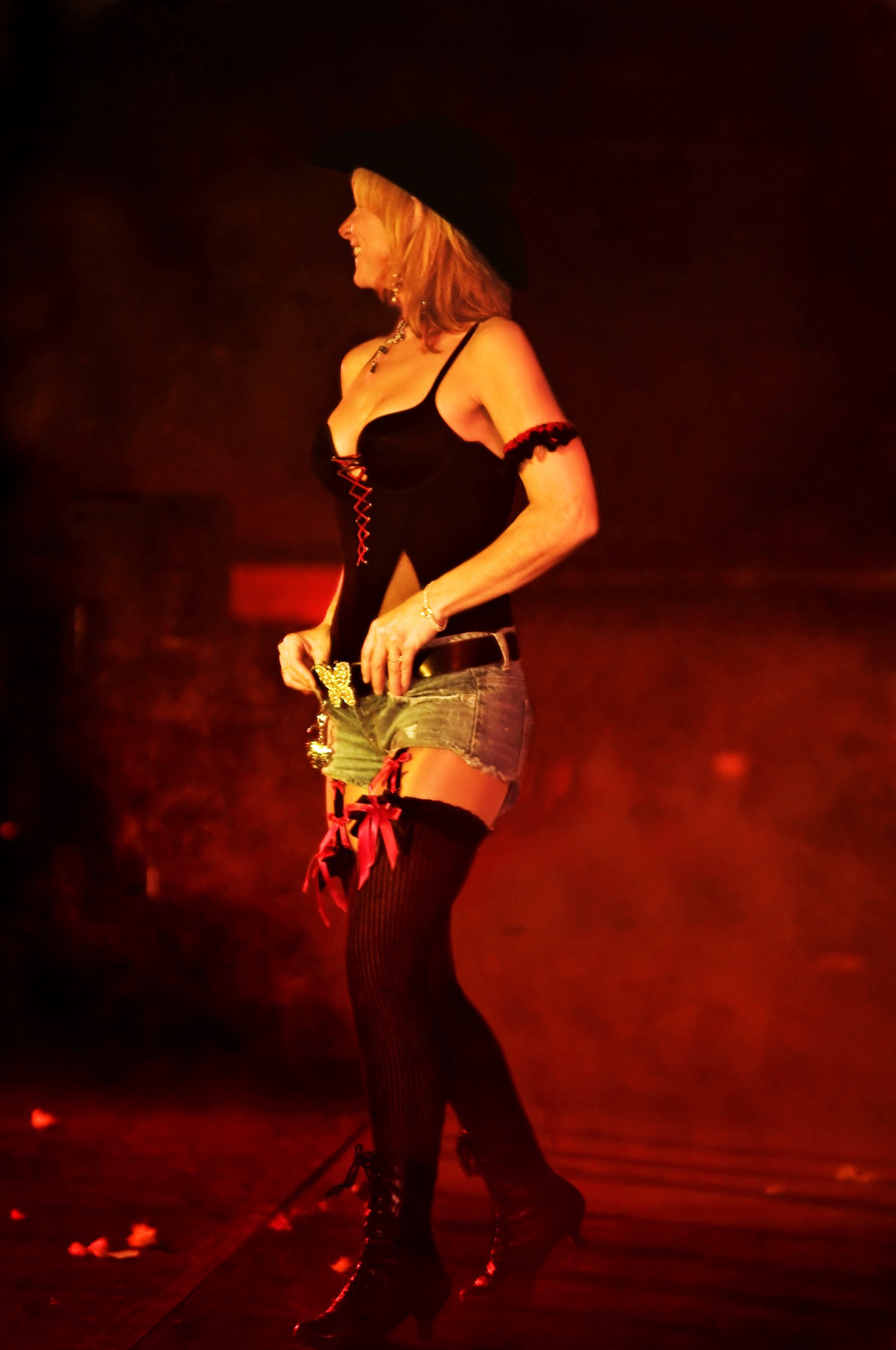
A solo female dancer stands in profile against a deep red atmospheric background, spotlit in warm golden-orange light. She wears a black corset-style top with red lacing detail, short denim shorts with a large ornate belt buckle, and black thigh-high stockings with red bow garters. Black boots with red laces complete the outfit. Her reddish-blonde hair is styled in waves, and she wears statement jewelry including a necklace and earrings. Her body is angled to the right, one hand near her hip, her gaze directed upward and away from the camera. The lighting isolates her figure dramatically against the dark background, creating a theatrical cabaret or burlesque performance aesthetic. The composition emphasizes her silhouette and the interplay of her costume's bold color blocking.
The dancing
The dancer's weight appears grounded in a standing position with a subtle twist through the torso, presenting her body at a three-quarter angle to the viewer. Her arms frame her body rather than execute balletic or linear movements; one hand rests near her hip in a posed rather than activated position. The posture and hand placement suggest presentation and display rather than dynamic movement. Her gaze is lifted, creating a moment of performative stillness rather than captured mid-movement.
The dance depicted
This appears to be burlesque or neo-burlesque performance, a contemporary fusion commercial style emphasizing theatrical costume, attitude, and persona over technical footwork. The 'Western Can Can' title and context from Wild West Cancan Dancers suggests a thematic mashup combining traditional cabaret-can-can references with contemporary burlesque costuming and styling. The image captures a posed moment rather than the kicking, skirt-work, or ensemble interaction typical of historical can-can dance, instead showing the glamour and spectacle staging that characterizes modern burlesque performance.
How it was made
This is a photograph, likely digital, taken during a live performance. The warm theatrical lighting and deep red background suggest studio or stage lighting design rather than ambient light. The photographic medium allows precise capture of costume detail, expression, and the exact moment of pose, which is essential to documenting burlesque performance where visual presentation and persona are primary. The photographer's choice of side-profile and dramatic spotlighting emphasizes the performer's silhouette and costume construction.
About this work
This is a documentary photograph of a contemporary burlesque performer from the Wild West Cancan Dancers, a Vancouver-based performance group. The image captures the visual language of modern burlesque: the layering of historical dance references (can-can, cabaret) with contemporary costume design, theatrical lighting, and persona-driven performance. Rather than documenting movement or technique, it records the aesthetic presentation and character construction that defines burlesque as a performance genre. The work sits at the intersection of cabaret revival, commercial dance, and theatrical costume spectacle.
How to look at it
Attend to the costume construction and color blocking—the deliberate contrast of the black corset, red accents, denim, and boots creates a visual narrative combining western wear, burlesque glamour, and contemporary styling. The lighting design isolates the performer and emphasizes her silhouette and surface detail rather than capturing movement or spatial relationships. The photograph freezes a moment of stillness and display typical of burlesque's presentation-focused aesthetic, where the pose and persona matter as much as any executed movement.
The artist
Brendan Lally is a Vancouver-based dance and live performance photographer. His work documents contemporary burlesque, theatrical dance, and cabaret performance in the Vancouver scene, with a portfolio showing strong attention to theatrical lighting, costume detail, and the posed presentation moments characteristic of burlesque documentation. His photographs are distributed through stock imagery platforms and artist portfolios, making them accessible records of local performance practice.
The period
This photograph dates to 2010–2011, during a sustained revival of burlesque in North America (roughly 2003 onwards). Neo-burlesque had emerged in the 1990s as a deliberately self-aware, theatrical, and often feminist reworking of mid-20th-century cabaret and burlesque forms, with performers and troupes combining historical references, contemporary music, and individualized personas. Thematic troupes like Wild West Cancan Dancers were part of a broader practice of using historical or genre frameworks as conceptual launching points for contemporary spectacle performance.
Where it lives
This image was published as part of Brendan Lally's documented photography of Vancouver performance culture. It appears in the Wikimedia Commons database with attribution to the photographer and credit to the Wild West Cancan Dancers troupe and the 2010 Vancouver Taboo Show. It is a live performance documentation photograph rather than a fine art or historical artifact.
Dance in this work
Questions about this work
Is this can-can dance?
Not in the traditional sense. The title references can-can and the group identifies with that lineage, but the photograph shows a posed cabaret-burlesque performance moment rather than the high-kick ensemble dancing characteristic of historical can-can. Modern burlesque often borrows can-can themes—costumes, the cabaret setting, the theatrical spirit—while using contemporary performance strategies and individual personas instead of codified ensemble technique.
What is burlesque?
Burlesque is a theatrical performance genre emphasizing humor, parody, spectacle, and display. Historical burlesque (19th–mid-20th century) parodied opera and serious theatre through exaggerated costume and situational comedy. Neo-burlesque (1990s–present) deliberately revives, adapts, and reinterprets those forms with contemporary music, politics, and aesthetics, often emphasizing performer agency, costume craft, and theatrical character over narrative plot.
Why is the lighting so dramatic?
The theatrical spotlighting isolates the performer from the background and emphasizes her silhouette, costume detail, and presence—all central to burlesque's visual language. This lighting is typical of live cabaret and burlesque performance design, where the performer is the focal point and costume construction and presentation are essential content. Photographically, it also solves the documentation challenge of capturing the visual impact of live theatre.
More dance artwork