49 works in this view — arrow keys or swipe to move between them.
Dance in Art
He could crawl through a key-hole
Unknown artist
- Collection:
- Prints depicting dance
- Source:
- New York Public Library
- Rights:
- Public domain — free to use, share and adapt.
- Recorded as:
- Public Domain
The image is a useful artifact for understanding how dance, acrobatics, and bodily spectacle were discussed and joked about in popular media in the 19th century. It shows that extreme flexibility or contortion was a recognizable cultural reference point—something the magazine's readers would understand as a joke—which suggests that acrobatic and contortionist performance was part of the visible entertainment landscape.
What you are looking at
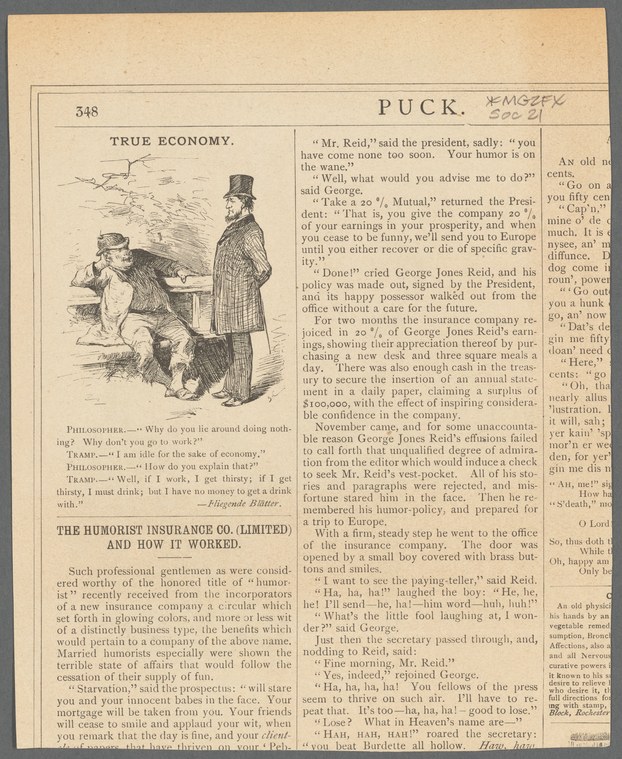
This is a satirical engraving from a 19th-century humor magazine, likely *Puck*, depicting a comic encounter between two men in a well-appointed interior. The scene shows what appears to be a portly gentleman in formal dress—top hat, waistcoat, and coat—being contrasted with a smaller, more nimble-looking man. The title 'He could crawl through a key-hole' plays on physical contrast: the implication is that one man is so thin or agile he could squeeze through an impossibly small space, while the other appears corpulent. The setting is a furnished room with a desk or table visible in the background, suggesting a business or office context. The engraving is surrounded by text columns—article text fills the page—indicating this was editorial illustration for a printed magazine. The line work is fine and detailed, typical of wood or steel engraving reproduction.
The dancing
Two figures occupy the center of the composition, neither posed in actual dance movement. The contrast between their body types is the compositional point: one man appears squat and broad, the other thin and bendable. Neither is in motion or in a dance hold. Their postures are naturalistic and conversational rather than choreographic. The humor derives from physical type rather than from dancing bodies or trained movement.
The dance depicted
This image does not depict a dance or a moment recognizable as part of dance practice. The title and the visual contrast suggest gymnastic or acrobatic ability—specifically the ability to contort through very small spaces—but the figures are shown in ordinary dress in an interior setting, not performing or training. The reference to crawling through a keyhole is a comic exaggeration about bodily flexibility or smallness, but it is deployed here as satire or everyday humor, not as a representation of performance or trained movement.
How it was made
The image is a wood engraving or steel engraving printed in black and white, typical of magazine illustration from the late 19th century. The fine parallel lines and cross-hatching show the engraver's hand and suggest this was reproduced from a drawing via a metal plate, allowing multiple copies to be printed. The technique was economical and precise enough for editorial illustration and allowed satirical or comedic images to reach a weekly or monthly audience. The surrounding text columns and page number (348) confirm this was part of a bound or paginated publication.
About this work
This is a page from *Puck* magazine showing an editorial illustration accompanying humorous text. The engraving depicts two men contrasted by body type to illustrate a joke about physical flexibility or small size—the capacity to 'crawl through a keyhole.' While the title plays with the idea of bodily extremeness, the image itself is not a dance scene but rather a satirical illustration of everyday character types. It belongs in an archive of dance imagery only insofar as it represents the boundary between acrobatic or contortionist humor and actual dance practice; the title invokes physical skill but the image shows ordinary men in ordinary circumstances.
How to look at it
Look at the contrast between the two figures: their body types are grotesquely opposed, which is the only joke the image delivers. The artist has exaggerated one man's bulk and the other's slenderness to make the title's claim visually obvious. The interior setting and formal dress ground the fantasy—this is not a circus or stage, but an ordinary room, which amplifies the comic absurdity of the premise. The page layout shows this was designed to be read quickly alongside the text columns, as part of a magazine's mixed offering of words and images.
The artist
The engraving is unsigned or the artist is not recorded in the catalogue. *Puck* was a weekly humor magazine published in the United States from 1877 onward, featuring caricature, satire, and comic illustration by multiple staff and freelance artists. The work represents the standard house style of magazine engraving: rapid, legible, and pitched to a mass audience.
The period
This engraving dates from the era of late 19th-century print culture, when illustrated magazines were the primary vehicle for visual humor and satire. Contortionists and acrobats were popular performers in circuses, music halls, and variety theaters during this period, and the visual exaggeration of bodily type was a stock resource for comic illustration. The magazine format itself—weekly or monthly publication with mixed text and illustration—was at its peak as a medium for reaching educated urban readers.
Where it lives
The image is from *Puck* magazine, held in the New York Public Library's prints collection. It is page 348 of a bound volume or issue, and the page number and magazine title are visible at the top of the page.
Questions about this work
Is this image actually about dance?
No. While the title invokes a bodily feat that might be performed by an acrobat or contortionist, the image shows two men in ordinary dress in an interior room. It is a satirical illustration accompanying text in a humor magazine, and the joke is about physical contrast and the absurdity of the premise, not about dance training or performance.
What is *Puck* magazine?
*Puck* was a weekly American humor magazine founded in 1877, featuring caricature, satire, comic strips, and editorial illustration. It was one of the most popular illustrated magazines of its era and reached a mass audience of educated urban readers. Contributors included some of the best cartoonists and engravers of the period.
What does 'crawl through a key-hole' mean in this context?
The phrase is a comic exaggeration. It suggests that one of the men is so thin, flexible, or small that he could squeeze through an impossibly narrow space. The joke plays on the physical contrast between the two figures and the absurdity of the claim. It may be alluding to contortionist acts or acrobatic tricks that were popular in variety theaters at the time.
More dance artwork





