49 works in this view — arrow keys or swipe to move between them.
Dance in Art
Portraits of women
Unknown artist
- Collection:
- Prints depicting dance
- Source:
- New York Public Library
- Rights:
- Public domain — free to use, share and adapt.
- Recorded as:
- Public Domain
The work documents the visual language and bodily ideals of late 19th-century ballroom and theatrical society, when a woman's ability to move with grace and wear elaborate costume was a sign of status and cultural refinement. For dance historians, it shows how performers and society women were publicly presented—as cultivated, poised figures whose elegance was inseparable from their dress, posture, and bearing.
What you are looking at
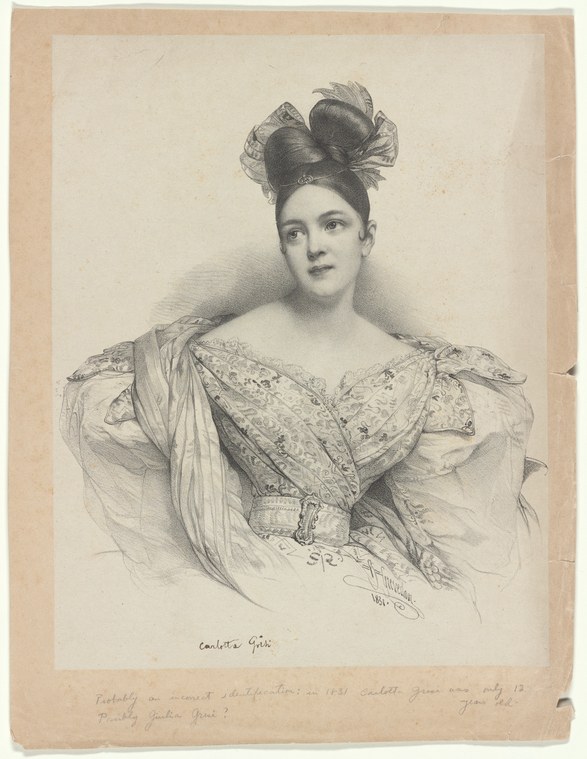
A three-quarter length portrait of a woman in elegant late 19th-century dress, her figure angled to the viewer's right. She wears a richly patterned day dress or tea gown with voluminous puffed sleeves and decorative embroidery or beading across the bodice and front. A long flowing scarf or sash drapes diagonally across her body from shoulder to hip, adding movement and a dance-like quality to the composition. Her dark hair is swept upward into an elaborate arrangement topped with a large bow or feathered ornament. She gazes toward the middle distance with a composed, graceful expression. The background is plain and neutral, focusing all attention on the figure and the fluid folds of fabric.
The dancing
The woman's posture is elegant and refined, with her weight balanced and her torso lifted. Her left shoulder is slightly drawn back, creating a gentle contrapposto stance. The flowing drapery of the scarf suggests potential movement—it reads as if caught mid-gesture or suspended in a moment of turning. Her arms are partially visible, positioned with restrained grace. The overall frame emphasizes verticality and poise rather than active choreography, though the textile treatment invites reading of the body as capable of fluid motion.
The dance depicted
This image depicts a woman in fashionable dress posed with a grace and poise associated with theatrical and ballroom culture of the Gilded Age (1880s–1900s). The elaborate dress, the elegant bearing, and the theatrical quality of the portrait suggest a performer or public figure—possibly an actress, dancer, or society woman known for her movement. The composition does not show active dancing but rather a portrait mode of dress and presentation that celebrates ballroom elegance and the refined movement vocabulary of high society. No specific dance style is choreographically evident; instead, the work documents the aesthetic values and physical ideals associated with theatrical and social dance performance of the period.
How it was made
This is a graphite or charcoal drawing on paper, rendered in a soft tonal technique that creates subtle modeling of form and drapery. The artist has used hatching and blending to build volume, particularly in the folds of the dress and the shading beneath the figure. The line work is controlled and disciplined, with clear delineation of facial features and decorative detail. The technique is consistent with commercial portraiture of the period and suggests a work intended for reproduction or circulation as a print or illustration, likely in a fashion or theatrical publication.
About this work
This is a society portrait from the Gilded Age rendered as a refined graphite drawing, documenting a woman of prominence dressed for public display. The work belongs to the tradition of theatrical and ballroom portraiture that celebrated elegance of carriage and costume. It is an artifact of how dance, fashion, and public performance were understood as aspects of refined femininity during the late 19th century—not a record of actual choreography, but a portrait that enshrines the aesthetic and postural ideals of theatrical culture.
How to look at it
Attend to the way the artist has used drapery and posture to suggest movement and elegance without depicting active motion. The diagonal sweep of the scarf is the key formal element—it creates a line of visual momentum across the figure that makes the static pose feel dynamic. Notice how the artist has given the woman's bearing a characteristic lift and turnout consistent with ballroom deportment. The elaborate headdress and embellished dress are not incidental ornament; they are the substance of what the portrait celebrates—the fusion of textiles, fashion, and refined carriage that defined Gilded Age theatrical glamour.
The period
This drawing was made during the Gilded Age (1880s–1900s), when ballroom dance and theatrical performance were central to elite social life and entertainment. The elaborate dress and aesthetic values it celebrates reflect the influence of Parisian fashion and the cult of refined feminine elegance. Portraiture of female performers and society women was a substantial commercial practice, often produced for theatrical programs, fashion publications, and high-society circulation. The soft, flattering drawing technique was ideally suited to documenting the textures and volumes of contemporary dress while celebrating the grace and status of the sitter.
Where it lives
The work is held in the New York Public Library's collection of prints depicting dance, catalogued as part of a series of society and theatrical portraits from the period. It appears to be a professional drawing, likely produced for commercial circulation or publication.
Dance in this work
Questions about this work
Is this a dancer or an actress?
The catalogue does not identify the sitter, and the image alone cannot determine her profession. The elegant dress and public portraiture suggest a woman of theatrical or society prominence, but her specific occupation is not recorded. Both actresses and ballroom performers of the period were portrayed in this style.
What dance style does this show?
No specific dance choreography is depicted. The portrait celebrates the aesthetic and postural values of ballroom culture and theatrical performance—refined carriage, upright bearing, and elegant line. It is a record of how dancers and performers presented themselves socially rather than a document of technique or movement vocabulary.
Why is the scarf so important to the composition?
The flowing scarf introduces a sense of motion and grace to what is otherwise a static, formal portrait. It suggests the kind of fluid, sweeping gestures valued in ballroom and theatrical movement, and it demonstrates the artist's skill in rendering drapery as both volume and line.
What does the dress tell us about ballroom fashion?
The voluminous puffed sleeves, fitted bodice, and elaborate embellishment are typical of 1890s fashionable dress. The scale and ornamentation of the garment reflect both the wealth and status of the wearer and the visual aesthetic of theatrical and social performance—movement and visibility were integral to how such gowns were designed and worn.
More dance artwork





