49 works in this view — arrow keys or swipe to move between them.
Dance in Art
Strephon & Chloe
Unknown artist
- Collection:
- Prints depicting dance
- Source:
- New York Public Library
- Rights:
- Public domain — free to use, share and adapt.
- Recorded as:
- Public Domain
The print shows how classical literary narratives were translated into physical comedy and gestural theater in the 18th century, and how printmakers captured theatrical moments through exaggerated, readable gesture. It documents a tradition of popular theatrical satire that valued expressive body language and comic physicality as primary means of storytelling.
What you are looking at
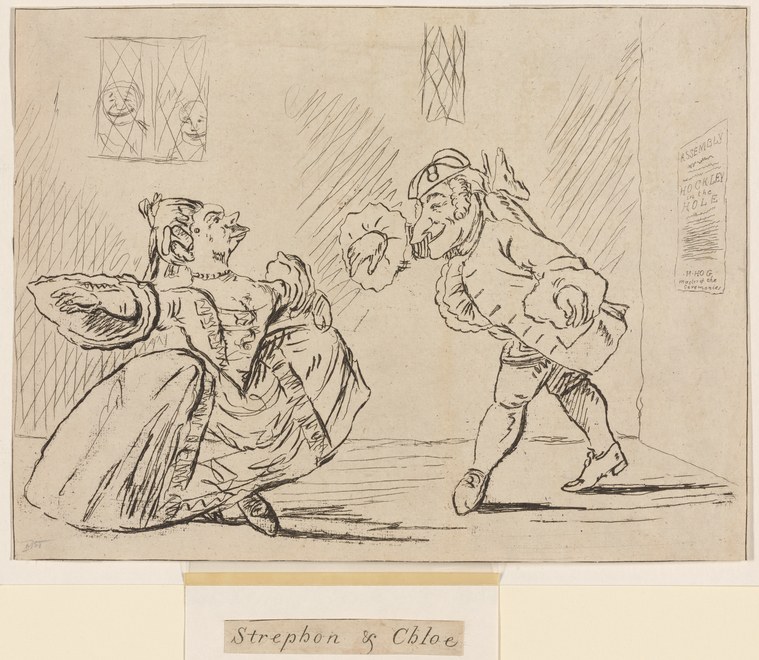
A theatrical scene depicting two figures in 18th-century dress engaged in an animated encounter. On the left, a figure in a long cape or cloak gestures expressively toward a stockier, more robustly drawn figure on the right who appears to be in a lunging or dynamic pose. The setting suggests an interior space with diagonal hatching indicating walls or drapery. In the upper left, two small head studies peer through what appears to be a window or opening, observing the scene below. The drawing style is loose and gestural, with pen lines that capture movement and personality rather than precise detail. The inscribed title identifies the figures as Strephon and Chloe, characters from classical pastoral tradition.
The dancing
The left figure holds an upright, dignified posture with one arm raised in exhortation or explanation, the body angled away in a posture of appeal or argument. The right figure adopts a much lower, more aggressive stance—knees bent, body compact, suggesting either a confrontational readiness or physical comedy. Both have grotesquely exaggerated facial features typical of satirical or comedic printmaking. The composition emphasizes contrast between their physical attitudes: one elevated and rhetorical, the other grounded and emphatic.
The dance depicted
This does not depict ballroom or theatrical dance in the technical sense. Rather, it shows a dramatic encounter between two stock characters from 18th-century pastoral and comedic tradition. Strephon and Chloe are figures from classical and neoclassical literature, often treated comically in popular prints and theatrical adaptations. The image captures a moment of dramatic interaction—possibly courtship, argument, or seduction—rendered as physical comedy through exaggerated gesture and posture. The style and subject matter suggest this is theatrical or dramatic gesture rather than formalized dance.
How it was made
This is an etching or engraving on paper, executed in pen or needle with characteristic cross-hatching for shadow and modeling. The loose, sketchy quality of the line work and the emphasis on expressive gesture over anatomical precision suggests this is a working print or reproduction for popular circulation rather than a fine art print. The technique was well-suited to rapid production and wide distribution, making such works accessible to a general theater-going or print-collecting public. The style is consistent with 18th-century comic or satirical prints illustrating theatrical scenes or literary subjects.
About this work
This is a comic theatrical print depicting a moment from the classical pastoral narrative of Strephon and Chloe, rendered as an etching in the loose, expressive style of 18th-century satirical printmaking. The two figures are locked in a moment of dramatic interaction—physical comedy enacted through exaggerated gesture and body language rather than formalized dance. The work captures the popular theatrical tradition of adapting classical literature into comedic scenes for contemporary audiences, with the grotesquely rendered faces and emphatic postures serving the conventions of satirical illustration. It belongs in a dance gallery not as documentation of dance technique, but as evidence of how movement, gesture, and physical comedy were understood and represented in theatrical contexts of the period.
How to look at it
Attend to the contrast in physical attitude between the two figures: the left figure's elevated, rhetorical posture against the right figure's compressed, aggressive stance. The grotesque exaggeration of facial features and the emphatic gesture are not meant to be naturalistic but rather to communicate character and dramatic intention immediately to a viewer. The small heads observing from above add a layer of theatrical self-awareness, common in satirical prints of the period. The artist has captured a single moment of high dramatic tension through pure physicality and expression.
The period
In the 18th century, the Strephon and Chloe narrative—drawn from classical pastoral literature and Longus's ancient Greek novel—was a popular subject for theatrical adaptation, particularly in comic or satirical contexts. Prints of theatrical scenes were a major form of public entertainment and record, circulating images of celebrated actors and popular dramatic moments. The loose, exaggerated style of this print reflects the broader 18th-century tradition of satirical and comic engraving, where readable, emphatic gesture took priority over naturalism. Such prints served as both theatrical advertisement and popular entertainment in their own right.
Where it lives
The work is held in the New York Public Library's collection of prints depicting dance and theatrical subjects. It is part of a larger tradition of 18th-century theatrical and satirical prints that documented popular entertainment and literary adaptation.
Questions about this work
Is this actually a dance?
Not in the technical sense of ballroom or theatrical dance styles. It depicts dramatic gesture and physical comedy—the primary means by which actors conveyed emotion and character in 18th-century theater. Theatrical gesture and movement of this kind are distinct from codified dance, but they share the stage and the body as their medium.
Who were Strephon and Chloe?
Characters from classical pastoral tradition, most famously from Longus's ancient Greek novel *Daphnis and Chloe*. They were stock figures in 18th-century literary and theatrical adaptations, often treated comically. Strephon also appears in pastoral poetry and drama as a conventional shepherd-lover figure.
What was the original context for this print?
It was likely created as a theatrical souvenir or advertisement for a stage production or popular entertainment. Such prints circulated among theatergoers and print collectors, documenting celebrated scenes or performers and serving as promotional material.
More dance artwork





