49 works in this view — arrow keys or swipe to move between them.
Dance in Art
Folk and ethnic costumes
Unknown artist
- Collection:
- Prints depicting dance
- Source:
- New York Public Library
- Rights:
- Public domain — free to use, share and adapt.
- Recorded as:
- Public Domain
The image is evidence of how 18th-century Europe documented and consumed knowledge of regional folk dance—not through description of steps and figures, but through the careful visual record of dress. For historians of dance and dress, this print shows what was considered visually distinctive enough to preserve and circulate, and reveals how the material culture of dance—the headdress, the veil, the embroidery—functioned as a marker of regional and ritual identity. The Ambler itself is poorly documented in written sources; this image may be among the only surviving records of what its practitioners wore.
What you are looking at
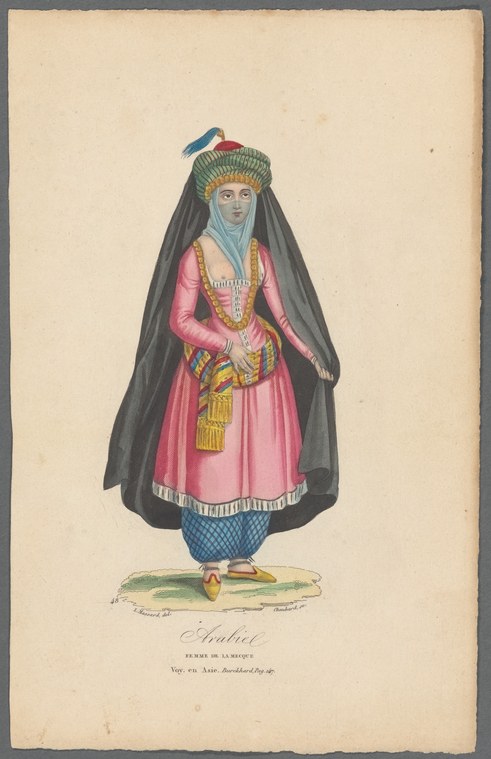
A single figure occupies the center of the composition, standing in formal frontal pose against a plain ground. She wears the elaborate dress of northern European folk costume, likely Scandinavian or Baltic: a pink linen dress with a white linen undergarment visible at the hem and cuffs, over which she wears a sleeveless yellow-gold brocade or embroidered overdress. A wide decorative belt hangs from her waist. Most striking is her headdress—a tall, structured white linen coif or bonnet with a sharp peak, from which a long dark veil or mourning cloth extends over her shoulders and down her back. A blue feather ornament rises from the headdress. Her stockings are blue-patterned and her feet rest in soft slippers. The figure's hands are folded at her waist, relaxed and modest. The watercolor is carefully worked, with attention to the metallic embroidery and the transparency of the veil. The title below reads "Ambler" with a subtitle in French indicating this is a dance form or dress from a northern region.
The dancing
The single dancer stands in a neutral, upright stance with no indication of active movement—no turned-out legs, no arm extension, no flexed joints. The posture is formal and static, the hands held at rest before the body. This is a figure presented for examination of dress rather than captured mid-movement. The composition is heraldic, symmetrical, showing the full figure from head to foot in frontal view.
The dance depicted
The inscription identifies this as an "Ambler," a northern European folk dance, likely from Scandinavia or the Baltic region given the costume details. However, the image does not depict active dancing: this is a costume study, a figure presented in the formal dress worn for the dance rather than in the act of dancing it. The Ambler was a type of wedding procession or bridal dance of the pre-industrial north, and the elaborate headdress and veil suggest this is specifically bridal costume. The work documents the material culture of the dance rather than the choreography.
How it was made
This is a hand-colored engraving or aquatint, characteristic of the 18th-century European practice of disseminating images of folk costumes and regional dress. The base appears to be a steel or copper engraving, with watercolor applied by hand to achieve the delicate tones of the pink dress, yellow-gold embroidery, and blue accents. This technique allowed detailed costume documentation to be produced in quantity and distributed to wealthy collectors and artists interested in ethnographic costume. The hand-coloring ensures each impression is unique and allows the colorist to render the metallic embroidery with convincing luminosity.
About this work
This is a hand-colored engraving documenting the dress of the Ambler, a folk dance from northern Europe, likely Scandinavia or the Baltic. It belongs to an 18th-century practice of costume study prints—works created not primarily to document choreography but to record and circulate knowledge of regional dress to a print-collecting public. The figure stands in formal pose, displaying the costume in all its material complexity: the embroidered overdress, the tall linen headdress with its formal peak, the dark veil, and the decorative belt. These prints were both ethnographic documents and objects of aesthetic pleasure, allowing urban European collectors to engage visually with the dress cultures of regions they might never visit.
How to look at it
Observe the formal frontality and stillness of the figure—this is not action frozen but dress displayed. Note the hierarchy of materials: the emphasis falls on the headdress and veil, which dominate the composition and required the most elaborate rendering. The pink dress and gold embroidery suggest luxury and ceremonial importance; the blue stockings and feather ornament mark this as festive dress. The composition follows conventions of heraldic display that were traditional for costume prints of the period. Viewers should recognize that this work documents the visual marker of a dance rather than the dance itself.
The period
This print belongs to the 18th-century European taste for costume studies and ethnographic imagery, emerging from the antiquarian and naturalistic interests of the Enlightenment. Publishers across Europe—in Paris, London, Amsterdam—produced series of costume prints depicting the dress of different regions, professions, and historical periods. These were collected by wealthy amateurs and formed part of the visual apparatus by which urban Europe mapped and understood its own cultural diversity. The folk dances and regional costumes of the north held a particular fascination as markers of authenticity, antiquity, and cultural difference. At the same time, the elegant hand-coloring and refined composition of these prints show they were aesthetic objects in their own right, not merely reference documents.
Where it lives
The work is held in the New York Public Library's Print Collection, part of a series documenting folk and ethnic costumes. The catalogue record indicates this is a print from a broader collection of costume studies, likely part of a European series produced in the late 18th or early 19th century.
Dance in this work
Questions about this work
Why is this a costume print rather than a dance scene?
In the 18th century, the visual record of folk dance was primarily maintained through the documentation of costume. The distinctive dress—the headdress, veil, embroidery, and belt—were understood as the visible markers of the dance's identity and regional origin. Prints like this were circulated to record and celebrate regional costume knowledge rather than to teach choreography. The dance itself was learned through participation and oral tradition; the print preserved what could be visually arrested and transmitted.
What is an Ambler?
The Ambler was a northern European folk dance, likely Scandinavian or Baltic in origin, associated with wedding processions and ceremonies. The elaborate bridal costume shown here—the tall headdress, the dark veil, the embroidered overdress—indicates this figure is dressed for the ceremonial version of the dance. Historical documentation of the Ambler is limited; prints like this are among the most detailed surviving records of what the dance's practitioners wore and how the dance was visually marked as a ritual occasion.
How was this print colored?
The base is an engraving, likely produced in steel or copper. Watercolor was then applied by hand to each impression, allowing colorists to render details like the metallic sheen of the gold embroidery and the transparency of the veil. Hand-coloring meant each print was unique and allowed for adjustments in tone and intensity. The labor and cost of hand-coloring limited these prints to wealthy collectors and institutions.
More dance artwork





