49 works in this view — arrow keys or swipe to move between them.
Dance in Art
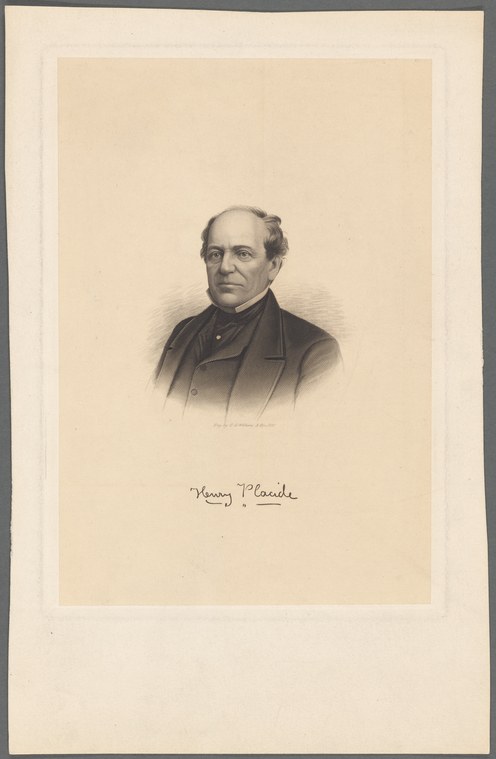
Henry Placide [facsimile signature]
Unknown artist
- Collection:
- Prints depicting dance
- Source:
- New York Public Library
- Rights:
- Public domain — free to use, share and adapt.
- Recorded as:
- Public Domain
While the portrait does not show dance in action, it is documentary evidence of who Henry Placide was and how he was presented to nineteenth-century audiences. For historians of American theatre and performance, such portraits are primary sources for understanding the personalities and public image of performers whose work is otherwise known only through written records and playbills.
What you are looking at
A formal portrait engraving of a man in middle age, shown from the chest up against a plain background. He wears a dark jacket or coat with what appears to be a white shirt visible at the neckline, in the style of the mid-nineteenth century. His hair is thinning, receding at the temples, and he has a composed, dignified expression. Below the portrait is a handwritten facsimile signature reading "Henry Placide." The engraving technique creates subtle shading through fine parallel lines, giving the face and clothing three-dimensional form. This is a formal commemorative or promotional portrait of the type used to publicize theatrical performers.
The dancing
A single standing figure shown in a static, frontal pose typical of portraiture rather than action. The shoulders are squared; the head is held upright and facing the viewer directly. There is no gesture or bodily movement suggested. This is a portrait study, not a depiction of dance or performance in action.
The dance depicted
This image does not depict dance. It is a formal portrait of Henry Placide, a figure whose name and era suggest connection to American theatre of the nineteenth century, but the portrait itself shows only the subject's head and shoulders in repose. No movement, costume specific to dance, or choreographic context is visible.
How it was made
This is an engraving, identifiable by the fine parallel lines (hatching and cross-hatching) used to build tone and create the illusion of depth and volume in the face, hair, and clothing. The technique is characteristic of wood or steel engraving common in the mid-to-late nineteenth century. The facsimile signature below suggests this was a promotional portrait, likely prepared for publication in theatrical journals, playbills, or biography collections. Engravings allowed for mass reproduction and circulation among theatre audiences.
About this work
This is a formal portrait engraving of Henry Placide, a nineteenth-century theatre personality. The work is catalogued as part of a collection of prints depicting dance, but the portrait itself is a static commemorative image rather than a scene of performance or movement. It documents the face and social standing of a performer rather than the dance itself. As a promotional engraving, it would have served to publicize Placide to theatre audiences and readers of theatrical publications.
How to look at it
This is a portrait, not a performance document. Attend to the dignity and restraint of the pose—the squared shoulders, the steady gaze, the formal dress—which communicate the subject's status and respectability as a theatre professional. The engraver has used fine, controlled lines to suggest not movement but authority and presence. The facsimile signature below the image authenticates the subject and was a common convention in theatrical portraiture, assuring buyers they possessed an authorized likeness.
The artist
The artist is not recorded in the catalogue. The engraving technique and style are consistent with mid-nineteenth-century American or European theatrical portraiture. Such portraits were often commissioned by theatres, theatrical journals, or the performers themselves to publicize their work and build audience recognition.
The period
Henry Placide was a prominent figure in American theatre, likely in the early-to-mid nineteenth century. During this period, theatrical portraiture—particularly engravings and lithographs—were important media for promoting performers and building theatrical celebrity. Such portraits were collected, sold separately, and pasted into scrapbooks and archives by theatre enthusiasts. The engraving medium was the standard technology for mass-producing and distributing these images before photography became widespread.
Where it lives
This is part of a collection of prints held by the New York Public Library, designated as depicting dance. The work's inclusion in that collection suggests it may document a performer known for dance or movement-based theatrical work, though the portrait itself shows the subject at rest.
Questions about this work
Is this engraving showing dance?
No. This is a formal portrait in which the subject is shown standing still, facing the viewer. No movement or choreography is depicted. The portrait documents the appearance of Henry Placide and his social standing as a theatre professional, but does not show him performing.
Who was Henry Placide?
The catalogue does not provide biographical information, but the style and quality of the portrait suggest he was a significant theatrical figure in nineteenth-century America, likely known to theatre-going audiences. Further research in theatrical histories and archives would be needed to establish his specific roles and contributions to American performance.
Why is this in a dance collection if it doesn't show dance?
Henry Placide may have been known for roles involving dance or movement, or for pantomime and other physical performance forms. Early theatrical collections often gathered portraits of all performers regardless of their speciality. The image itself, however, is a standard portrait rather than documentation of performance.
What is a facsimile signature?
A facsimile signature is an engraved reproduction of the subject's actual handwritten signature, printed as part of the portrait. This authenticated the image as an authorized likeness and was standard practice for theatrical portraits, playbills, and promotional prints in the nineteenth century.
More dance artwork





