49 works in this view — arrow keys or swipe to move between them.
Dance in Art
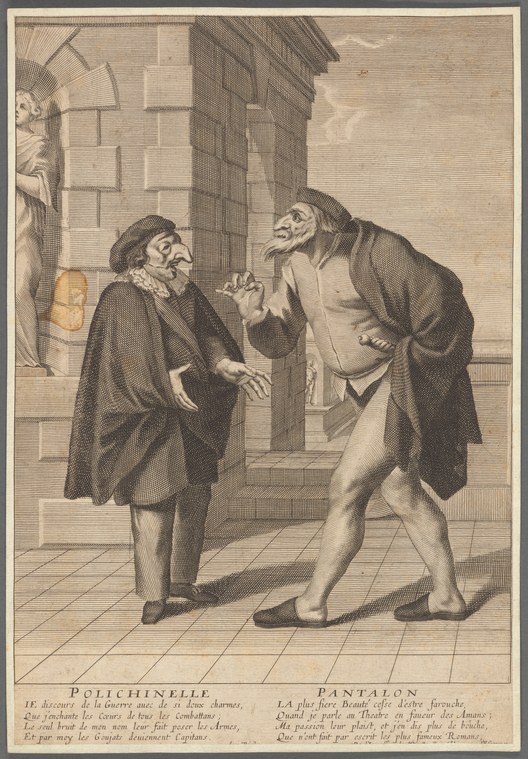
Polichinelle [et] Pantalon [includes verses in French]
Unknown artist
- Collection:
- Prints depicting dance
- Source:
- New York Public Library
- Rights:
- Public domain — free to use, share and adapt.
- Recorded as:
- Public Domain
Commedia dell'arte was a foundational influence on European theatre and dance, establishing conventions of physical comedy, character types, and movement vocabulary that shaped ballet, pantomime, and modern theatre for centuries. This print documents how commedia characters were understood and represented by audiences of the period, and shows the integration of heightened physical gesture, social satire, and performance spectacle that characterized the form.
What you are looking at
Two figures confront each other in an architectural setting with a columned portico and tiled floor. The figure on the left, labeled Polichinelle, wears a dark coat and cap; he leans forward in an attitude of supplication or negotiation, one hand gesturing toward his companion. The figure on the right, labeled Pantalon, is depicted nearly nude except for a dark coat draped over his shoulders, his posture aggressive and commanding—one leg extended, torso thrust forward, one hand raised in a dismissive or threatening gesture. The composition suggests a moment of comic confrontation or dispute, with architectural grandeur framing what appears to be a street or public space. The engraving's hatching and line-work create strong contrasts between light and shadow, emphasizing the dramatic tension between the two characters.
The dancing
Both figures stand in exaggerated, confrontational postures typical of commedia dell'arte performance. Polichinelle's weight appears centered but his upper body leans forward, arms and hands positioned in pleading or argumentative gesture. Pantalon dominates the composition: his left leg is extended in a wide stride, his torso twisted and projected forward aggressively, his raised right arm commanding the space. Neither figure is in a dance hold or frame; this is gestural confrontation rather than partnered movement, yet the exaggerated attitudes and asymmetrical poses suggest the physicality and comic body language of staged performance.
The dance depicted
This depicts characters from the commedia dell'arte tradition rather than a formal dance genre. Polichinelle and Pantalon are stock characters from this improvisational theatre form, and the engraving captures a moment of comic interchange between them—likely a negotiation, argument, or humorous reversal of social status. Commedia performances included movement, gesture, and acrobatic business that drew on dance vocabulary, but this is theatrical character work rather than choreographed dance. The print captures the exaggerated physicality and social satire central to the form.
How it was made
This is an engraving, produced by hand-incised lines on a metal plate (likely copper) and printed from that plate. The hatching technique creates tonal modulation and the illusion of volume and texture—visible in the rendering of cloth, shadow, and architectural detail. The precision of the medium allowed fine detail in the characters' expressions and in the setting, and engravings of this type circulated widely as relatively affordable prints, reaching audiences beyond those who could attend live performance. The technique implies a work of some commercial and artistic ambition, likely created in the 17th or early 18th century when commedia imagery was widely popular across Europe.
About this work
This engraving records a moment from commedia dell'arte, the improvisational theatre tradition that dominated European popular performance from the 16th through 18th centuries. The two characters, Polichinelle and Pantalon, engage in comic physical confrontation—one pleading or arguing, the other dominating through exaggerated aggression and display. While not depicting formal dance, the work captures the theatrical physicality and gestural vocabulary that underlay commedia performance, including elements of acrobatic and dance-like movement. The engraving survives as evidence of how this tradition was visualized and circulated in print form, reaching audiences who may never have seen a live performance.
How to look at it
Observe the exaggerated attitudes and asymmetrical poses: how each figure's body tells a different story—Polichinelle bent and ingratiating, Pantalon commanding and dismissive. The artist has frozen a moment of social and physical comedy in which power, status, and personality are expressed through gesture and posture. The architectural setting elevates this street confrontation, suggesting that even comic characters and lower-class scenarios were deemed worthy of formal artistic rendering. The inscribed verses below (in French) likely gloss the scene with witty commentary on the encounter.
The period
Commedia dell'arte flourished from the mid-16th century onward, with particular popularity in Italy and France during the 17th and 18th centuries. The form influenced court ballet and theatrical dance; characters like Pantalon and Polichinelle appear in ballets and pantomimes of the period. The tradition relied on actors' physical virtuosity, including acrobatics and exaggerated gesture, blurring the line between theatre and dance. Prints of commedia characters were highly popular as souvenirs and aids to understanding the tradition's stock figures and scenarios.
Where it lives
This engraving belongs to the collection of prints depicting dance held by the New York Public Library. It survives as part of the institutional documentation of dance and theatrical performance in European visual culture.
Questions about this work
Who were Polichinelle and Pantalon?
Stock characters from commedia dell'arte. Polichinelle (also Pulcinella) was a servant or zany—comic, scheming, often hungry or desperate. Pantalon was a wealthy, elderly merchant or father figure, usually portrayed as miserly, lecherous, or ridiculous. Their interactions generated much of commedia's comic business, playing on class and generational conflict.
Is this actual dance or just theatrical gesture?
Commedia performances included acrobatic and dance-like movement, but this image captures a moment of gestural theatre rather than formalized dance. However, commedia's physical vocabulary deeply influenced European dance and theatre, and the exaggerated poses here reflect that tradition of heightened, athletic physicality.
What do the verses say?
The inscriptions are in French and would gloss the scene with commentary on the confrontation—likely witty or satirical observations on Polichinelle's predicament or Pantalon's behavior. Without transcription, their exact content cannot be determined from the image alone.
More dance artwork





