49 works in this view — arrow keys or swipe to move between them.
Dance in Art
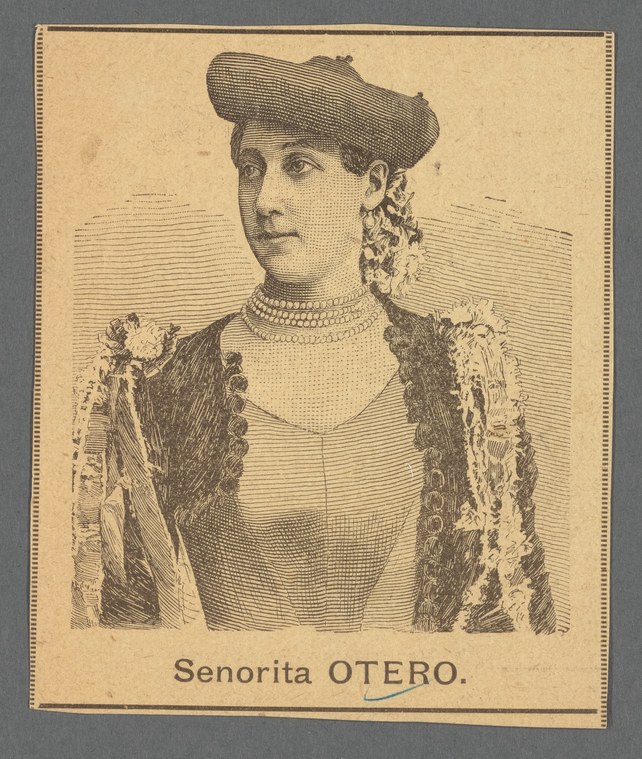
Senorita Otero
Unknown artist
- Collection:
- Prints depicting dance
- Source:
- New York Public Library
- Rights:
- Public domain — free to use, share and adapt.
- Recorded as:
- Public Domain
This image preserves the stage identity of a performer now known primarily through archival fragmentation, making it valuable for any study of late nineteenth-century theatrical dance and the women who performed during the era of music hall and theatrical spectacle. The engraving technique and format tell us how dance performers were promoted and how they reached audiences beyond the theatre through collectible prints—an important distribution method in an age before photography could be easily mass-produced.
What you are looking at
A three-quarter-length portrait of a woman identified as Señorita Otero, rendered in fine engraving or etching. She is shown in profile facing left, wearing an ornate costume that suggests late nineteenth-century theatrical dress. Her dark hair is styled in curls pinned up with what appears to be a decorative comb or headpiece. A triple strand of pearls encircles her neck. Her costume consists of a fitted bodice in a crosshatch-patterned fabric and a dramatically decorated jacket or cape with elaborate lace or embroidered detailing at the shoulders and cuffs—the kind of lavish ornamentation associated with Spanish or Latin American performance dress. The background is rendered in horizontal parallel lines that create depth and frame the figure. The composition is formal and dignified, the engraving technique precise and accomplished.
The dancing
The figure is stationary and posed rather than caught in motion. The body is upright and composed, the gaze directed outward in profile. No limbs are in active gesture; this is a portrait of a performer in costume rather than a depiction of dance movement. The shoulders are relaxed and level. The posture suggests dignity and presence rather than the physical engagement of an actively dancing body.
The dance depicted
This is a portrait of a performer, not a representation of dance in action. Based on the theatrical costume—particularly the Spanish or Latin American styling of the jacket and comb—Otero was likely a dancer or musical theatre performer of the late nineteenth century, possibly from Spain or the Caribbean. The name 'Otero' (sometimes recorded as La Belle Otero) was associated with a famous Spanish dancer and courtesan of the era, but we cannot confirm identity from the engraving alone. The image documents the stage dress of the period rather than the choreography or movement style.
How it was made
This is a fine engraving or etching on paper, likely mass-produced as a theatrical print or portrait souvenir. The technique—parallel line work to create tone and texture—was the standard method for reproducing photographic images and portraits in the nineteenth century before halftone lithography became dominant. The precision of the crosshatching and the quality of the line work suggest a skilled hand and probably commercial printing, making this the kind of promotional or collectible print that circulated widely, sold in theatre lobbies or distributed by performers to admirers.
About this work
This is a theatrical portrait engraving of a performer named Otero, produced in the late nineteenth century. The precise costume—Spanish or Latin American in character, with ornate embroidered jacket and decorative comb—places her in a specific performance tradition, though without further documentation the exact choreographic context remains unclear. The work is a record of how performers of this era dressed for the stage and how they were marketed and memorialized through print culture. For a gallery of dance, it documents the visual identity and theatrical presentation of a performer from a period when dance was inseparable from spectacular costume and material display.
How to look at it
Examine the details of the costume closely: the patterning of the bodice fabric, the construction and embroidery of the jacket, the specific styling of the comb and pearls. These elements anchor the figure in a particular performance tradition and geographic origin. Note the formal frontality and dignity of the pose—this is how a celebrated performer wished to be remembered and circulated. The fine line work of the engraving, while beautiful, is also an index of commercial investment: this performer was considered worth the cost of quality reproduction.
The artist
The artist is not recorded. The engraving is competently executed in the commercial portrait tradition of the period, suggesting a professional workshop rather than a named master, and indicates substantial investment in the performer's marketability.
The period
This engraving dates to the era when theatrical dance—particularly Spanish, Cuban, and music-hall performance—commanded international attention and celebrity. The late nineteenth century saw the rise of the professional touring performer and the cultivation of the theatrical 'star' through visual reproduction. Performers like La Belle Otero became celebrities whose images circulated as souvenirs and promotional materials. The engraving process allowed for multiple copies distributed far beyond the theatre itself, creating a form of fame based on reproducible image.
Where it lives
Held in the New York Public Library's collection of prints depicting dance. The work comes to us as part of a larger archive of theatrical portraiture, likely assembled as a research collection rather than preserved from a single theatrical estate or personal archive.
Questions about this work
Who was Señorita Otero?
The catalogue does not record a full identity, but the name and style suggest a performer active in the late nineteenth century, likely Spanish or Cuban in origin or repertoire. The theatrical dress—particularly the style of jacket and comb—points toward Spanish dance or music hall performance. Without additional documentation, we cannot confirm whether this is La Belle Otero, the famous dancer and courtesan, or another performer of the same era.
What kind of dance did she perform?
The portrait costume suggests Spanish or Latin American theatrical dance, but we cannot determine the specific style from the image alone. The elaborate ornamentation suggests music hall or theatrical spectacle rather than concert dance.
Why is she dressed this way?
This is stage costume—the theatrical dress that marked her identity as a performer of a particular tradition. The Spanish styling, pearls, and embroidered jacket were signs of her act and her appeal, visible from the theatre audience at a distance and recognizable in reproduction.
What was the purpose of this print?
This was a promotional and collectible print, likely sold in or near the theatre where she performed or distributed by the performer herself to admirers. It served the function that photographs and posters do today—circulating the performer's image and building her reputation beyond the live performance.
More dance artwork





