49 works in this view — arrow keys or swipe to move between them.
Dance in Art
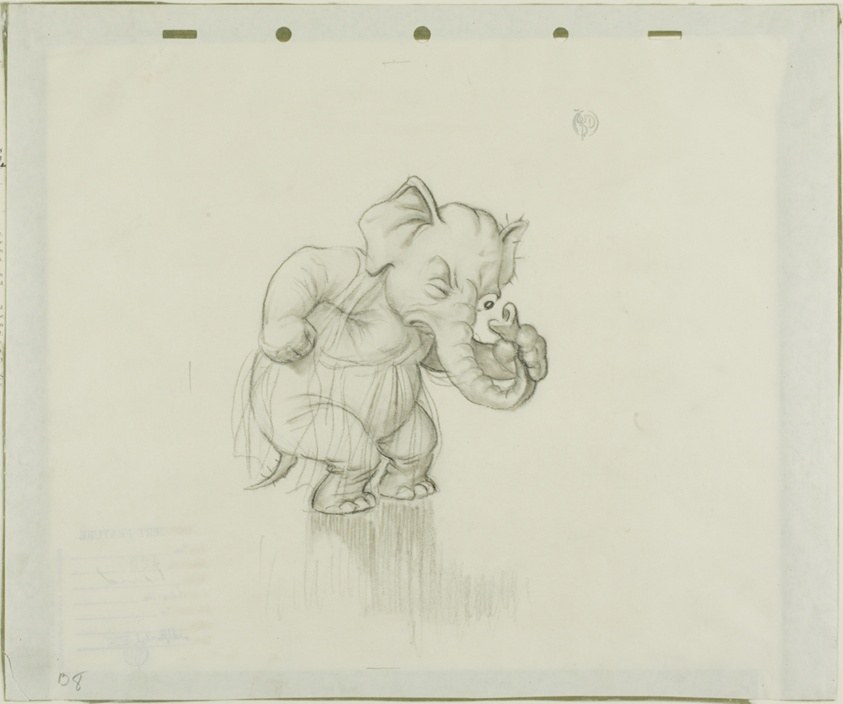
Study: Elephant Ballerina (recto and verso)
Studio of Walter Elias Disney American, 1901-1966
- Medium:
- Charcoal, with stumping, over graphite (recto and verso), on ivory wove paper
- Collection:
- Prints and Drawings
- Source:
- Art Institute of Chicago
- Rights:
- Rights reserved by the holding institution — do not reuse without permission. Source record ↗
- Recorded as:
- AIC — rights reserved
This work documents the intersection of classical ballet with popular entertainment and animation during the studio era, a period in which fine artists and animators shared techniques and visual language. The drawing reveals how ballet's formal vocabulary—its poses, its costumes, its aesthetic of discipline and control—could be translated, extended, and satirized to create fantasy figures, and how the balletic body (however fantastical) functioned as a marker of grace, artistry, and civilization even in whimsical contexts.
What you are looking at
A rotund elephant in a tutu stands in a three-quarter pose, leaning backward with its trunk curled upward in an exaggerated arabesque-like gesture. The elephant wears a fitted bodice or corset and a full, gathered skirt rendered with hatching to suggest volume and shadow. The figure is drawn in graphite with charcoal stumping, giving it soft modeling and dimension. The elephant's posture—weight shifted, torso tilted back, one foreleg extended—mimics the exaggerated extension and theatricality of classical ballet. The drawing captures a moment of studied grace, with the artist emphasizing the comic incongruity between the animal's bulk and the delicate, disciplined pose of ballet technique. The background is spare, allowing the figure to dominate the composition.
The dancing
The elephant's weight appears to rest on its hind legs, with the front leg extended in a balletic line suggestive of an arabesque or attitude derrière. The trunk curves upward in an arc that echoes the upper body's backward lean, creating a unified line from hindquarters through torso to trunk tip. The posture is exaggerated and artificial—an articulated ballet frame—rather than naturalistic. The drawing shows understanding of classical ballet's geometry: the lifted sternum, the extended line, the precise placement of limbs, even rendered on an anatomically impossible dancer.
The dance depicted
This is a study for a character ballet, most likely for a classical or neoclassical ballet score. The subject is anthropomorphic rather than documentary: the elephant is presented not as a naturalistic animal but as a performer in a tutu, executing a recognized balletic pose. The image belongs to a tradition of fantastical or comedic ballet in which animals or inanimate objects are given human balletic training and glamour. The pose and costume signal European classical ballet of the mid-20th century, and the exaggerated theatricality suggests either a demi-caractère role or a deliberately comic interlude within a larger work.
How it was made
The work is executed in graphite and charcoal with stumping (blending), a technique that softens and unifies the tonal transitions. This mixed medium allows the artist to move fluidly between linear definition (the outline, the tutu's folds) and volumetric modeling (the elephant's body, the shadow beneath). Charcoal stumping creates a warm, velvety surface that suits both the animal's mass and the delicacy of the ballet costume. The combination is economical and gestural—suited to studio work and rapid ideation rather than a presentation drawing, suggesting this is a working study for a larger project or finished artwork.
About this work
This is a character study for an animated or theatrical ballet featuring an elephant ballerina. The drawing belongs to a mid-twentieth-century tradition of anthropomorphic fantasy in dance and animation, in which the strict geometry and discipline of classical ballet are applied to unlikely bodies for comedic and whimsical effect. The work demonstrates sophisticated understanding of balletic line and posture: the artist has rendered the classical frame accurately, translating its proportions and relationships to a four-legged animal without breaking the internal logic of the dance form. The study shows the careful observation and anatomical translation necessary to make such a figure believable within the conventions of theatrical spectacle.
How to look at it
Notice how the artist has constructed the classical ballet pose on a four-legged frame: the hind legs serve as the supporting leg and the extended leg, the torso maintains the lifted sternum and backward lean of an arabesque, and the trunk becomes an expressive arm extended upward. The drawing captures the moment at the apex of the pose—the held position of maximum extension and control, not a moment in transition. Observe how the tutu and corset anchor the figure as a ballet dancer rather than a caricature: the costume is rendered with care and specificity, with weight and volume, integrating the animal into the ballet aesthetic rather than merely dressing it.
The artist
This work is attributed to the Studio of Walt Disney, the animator and producer whose company pioneered full-length animated feature films in the 1930s and 1940s. Disney's studio employed hundreds of artists, many trained in classical drawing and anatomy; character development involved extensive study sheets of pose, movement, and expression. The studio produced works featuring both realistic and fantastical dancers—most notably the Hippo Ballet in Fantasia (1940), released the year before this study, in which inanimate and animal characters perform classical dance. Artists working in the Disney studio would have studied live ballet, consulted with choreographers, and made hundreds of drawings to establish how a character would move and hold itself.
The period
This drawing dates to 1939, a pivotal moment in animation and in ballet's popular visibility. George Balanchine's neoclassical ballet was reshaping American ballet aesthetics, and the American Ballet Caravan was touring works that mixed high theatrical art with American vernacular energy. Simultaneously, animation had begun to treat movement and music with the sophistication of live theater: Disney's Fantasia was in production, bringing symphonic music and balletic movement into animated form. The anthropomorphic ballet character—the dancing hippo, the dancing elephant—belongs to this moment of cross-pollination, when animation could offer ballet a new scale and freedom while ballet gave animation a vocabulary of grace and artistry.
Where it lives
This is a charcoal and graphite study sheet held in the Prints and Drawings collection of the Art Institute of Chicago. It is catalogued as a work of the Studio of Walt Disney, suggesting it was created within the collaborative production system of the Disney animation studio rather than as a work of singular authorship. Such studies were working drawings produced in quantity to explore character, movement, and pose for eventual use in animation or theatrical design.
Dance in this work
Questions about this work
Is this from a finished Disney film?
The drawing is catalogued as a study, suggesting it was exploratory work. The elephant ballerina may have been intended for a film project, but the record does not confirm whether or where this character appeared in any completed work. The 1940 Fantasia featured animal and object characters in ballet, but that film's cast is documented separately.
Who actually made this drawing?
It is attributed to the Studio of Walt Disney rather than to a named individual artist. The Disney studio employed dozens of character animators, pose artists, and layout designers. The attribution reflects how animation studios worked collaboratively, with multiple artists contributing to the development of a character. Individual authorship within such studios is often unrecorded.
What is the pose the elephant is in?
The pose resembles an arabesque or attitude derrière—classical ballet positions in which one leg is extended behind the body while the other supports, the torso is lifted and slightly arched backward, and the arms frame the line. The artist has translated this pose to the elephant's anatomy by using the hind legs and torso as in a human, and the curved trunk as the upper arm line, creating a recognizable ballet silhouette.
Why would an animator study ballet so carefully?
Animation requires extreme precision in movement and pose. To make an elephant move with the grace and control of a ballet dancer—a fantastical conceit that requires the viewer to suspend disbelief—the animator must understand classical ballet's geometry and discipline perfectly. The study demonstrates this mastery so that the animated movement will read as balletic to the audience.
More dance artwork





