49 works in this view — arrow keys or swipe to move between them.
Dance in Art
Costume design
Ana de Pombo
- Collection:
- Costume design
- Source:
- Victoria and Albert Museum
- Rights:
- Rights vary by item — check the source record before reusing this image. Source record ↗
- Recorded as:
- V&A — check rights per item
Costume designs are primary sources for understanding how dance and theatrical movement were framed, supported, and constrained by the garments performers wore. This drawing documents the 1930s taste for voluminous, highly ornamented costume in revue spectacle, showing the relationship between fashion illustration, theater design, and dance practice. For historians of theatrical dance and designers seeking precedent, the work preserves a moment when costume was a primary vehicle of theatrical meaning.
What you are looking at
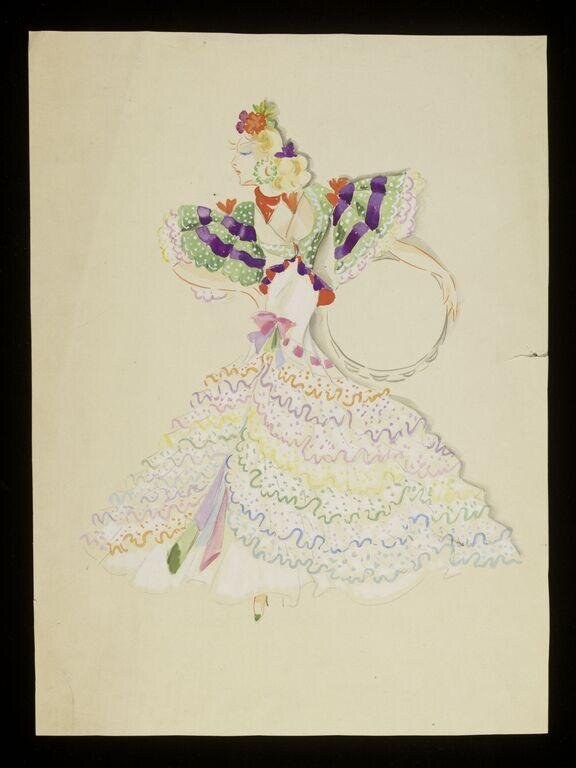
A single female figure dominates the composition, posed in an elegant contrapposto stance against a cream ground. She wears an elaborate costume of the 1930s theatrical imagination: a structured bodice of cream and pale yellow adorned with purple velvet ribbons and a profusion of colorful flowers—roses in coral and pink, green foliage—arranged as if part of her dress. The most striking element is the voluminous skirt, constructed of layer upon layer of ruffled cream, yellow, lavender, and tan fabric, rendered in soft pencil linework that suggests movement and depth. Her left arm extends outward holding a large circular prop—possibly a mirror or fan—while her right arm rests near her torso. Her face is delicate and idealized, shown in three-quarter profile with soft features and an upswept hairstyle. The overall impression is of a theatrical costume design rather than street wear, the kind of fantastical creation typical of 1930s revue or operetta spectacle.
The dancing
The figure is depicted in a classical standing pose with weight balanced, one leg slightly advanced. The extended left arm with the circular object creates a graceful line across the composition; the positioning suggests either a moment of display or a choreographed gesture rather than active movement. The silhouette is elongated and elegant, with the proportions and pose typical of fashion or costume illustration. There is no sense of vigorous dance action—this is a figure presented for visual appreciation of the garment itself.
The dance depicted
This is a costume design for theatrical performance, almost certainly for a musical revue, operetta, or pageant spectacle of the 1930s. The design belongs to a tradition of elaborate stage costume that prioritized visual fantasy and femininity over functional movement. While the figure strikes a stage pose, the costume itself—with its cascading ruffled skirt and decorative floral elements—suggests a performer designed to be admired rather than a dancer executing complex choreography. The design tells us that 1930s theatrical spectacle valued ornament, color, and silhouette over mobility.
How it was made
This is a mixed-media costume design drawing, executed primarily in watercolor and colored pencil on paper. The artist used soft colored pencils for the ruffled skirt layers, creating texture and dimension through fine linework, while achieving more solid color in the bodice and floral elements with watercolor wash. The technique is delicate and precise, characteristic of professional costume design work intended for production teams. The medium and execution suggest this was a working design for a theater production, circulated among costume makers and directors rather than exhibited as fine art.
About this work
This is a costume design by Ana de Pombo dated 1930, depicting a female figure in an elaborate theatrical gown for revue or operetta. The work belongs to a specific moment in twentieth-century theatrical practice when spectacle, color, and imaginative costume design were primary attractions of commercial musical theater. The piece is as much about the designer's ability to visualize and render fabric, construction, and ornament as it is about dance itself—it shows us how dancers were dressed and presented in this era of theater, and what visual fantasy the audience expected.
How to look at it
Notice how the artist has rendered the ruffled skirt—the layering of curved lines in different pencil tones creates both volume and the sense of stacked fabric without rendering every individual ruffle literally. The contrast between the precisely drawn floral details and the loose, gestural handling of the skirt layers shows the hierarchy of detail in costume design: the face and flowers must read clearly from the audience, while the skirt's texture matters more than exact delineation. The extended arm and the pose itself are calculated to display the garment; this is costume-as-sculpture, meant to be seen, not primarily worn for movement.
The artist
Ana de Pombo appears to have been a costume and fashion designer active in the 1930s, working in a tradition of theatrical and commercial design. Little is presently known about her biographical details or full body of work. The style and execution of this drawing suggest professional training in fashion and costume design and direct connection to the theatrical production industry of the period.
The period
The 1930s saw the height of revue spectacle and large-scale theatrical productions featuring dancing choruses in elaborate costume. This was the era of the Folies Bergère, American theatrical revues, and operetta—production modes that valued visual spectacle, colorful costumes, and idealized femininity. In fine art, the period saw continued engagement with fashion and design as subjects; costume and set design were recognized as serious artistic disciplines. The soft pencil technique and watercolor approach were standard professional methods for costume rendering during this period.
Where it lives
The work is recorded as a costume design drawing, held in the VA (Victoria and Albert Museum) collection, which maintains extensive holdings of theatrical design, fashion illustration, and costume studies. The drawing represents the kind of working design that was integral to theatrical production but often preserved in institutional collections rather than kept by the theater companies themselves.
Dance in this work
Questions about this work
Is this a real dance costume or a fantasy design?
It is a theatrical design from the revue spectacle tradition of the 1930s, which blended both. The costume as drawn is too elaborate and ornament-heavy for functional dance movement, but it was intended to be built and worn on stage. Theater of this era often prioritized spectacular appearance over practical choreography; dancers in these productions worked within the constraints of heavy costume rather than vice versa.
Who would have worn this?
A female performer in a musical revue, operetta, or large-scale theatrical spectacle of the 1930s—likely a chorus dancer or principal performer in an entertainment-focused production. The costume's glamour and theatrical excess suggest a featured role rather than ensemble work, though chorus girls in large productions often wore similarly elaborate costumes.
What can we learn from costume designs like this?
Costume designs are historical documents of movement, gender, labor, and taste. They show us what bodies were meant to look like on stage, what materials and silhouettes were valued, and how much of a performer's effort went into simply wearing and moving within the garment. This design tells us that 1930s revue valued ornament and femininity expressed through fabric and decoration rather than the dancer's own body line.
More dance artwork





