Balasaraswati
Legend of Dance
Why They Matter
Balasaraswati matters because she demonstrated that Bharatanatyam’s theatrical power depends on profound musicianship, poetry, rhythmic command, and the cultivated freedom of abhinaya. Her career made a hereditary South Indian tradition visible on national and international stages while refusing the
Biography
Tanjore Balasaraswati, widely known as T. Balasaraswati or Bala, was born in Madras in 1918 into a matrilineal hereditary community of musicians and dancers. Her grandmother was the influential veena artist Veenai Dhanammal, and her mother Jayammal was a singer who accompanied and guided her training. In this family lineage, music was not external accompaniment but the medium through which gesture, rhythm, poetry, and emotional interpretation were learned and transmitted.
Balasaraswati began her training as a child with K. Kandappan Pillai of the Thanjavur nattuvanar tradition and gave her debut at Kanchipuram in 1925. Her art developed through the interaction of nattuvangam (rhythmic chanting), vocal music, percussion, text, and embodied interpretation—a collaborative ensemble practice rather than the work of a soloist alone. In 1934 she performed in Calcutta, marking an important early appearance beyond South India.
During the 1930s, Bharatanatyam was undergoing significant transformation. The form that had been called *sadir* in hereditary devadasi practice was being recoded as a concert art through upper-caste institutional reform and anti-nautch politics. Balasaraswati defended the artistic and spiritual legitimacy of *sringara*—love poetry and expressive depth—as structural to the form rather than a sign of impropriety. Her position was not simply resistance to change; it was an argument that musical nuance, poetic interpretation, and the freedom of *abhinaya* (dramatic expression) were inseparable from Bharatanatyam's power.
Following independence, Balasaraswati received the Sangeet Natak Akademi Award in 1955 and the Padma Bhushan in 1957, recognizing her status as a pre-eminent exponent of the tradition. In 1953 a school bearing her name was established under the auspices of the Music Academy in Madras, giving institutional form to teaching that remained rooted in hereditary repertoire and ensemble musicianship. From the 1960s onward, she performed and taught internationally, including residencies in the United States where she worked alongside her brothers T. Viswanathan and T. Ranganathan. Her international work presented Bharatanatyam as a musically sophisticated dramatic art rather than a decorative display.
The Music Academy named her Sangita Kalanidhi in 1973, an honor that recognized the inseparability of her dancing and musical knowledge. The filmmaker Satyajit Ray documented her art and teaching practice in the film *Bala*, preserving important evidence of her performance and rehearsal method. Balasaraswati received the Padma Vibhushan in 1977 and died in Madras in 1984, leaving a family and pedagogic lineage continued by students and descendants.
Career Highlights
Gave her dance debut at Kanchipuram after childhood training with K. Kandappan Pillai. University of Washington Ethnomusicology Archives University of Washington Ethnomusicology Archives
Performed in Calcutta, an important early appearance beyond South India. Jacob’s Pillow Dance Interactive Jacob’s Pillow Dance Interactive
T. Balasaraswati’s Classical Bharata Natya School was registered under the Music Academy’s auspices. The Music Academy The Music Academy
Received the Sangeet Natak Akademi Award for dance. Sangeet Natak Akademi Sangeet Natak Akademi
Received the Padma Bhushan from the Government of India. Sangeet Natak Akademi Sangeet Natak Akademi
Expanded her international performance and teaching activity, including work in the United States. Jacob’s Pillow Dance Interactive Jacob’s Pillow Dance Interactive
Was named Sangita Kalanidhi by the Music Academy, recognizing her exceptional musical as well as dance artistry. The Music Academy The Music Academy
Satyajit Ray completed the documentary Bala, preserving extended evidence of her art and teaching. University of Washington Ethnomusicology Archives University of Washington Ethnomusicology Archives
Received the Padma Vibhushan in the field of art. Padma Awards, Government of India Padma Awards, Government of India
Died in Madras, leaving a family and pedagogic lineage continued by students and descendants. University of Washington Ethnomusicology Archives University of Washington Ethnomusicology Archives
Balasaraswati on screen
Films and television featuring Balasaraswati, with the sequences we have indexed.
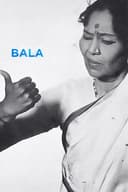
Poster artwork from TMDB.
 This site uses TMDB and the TMDB APIs but is not endorsed, certified, or otherwise approved by TMDB.
Legacy & Impact
Balasaraswati demonstrated that Bharatanatyam's theatrical power depends on profound musicianship, poetry, rhythmic command, and the cultivated freedom of *abhinaya*. Her career made a hereditary South Indian tradition visible on national and international stages while refusing the idea that respectability required the removal of *sringara*. She actively argued with and shaped the form's twentieth-century history, correcting narratives that center only institutions while marginalizing devadasi and nattuvanar knowledge. Dancers today inherit not just her technique but her insistence that emotional depth and musical partnership are the foundation of the art.


Explore More Legends
Discover the dancers, teachers, choreographers, and cultural icons who shaped how the world moves.
Keep the thread going
Dance history, technique, and the occasional rabbit hole — in your inbox. Thoughtful, infrequent, unsubscribe anytime.
Free. No spam. One click to leave.