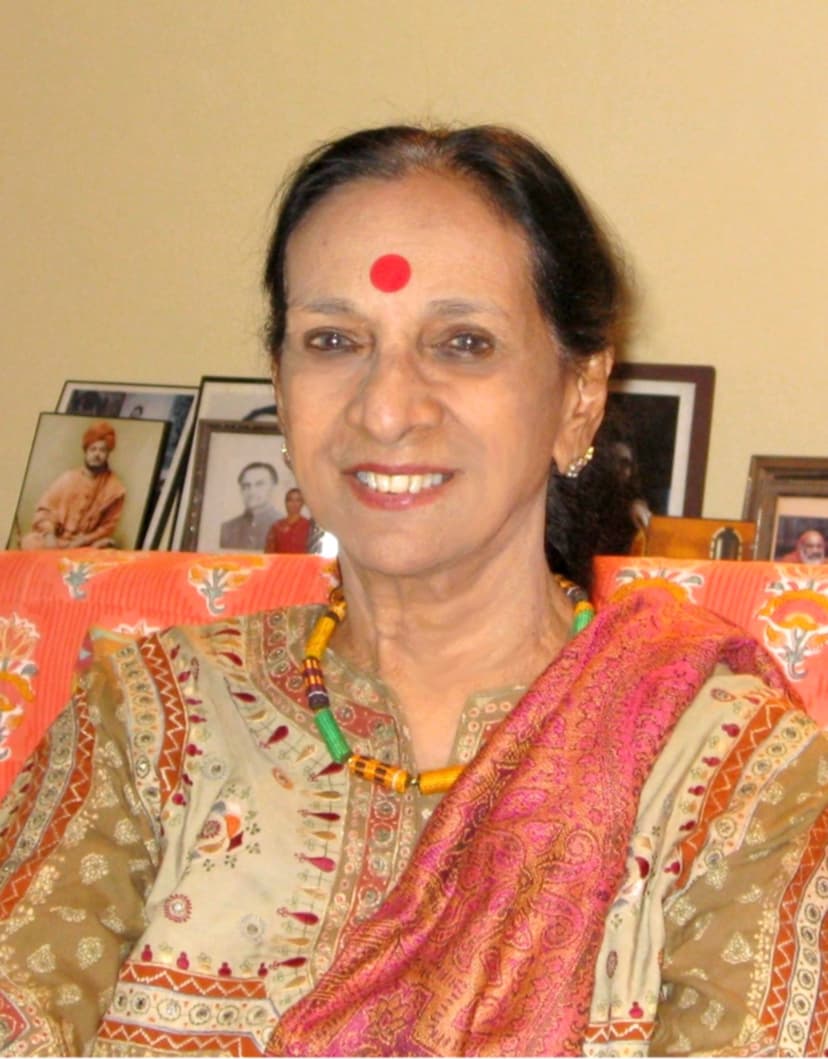
Mrinalini Sarabhai
Legend of Dance
Why They Matter
Sarabhai matters to dance because her career joined three kinds of work that are too often separated: mastery of inherited technique, authorship through choreography, and durable institution-building. Darpana gave her experiments a home, a teaching system, collaborators, and successors. Her socially
Watch
Mrinalini Sarabhai: The Artist and her Art
PSBT India
Substantial documentary treatment of Sarabhai's artistic ideas and use of dance for social commentary.
Biography
Mrinalini Sarabhai was born on 11 May 1918 in Madras (now Chennai) into a politically active South Indian family. Her mother, Ammu Swaminathan, became an independence activist and parliamentarian; her elder sister Lakshmi Sahgal later led the Rani of Jhansi Regiment of the Indian National Army. Her education combined unconventional exposure—schooling in Switzerland, study of Dalcroze eurhythmics, and time at Santiniketan under Rabindranath Tagore—with rigorous training in Indian classical dance. She studied Bharatanatyam with Muthukumaran Pillai and Meenakshi Sundaram Pillai, and trained in Kathakali with leading masters, grounding herself in both the precise solo and narrative vocabulary of Bharatanatyam and the dance-drama scale, character construction, and theatrical transformation of Kathakali.
After marrying scientist Vikram Sarabhai in 1942, she made Ahmedabad a base for sustained artistic work. Her early dance-drama *Manushya* reduced Kathakali's conventional costume and makeup to examine the human life cycle; a photograph records Jawaharlal Nehru with her after a New Delhi performance in 1948, marking her willingness to preserve trained vocabularies while altering theatrical framing. With Vikram, she established Darpana Academy of Performing Arts in Ahmedabad around 1948–49. The institution became a durable home for dance, theatre, music, and puppetry, and later an important platform for arts-based communication and social engagement. Sarabhai recruited teachers, trained generations of performers, developed dance dramas, and helped make classical forms part of Ahmedabad's public cultural life.
Her choreography repeatedly addressed contemporary ethical questions through classical and folk-derived theatrical means. Dance critic S. D. Desai documented works on dowry violence, social violence, environmental protection, and women questioning authority, alongside adaptations of Sanskrit and Tagore material. Her distinctive contribution lay not in inventing new step vocabularies but in reframing classical ones dramaturgically—using Bharatanatyam's line, rhythmic articulation, gesture, and abhinaya to carry argument as well as devotion, and stripping some of Kathakali's conventional spectacle to focus attention on human development and social conflict. Her choreography organized movement as public address: clear spatial projection, legible characterization, and thematic sequencing, while retaining the disciplined weight of the forms in which she trained.
National recognition followed across several decades. Sarabhai received the Padma Shri in 1965, the Sangeet Natak Akademi Award for creative dance and choreography in 1970, the Padma Bhushan in 1992, and was elected a Fellow of the Sangeet Natak Akademi in 1993. She continued writing, teaching, and guiding Darpana into old age. Sarabhai died in Ahmedabad on 21 January 2016 at age 97, leaving an institutional and choreographic legacy continued by artists including her daughter Mallika Sarabhai.
Career Highlights
Trained in Bharatanatyam and Kathakali with named gurus documented by India’s national performing-arts academy. Sangeet Natak Akademi profile
Performed the dance-drama Manushya in New Delhi; a Commons photograph records her with Jawaharlal Nehru after the performance. Commons file page
Co-founded Darpana Academy of Performing Arts in Ahmedabad with Vikram Sarabhai. Darpana
Received the Padma Shri for art. Padma Awards, Government of India
Received the Sangeet Natak Akademi Award in creative dance/choreography. Sangeet Natak Akademi dance roster
Received the Padma Bhushan for art. Padma Awards, Government of India
Was elected a Fellow of the Sangeet Natak Akademi. Sangeet Natak Akademi 2015–16 annual report
The documentary Mrinalini Sarabhai: The Artist and Her Art circulated as a substantial screen record of her artistic ideas and socially engaged choreography. PSBT India official watch page
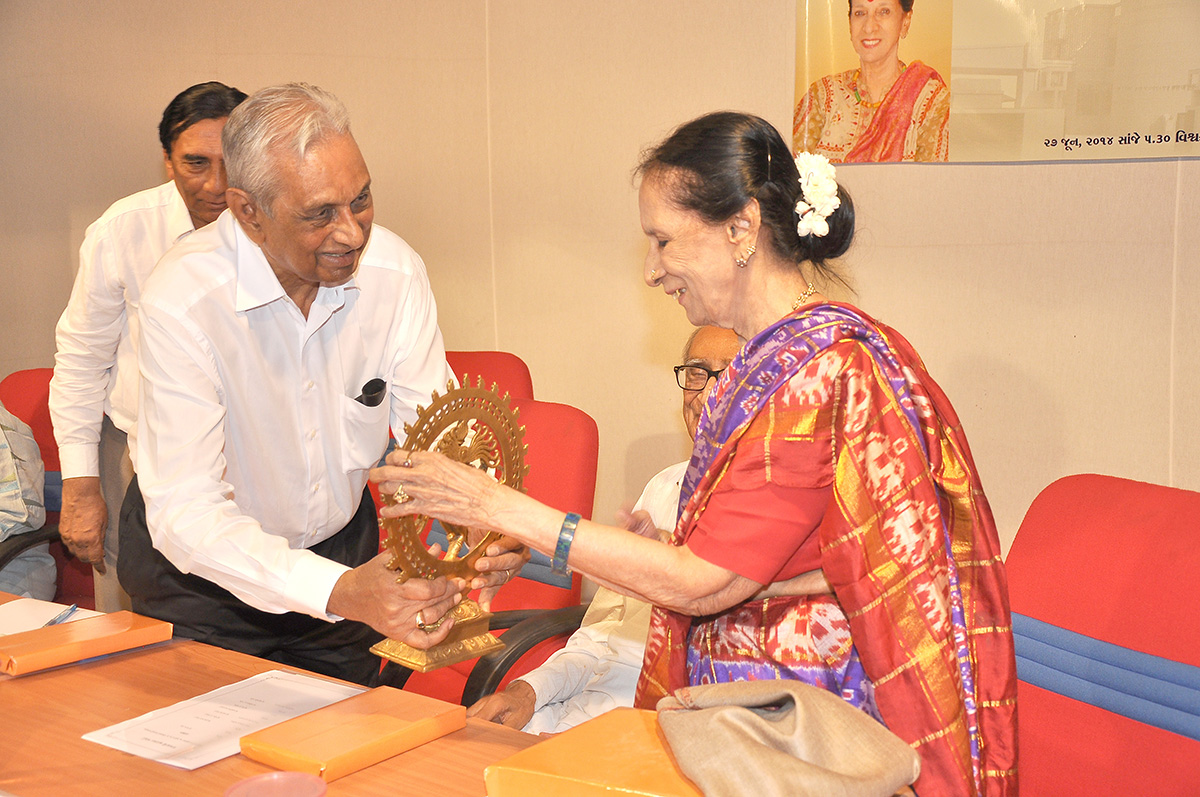
Received the Dhirubhai Thakar Savyasachi Saraswat Award; a licensed Commons photograph documents the ceremony. (Commons file page_savysachi_sarswat_award.jpg)) Commons file page
Died in Ahmedabad on 21 January at age 97. TIME
Gallery
Legacy & Impact
Sarabhai matters to dancers because her career joined three kinds of work that are too often separated: mastery of inherited technique, authorship through choreography, and durable institution-building. Darpana gave her experiments a home, a teaching system, collaborators, and successors. Her socially directed dance dramas also widened the range of subjects that classical Indian performance could address on a modern public stage without treating technique as disposable ornament. Her approach—using the grammar of classical forms to stage subjects often treated as outside a narrowly devotional repertoire—remains a model for choreographers navigating tradition and contemporary urgency.


Explore More Legends
Discover the dancers, teachers, choreographers, and cultural icons who shaped how the world moves.
Keep the thread going
Dance history, technique, and the occasional rabbit hole — in your inbox. Thoughtful, infrequent, unsubscribe anytime.
Free. No spam. One click to leave.