
Basil Twist
Legend of Dance
Why They Matter
Twist matters to dance because he treats materials as performers. His work demonstrates that choreography can reside in cloth suspended in water, a line under tension, a coordinated marionette, a moving screen, or a field of paper responding to air. By joining rigorous puppetry traditions to…
Watch
Puppetry Artist and Director Basil Twist — 2015 MacArthur Fellow
MacArthur Foundation
The MacArthur Foundation's official fellow page embeds this exact video and frames Twist's contributions to contemporary puppetry.
Biography
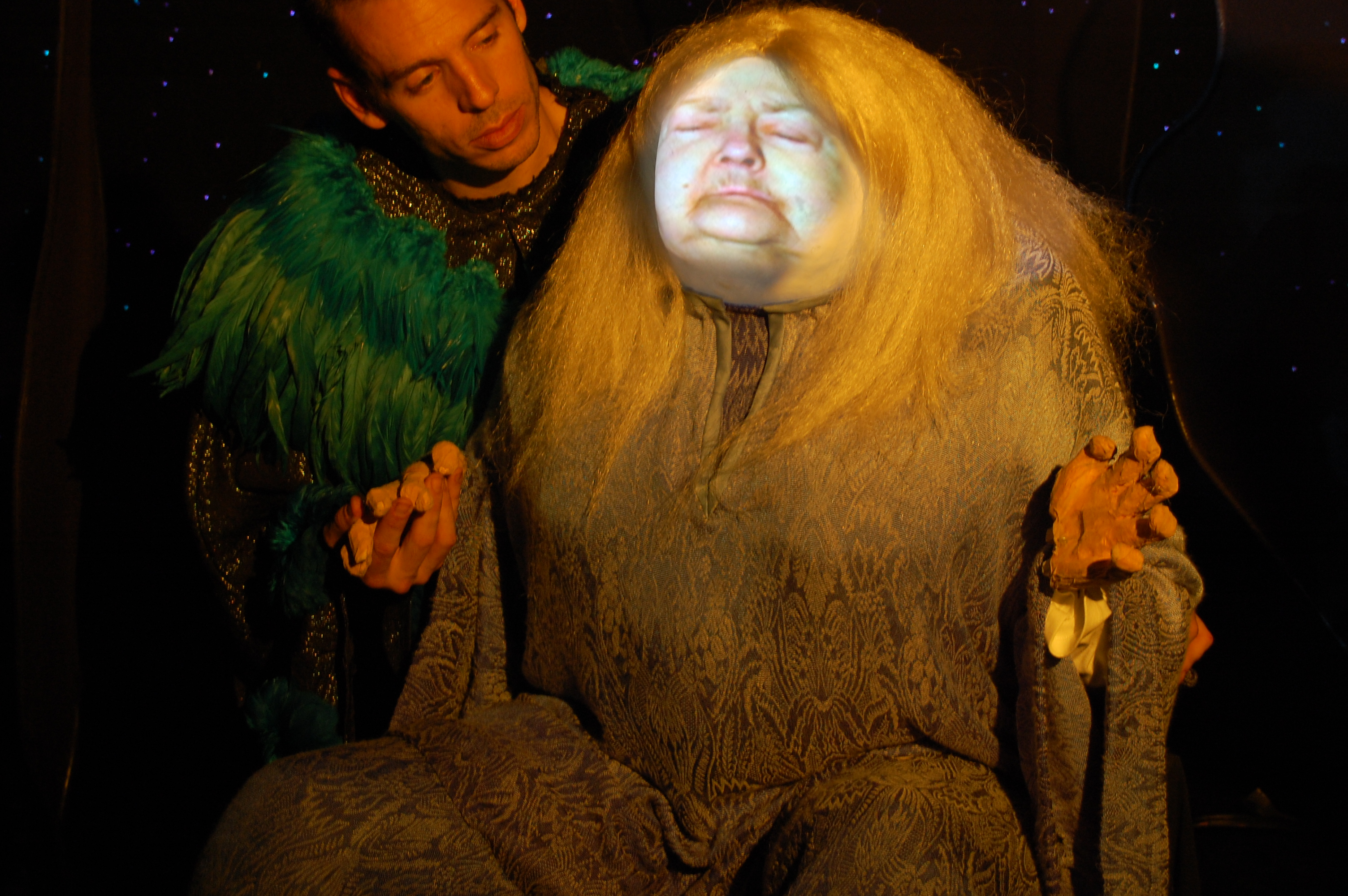
Basil Twist is an American puppeteer, designer, and theater artist who has transformed contemporary puppetry into a choreographic practice of materials, light, and abstraction. Born in San Francisco in 1969, Twist comes from a third-generation puppetry family. After training at Oberlin College and in France, he graduated in 1993 from the École Nationale Supérieure des Arts de la Marionnette in Charleville-Mézières, becoming its sole American graduate at that time.
Twist's breakthrough came with *Symphonie Fantastique* in 1998, staged inside a water tank set to Hector Berlioz's score. Rather than conventional characters, the work animated fabric, feathers, tinsel, cutouts, bubbles, and light to evoke human qualities while visualizing the orchestra—establishing abstraction as central to his practice. In 1999, he became director of the Dream Music Puppetry Program at HERE Arts Center, a role that combined his own creative work with mentorship of emerging puppet artists.
Throughout the 2000s, Twist's range widened across intimate downtown theater and major opera, ballet, and orchestral stages. *Petrushka* used articulated figures to sharpen the ballet's tragedy; *Dogugaeshi* transformed a Japanese screen-changing tradition into a meditation on space and disappearance; and *Arias with a Twist*, created with Joey Arias, merged cabaret performance with multiple puppet scales and scenic transformation. He collaborated with companies including Pilobolus and the Dutch National Ballet.
In *The Rite of Spring* (2013), Twist returned to near-abstraction, answering Stravinsky through silk, paper, smoke, projection, and a single dancer. The MacArthur Foundation named him a fellow in 2015, recognizing how his experiments crossed animate/inanimate and abstract/figurative boundaries while establishing puppetry as integral to contemporary theater, dance, and music. More recently, he designed and directed puppetry for the Royal Shakespeare Company's stage adaptation of *My Neighbour Totoro*, continuing a career-long balance in which exacting craft serves both narrative creatures and nonfigurative movement.
Career Highlights
Graduated from the École Nationale Supérieure des Arts de la Marionnette in Charleville-Mézières. MacArthur Foundation
Premiered the underwater abstract work Symphonie Fantastique, his best-known early production. MacArthur Foundation
Began serving as director of HERE Arts Center's Dream Music Puppetry Program. MacArthur Foundation
Created Petrushka, using life-like puppets and visible manipulation to reframe the tragic ballet narrative. MacArthur Foundation
Created Dogugaeshi, drawing on Japanese sliding-screen traditions and live shamisen performance. official production archive
Co-created and directed Arias with a Twist with performer Joey Arias. official site
Premiered The Rite of Spring, an abstract material response to Stravinsky incorporating one dancer. MacArthur Foundation
Received a MacArthur Fellowship in theatrical arts. MacArthur Foundation
Led puppetry for the Royal Shakespeare Company's stage adaptation of My Neighbour Totoro. official site
Legacy & Impact
Twist matters to dancers and choreographers because he demonstrates that choreography exists in materials themselves—in the weight of water, the tension of strings, the instability of suspended fabric, the rhythm of moving screens. By joining rigorous puppetry traditions to orchestral form, ballet, opera, and experimental theater, he has expanded both the technical vocabulary and critical standing of puppetry while mentoring a generation of artists through Dream Music. His work proves that the puppet stage is a choreographic stage.


Explore More Legends
Discover the dancers, teachers, choreographers, and cultural icons who shaped how the world moves.
Keep the thread going
Dance history, technique, and the occasional rabbit hole — in your inbox. Thoughtful, infrequent, unsubscribe anytime.
Free. No spam. One click to leave.