Bebe Miller
Legend of Dance
Why They Matter
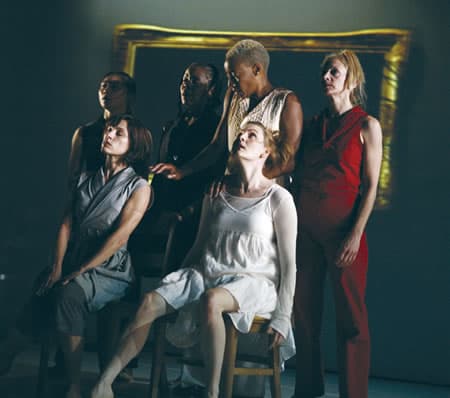
Miller matters because she expanded what American contemporary dance could hold without sacrificing bodily specificity. Her work has made collaboration, Black artistic agency, interpersonal attention, and choreographic process central subjects rather than background conditions. Through more than fif
Biography
Bebe Miller is an American choreographer whose ensemble-centered work treats the moving body as a record of thought, relationship, experience, and beauty. Born September 20, 1950, in Brooklyn, Miller began studying dance in childhood and developed an early commitment to improvisation, composition, and the expressive possibilities of ordinary human behavior. She earned an MA in Dance from Ohio State University in 1975 and first presented her own choreography at New York's Dance Theater Workshop in 1978, placing herself within the experimental downtown context while developing a voice that held postmodern inquiry, Black experience, theatrical intelligence, and intensely physical dancing in the same frame.
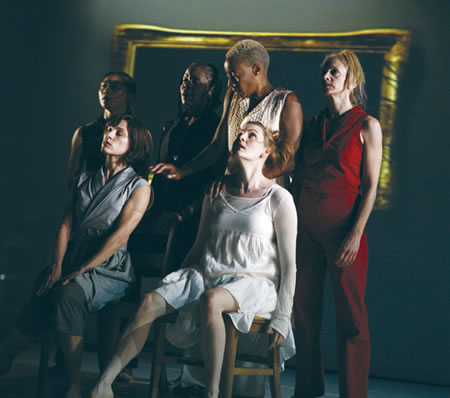
In 1985, Miller established the Bebe Miller Company to support her search for a physical language of the human condition. The company has since presented more than fifty works and is distinguished by deep collaboration: dancers, composers, writers, designers, filmmakers, and digital artists participate in how a work is discovered. Her choreography has been commissioned and presented by BAM, the Joyce Theater, Jacob's Pillow, the Walker Art Center, and the Wexner Center for the Arts, while other companies including Dayton Contemporary Dance Company, Philadanco, Oregon Ballet Theatre, Boston Ballet, and Phoenix Dance Company have performed her work.
Miller's recognition includes four New York Dance and Performance "Bessie" Awards, a Guggenheim Fellowship, a Wexner Residency Award, designation as a USA Ford Fellow, the David White Award, and selection as one of the inaugural 2012 Doris Duke Artists. These honors recognize both individual works and a sustained practice whose influence reaches performance, teaching, and institutional thinking about dance. In 2000, Miller joined Ohio State University as faculty, serving as a Distinguished Professor through 2016 and later becoming Professor Emerita.
Throughout her career, Miller has extended choreography beyond the stage into text, film, and digital archives. Her teaching and mentorship are joined by a broader commitment to making choreographic knowledge shareable. Projects around documentation and archiving ask what remains of a dance after performance and how process, memory, and dancers' lived knowledge can be represented without pretending that an archive is the work itself. Her later work continues to cross performance and media, with revivals and reimaginings keeping earlier material in active conversation with new bodies and circumstances—as in Danspace Project's 2025 presentation of *Vespers, Reimagined*, which framed the work as an encounter with an earlier Miller dance rather than a reconstruction. Miller's continuing practice treats history as something embodied, revised, and collectively carried.
Career Highlights
Born September 20 in New York City; PBS specifies Brooklyn. University of Washington · PBS/Thirteen University of Washington
Earned an MA in Dance from Ohio State University. Ohio State University Ohio State University
First presented her choreography at Dance Theater Workshop in New York. Ohio State University Ohio State University
Formed Bebe Miller Company. Bebe Miller Company Bebe Miller Company
Joined Ohio State's dance faculty, beginning a Distinguished Professor tenure that continued through 2016. Ohio State University Ohio State University
Received an honorary doctorate from Ursinus College. United States Artists United States Artists
Named a United States Artists Ford Fellow. United States Artists United States Artists
Selected for the inaugural class of Doris Duke Artists. Doris Duke Foundation Doris Duke Foundation
Received the David White Award from New York Live Arts. United States Artists United States Artists
Honored by Movement Research. United States Artists United States Artists
Concluded her Ohio State Distinguished Professor tenure and became Professor Emerita. Ohio State University Ohio State University
Vespers, Reimagined was presented in Danspace Project's Platform 2025, extending an earlier work through a contemporary encounter. Danspace Project Danspace Project
Gallery
Legacy & Impact
Miller expanded what American contemporary dance could hold without sacrificing bodily specificity. Her work made collaboration, Black artistic agency, interpersonal attention, and choreographic process central subjects rather than background conditions. Through more than fifty works, extensive commissioning, university teaching, mentorship, and experiments in digital documentation, she influenced how dances are made and how their knowledge is transmitted. Her legacy lives not only in a repertory but in communities of dancers and thinkers trained to notice how movement carries history, emotion, and social relation.


Explore More Legends
Discover the dancers, teachers, choreographers, and cultural icons who shaped how the world moves.
Keep the thread going
Dance history, technique, and the occasional rabbit hole — in your inbox. Thoughtful, infrequent, unsubscribe anytime.
Free. No spam. One click to leave.