Performer · Stage Icon · Social Dance Icon
Carlos Gavito
Poet of Argentine Tango
“The secret of tango is in that moment of improvisation that happens between step and step.”
Why They Matter
He showed that tango's power lives in stillness and intention, not just in complex figures, influencing a generation of social tango dancers.
Styles Carlos Gavito shaped
Each one links to the style’s own page — its origins, music, tempo and video.
Biography
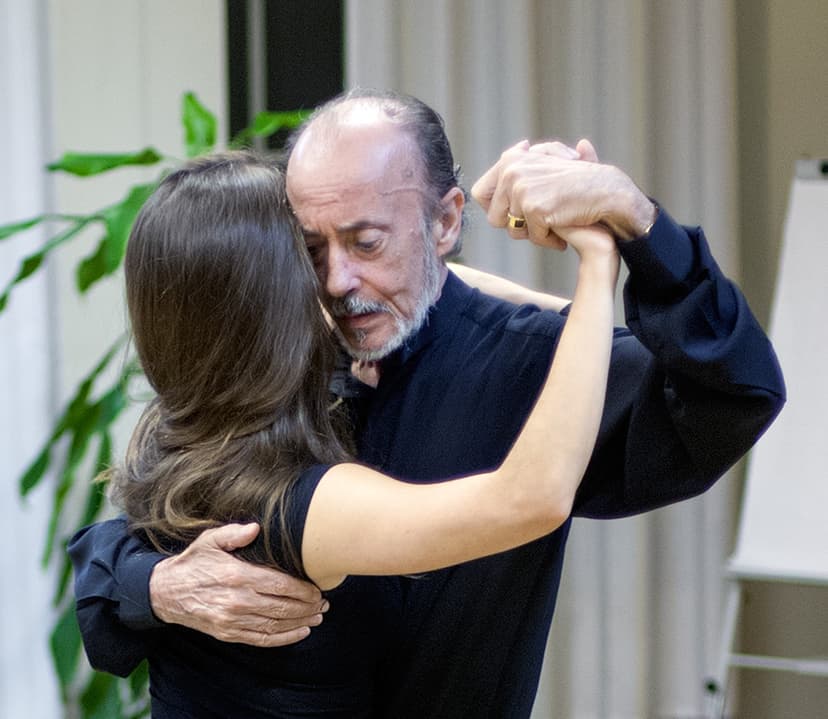
Carlos Eduardo Gavito was an Argentine tango dancer, choreographer and teacher whose restrained stage presence and emphasis on close-embrace partnership became influential in international tango during the late twentieth century. Born 27 April 1942 in Avellaneda, Buenos Aires Province, Gavito grew up in the social tango world that formed the foundation of his later artistry. He began his professional career in 1965 on the Argentine television program *Así canta Buenos Aires*, and over the following decades built a touring practice across South America, Europe and the United States that combined stage experience with social-floor knowledge.
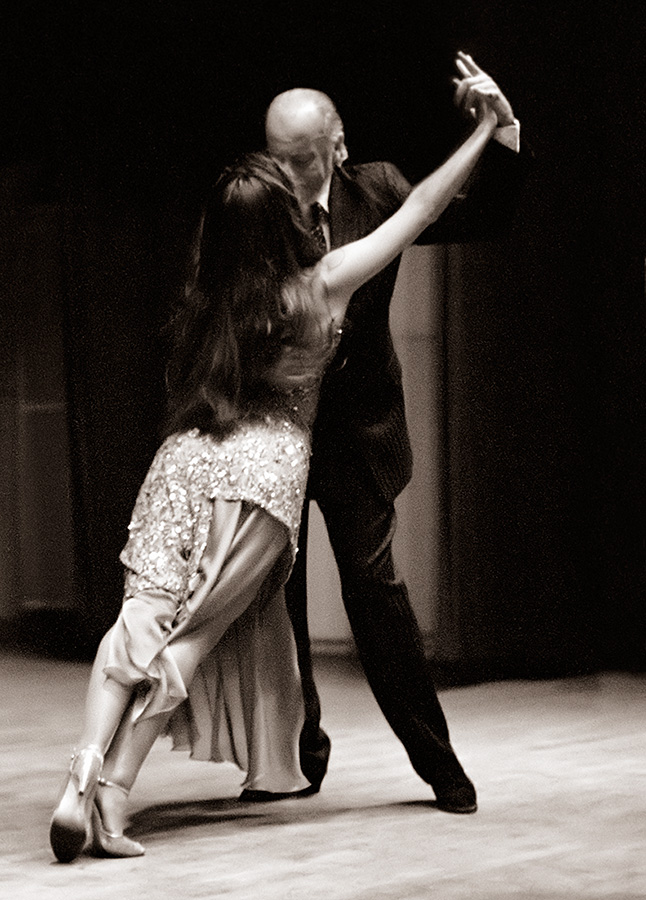
During the 1980s and 1990s tango revival, Gavito became increasingly visible as a performer and teacher. His most consequential stage work came through Luis Bravo's *Forever Tango*, where he danced and choreographed alongside Marcela Durán. The pair performed together for roughly a decade, including the numbers "S.V.P." and "A Evaristo Carriego." Their 1998 appearance with the *Forever Tango* orchestra at Boston Symphony Hall—where their sustained suspensions held the audience as powerfully as traveling sequences—exemplifies how Gavito's work operated. When *Forever Tango* opened on Broadway at the Walter Kerr Theatre on 19 June 1997, Gavito was credited as both dancer and one of the production's choreographers alongside an ensemble that included Durán. The show ran 332 performances and four previews before closing on 2 August 1998, earning collective choreography nominations at the Tony Awards and Drama Desk Awards.
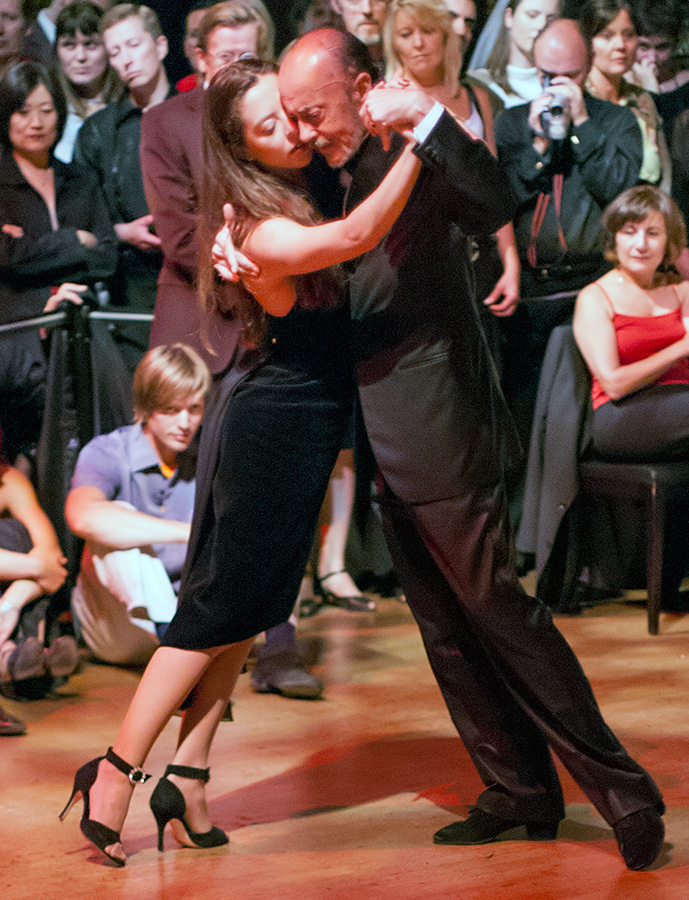
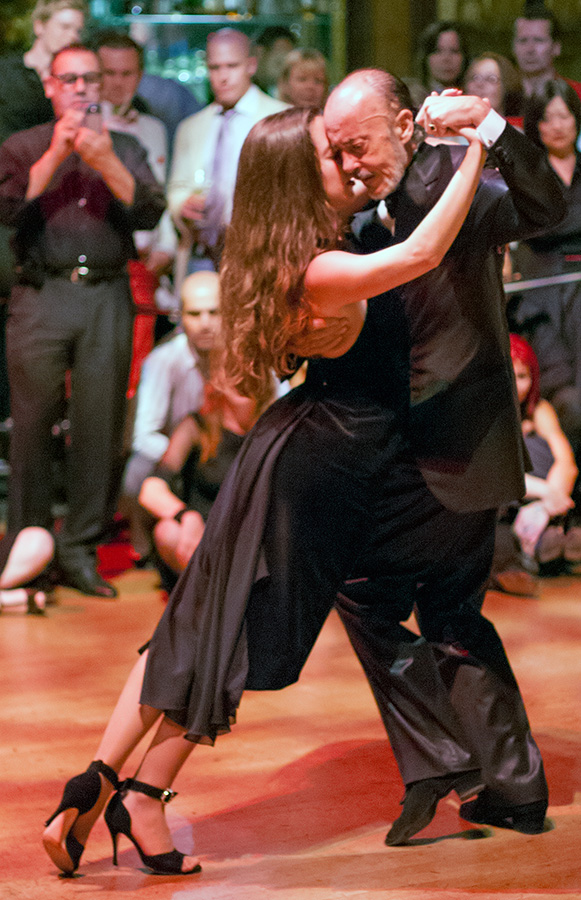
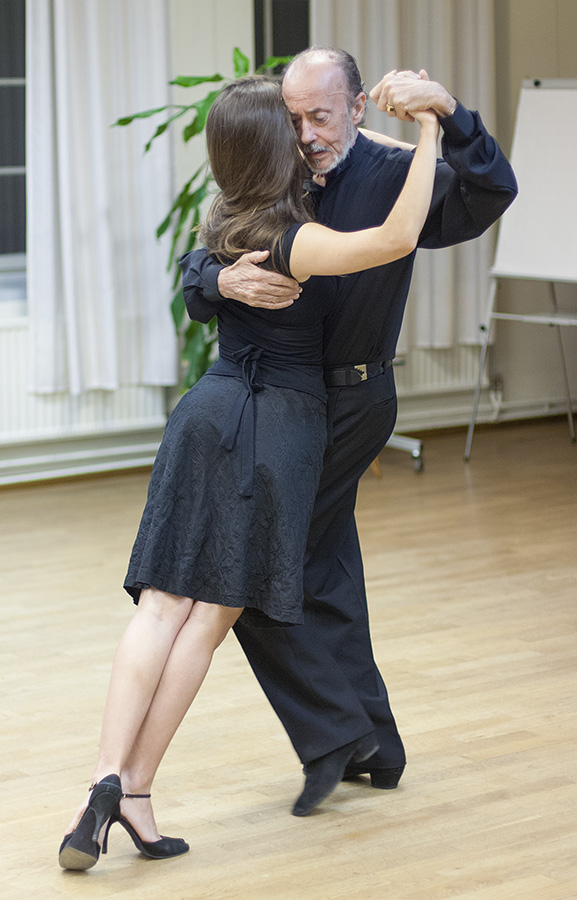
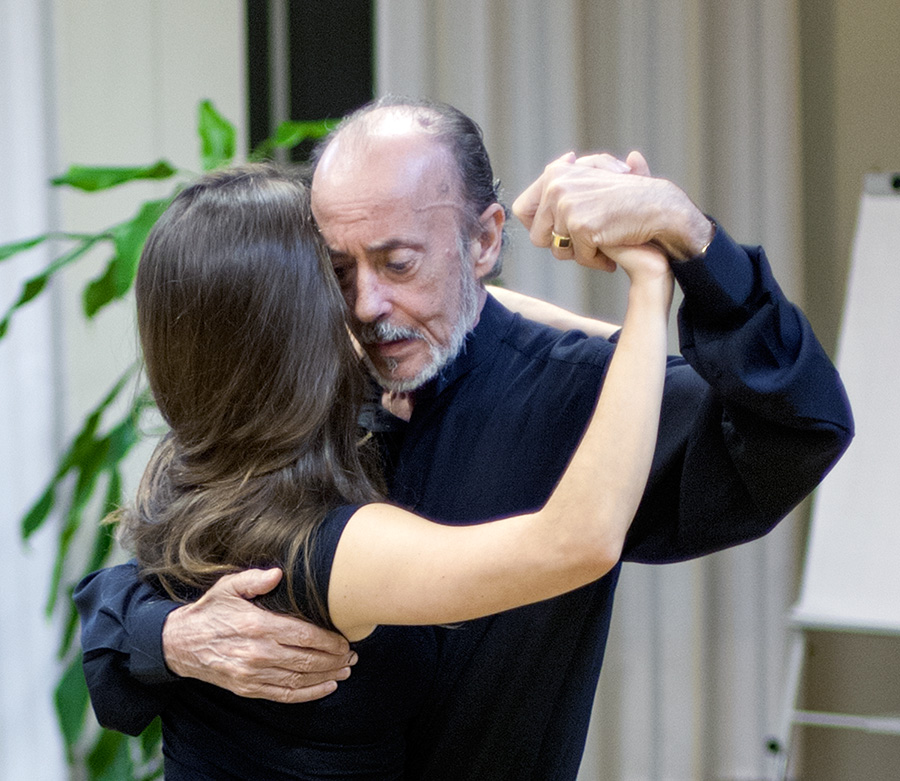
In his later years, Gavito continued to teach and demonstrate internationally, often with María Plazaola. Photographs taken during 2003 and 2004 Stockholm workshops document the pair in both performance and pedagogical settings: close torso connection, shared forward intention, economical steps, and a walk shaped by timing rather than ornament. An interview recorded in Argentina in November 2004 with fellow tango artist Miguel Ángel Zotto provides late-career testimony to his artistic approach. Gavito died in Buenos Aires on 1 July 2005. His reputation endured through recordings, workshop transmission by students, *Forever Tango* footage, and accounts from his partners and colleagues. A posthumous biography by Ricardo Plazaola, *I Wanted to Dance: Carlos Gavito, Life, Passion and Tango*, further shaped his public legacy.
Career Highlights
Began his professional career on the Argentine television program Así canta Buenos Aires. Todo Tango
Emerged as a widely touring figure during Argentine tango's international stage and teaching revival. Todo Tango
Marcela Durán joined Forever Tango in San Francisco; her presenter biography places the start of a roughly ten-year Gavito partnership in this company period. Marcela Durán presenter biography
Opened on Broadway in Forever Tango as a credited dancer and one of the production's choreographers. IBDB production record
Shared in Forever Tango's collective Tony and Drama Desk choreography nominations; the Broadway engagement ultimately ran 332 performances and four previews. IBDB production record
Performed “A Evaristo Carriego” with Marcela Durán and the Forever Tango orchestra at Boston Symphony Hall for a Boston Pops television program. Forever Tango official video
Appeared with Marcela Durán at the CITA tango gathering in Buenos Aires; the surviving exact-URL archive requires uploader-rights review. archival video
Taught and demonstrated close-embrace tango with María Plazaola at Medborgarhuset in Alvik, Stockholm. Commons file page
Gave Stockholm workshops and a demonstration with Plazaola, documented in a five-image CC BY-SA series. Commons category
Recorded a two-part late-career interview with Miguel Ángel Zotto in Argentina. part 1
Died in Buenos Aires on 1 July. Todo Tango
A decade after his death, Ricardo Plazaola's book-length biography appeared in Spanish; an English translation is now marketed by Abrazos Books. Abrazos Books
Gallery
Legacy & Impact
Gavito matters because he demonstrated that restraint could command theatrical attention. At a time when international tango often relied on velocity and spectacle, his most remembered work showed how a walk, a weight change, a suspension and the couple's shared axis could sustain focus. This influence extended from Broadway audiences to workshop communities worldwide. His legacy is best understood as interpretive and pedagogical: he gave exceptional visibility to close-embrace possibilities already embedded in Argentine social tango, and he did so through sustained collaborations—notably with Marcela Durán and María Plazaola—rather than as a solitary inventor. The continuing circulation of official *Forever Tango* footage and the freely licensed Stockholm photographs allows dancers and students to analyze that contribution directly.


Explore More Legends
Discover the dancers, teachers, choreographers, and cultural icons who shaped how the world moves.
Keep the thread going
Dance history, technique, and the occasional rabbit hole — in your inbox. Thoughtful, infrequent, unsubscribe anytime.
Free. No spam. One click to leave.