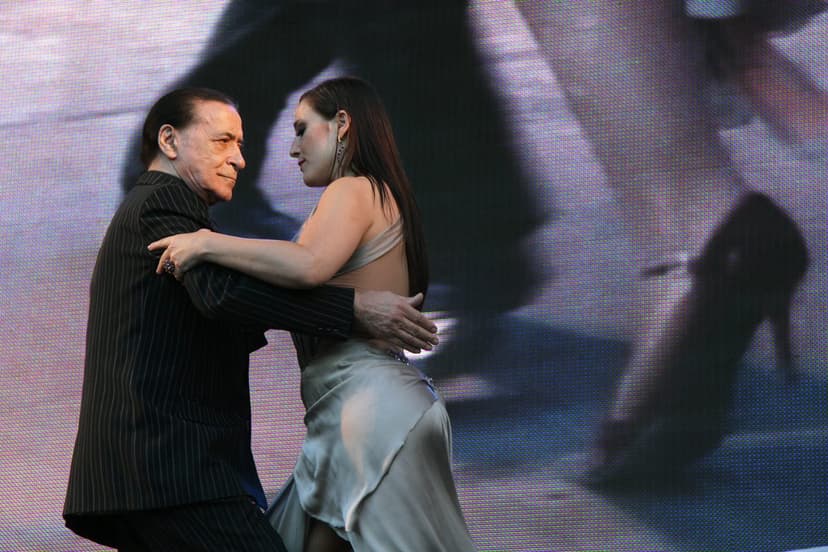
Performer · Stage Icon · Popularizer · Partnership Icon
Juan Carlos Copes
Tango's Stage Pioneer
Why They Matter
He was instrumental in the worldwide tango revival of the 1980s, proving that social tango could captivate theater audiences.
Styles Juan Carlos Copes shaped
Each one links to the style’s own page — its origins, music, tempo and video.
Watch
Our Last Tango (Official Trailer AU)
Sharmill Films
Rights-holder trailer introduces the Copes–Nieves story while making the documentary's reconstruction method visible.
Celebramos a Juan Carlos Copes
Festivales BA
Buenos Aires festival tribute places Copes within the city's tango institutions and performance memory.
Homenaje a Juan Carlos Copes: entrevista con Johana Copes
Tango BA Festival y Mundial
Johana Copes discusses her father's legacy and offers first-person lineage context that can be clearly attributed.
Final Mundial de Tango 2021 — homenaje escénico
Tango BA Festival y Mundial
Shows how a major Buenos Aires institution memorialized Copes through a contemporary ensemble performance.
Copes Tango Show — Programa 14, segunda temporada
Copes Tango Show
A first-party program centered on Copes's anniversary and continuing legacy, hosted within the family-led project.
Copes Tango Show — Programa 2
Copes Tango Show
Long-form legacy programming offers context beyond short performance clips and credits the ongoing Copes project.
Biography
Juan Carlos Copes was born on 31 May 1931 in the Mataderos neighborhood of Buenos Aires and grew up in Villa Pueyrredón, learning tango not through formal training but through the city's neighborhood clubs and milongas. That foundation in social dance remained the anchor of everything he later created for the stage: his theatrical vocabulary stayed rooted in the walk, the pause, the turn, the embrace and the improvisatory logic of the floor, even when enlarged for an audience seated in a theatre.
As a young dancer he formed a partnership with María Nieves Rego, whom he met in the Buenos Aires dance world. Nieves was not his follower but his co-creator—her rhythmic attack, speed and dramatic independence complemented his intensely framed, deliberate lead and choreographic architecture. Together they turned a social partnership into an internationally significant performing one, establishing themselves through competitive success and professional engagements in Buenos Aires theatres and nightclubs throughout the 1950s.
Copes made his first documented Broadway appearance in *New Faces of 1962*, which opened at the Alvin Theatre on 1 February 1962. But his transformative international platform came with *Tango Argentino*, conceived and directed by Claudio Segovia and Héctor Orezzoli. The production premiered in Paris in 1983 and opened on Broadway on 9 October 1985, gathering major dancers, singers and musicians into an ensemble portrait of tango history. Copes served as choreographer while Segovia and Orezzoli directed; the show's impact came from the combined authority of the entire company, not from any single creator.
During the following decades Copes continued to work across theatre, television and film. He appeared in Raúl de la Torre's *Funes, un gran amor* (1993) and in Carlos Saura's *Tango* (1998), where his stage presence connected an older performance lineage with a younger cast. He returned to Broadway as a guest artist in the 1999 revival of *Tango Argentino*, performing alongside his daughter Johana Copes, who was credited as both dancer and choreographer. These later engagements underscore that his legacy was institutional as well as personal: he worked to make choreography a reproducible professional practice rather than a sequence known only to one couple.
In 2003, Buenos Aires designated Copes a Ciudadano Ilustre under Law 1,088 for his contributions as dancer and choreographer. Later public performances, including appearances with Johana at major Buenos Aires tango events in 2011, showed an artist still commanding the stage through phrasing, stillness, weight and relationship rather than through amplitude. German Kral's 2015 documentary *Our Last Tango* revisited the Copes–Nieves partnership through interviews and archival material, offering a retrospective on a relationship that had spanned decades.
Copes died at age 89 on 15/16 January 2021 in Florida, Buenos Aires Province, after a period of illness. His death does not simplify his legacy: he was at once a social dancer formed in neighborhood culture, an ambitious theatrical organizer, a choreographer working through collaboration, a teacher and a public symbol of Argentine tango's international reach.
Career Highlights
Copes and María Nieves were established as a competitive and professional tango couple in Buenos Aires; sources disagree on whether their pivotal Luna Park win occurred in 1951 or 1955, so the year should not be used without a note. Buenos Aires neighborhood history and Todo Tango. Buenos Aires neighborhood history
He made a documented Broadway appearance in New Faces of 1962 at the Alvin Theatre. IBDB. IBDB
Secondary biographies associate Copes with choreography for Piazzolla and Ferrer’s María de Buenos Aires; retain as a qualified credit pending a primary program. Todo Tango. Todo Tango
Tango Argentino, conceived and directed by Claudio Segovia and Héctor Orezzoli and choreographed by Copes, premiered in Paris. Vancouver Ballet Society. Vancouver Ballet Society
Tango Argentino opened on Broadway with Copes and Nieves in its company; IBDB credits the full creative team and ensemble. IBDB. IBDB
Copes appeared in Raúl de la Torre’s film Funes, un gran amor. Todo Tango. Todo Tango
He appeared in Carlos Saura’s film Tango, extending his stage lineage into a major international dance film. IMDb title record. IMDb title record
He returned to Broadway as a guest artist in the revival of Tango Argentino, alongside Johana Copes, who was credited as dancer and choreographer. IBDB. IBDB
Buenos Aires designated him a Ciudadano Ilustre under Law 1,088 for his contribution as a dancer and choreographer. CEDOM official law text. CEDOM official law text
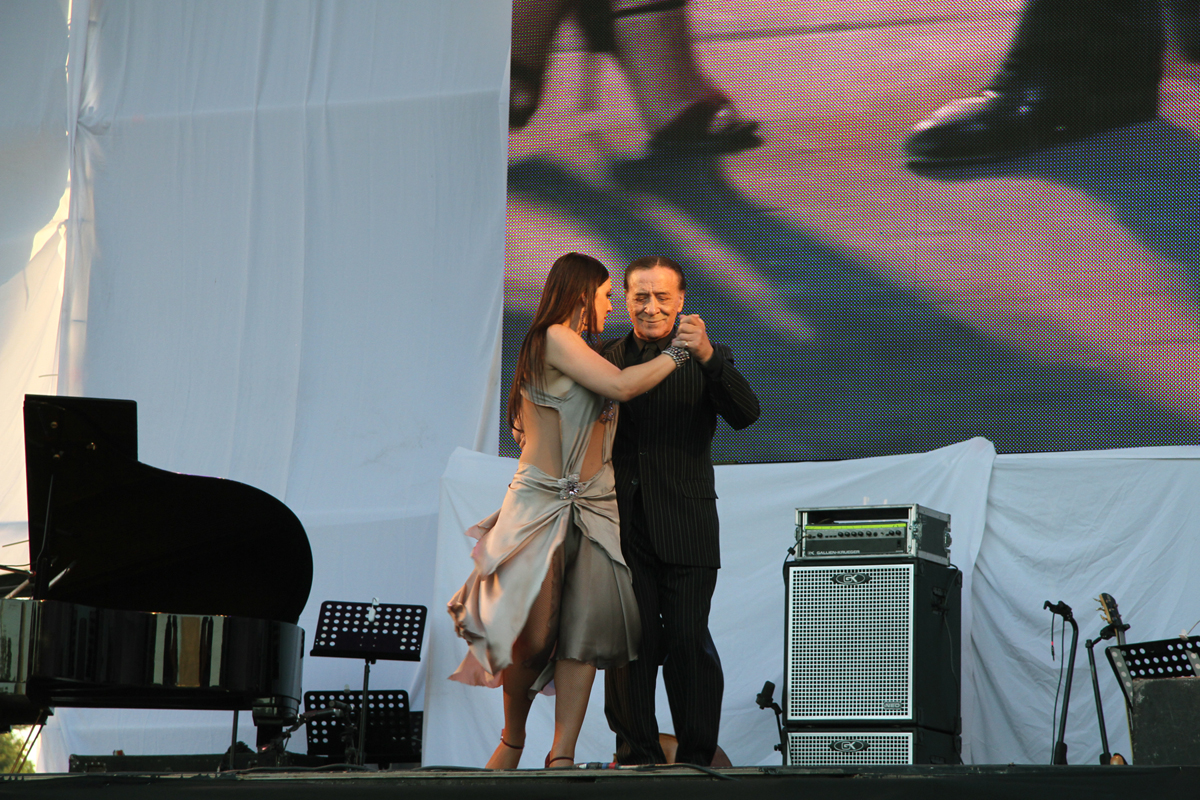
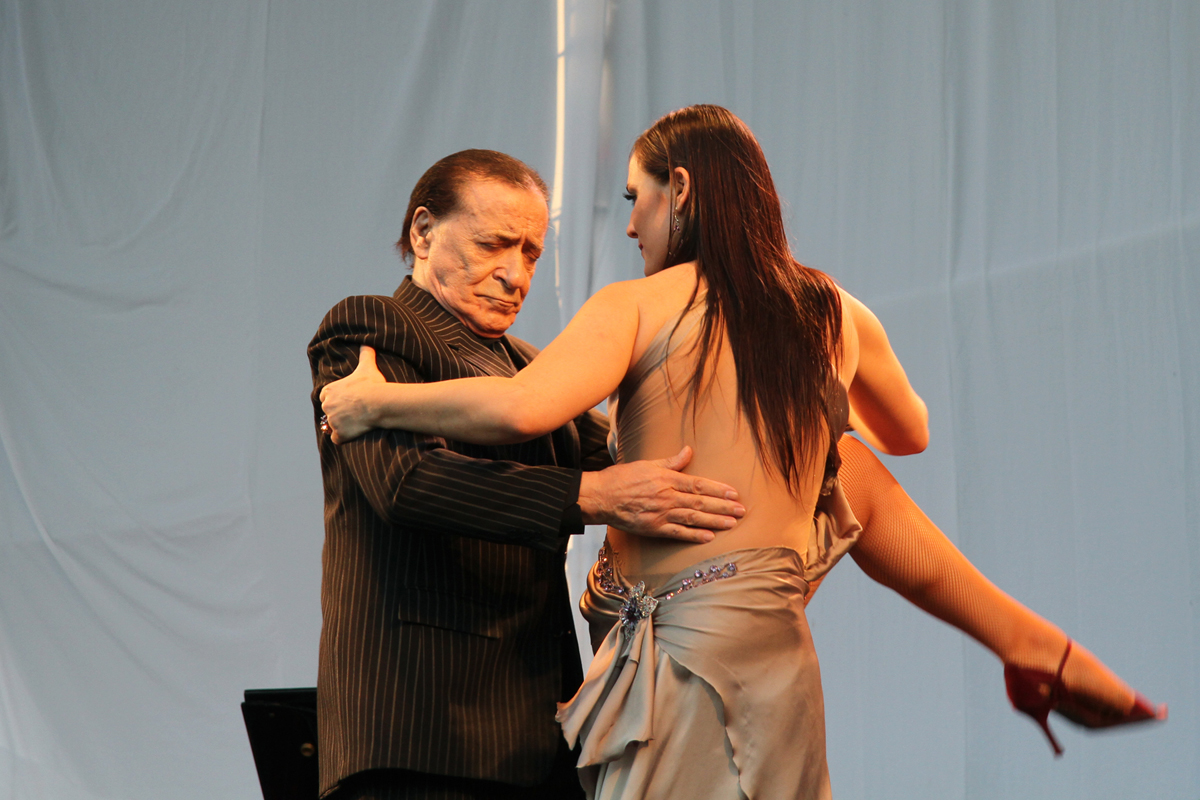
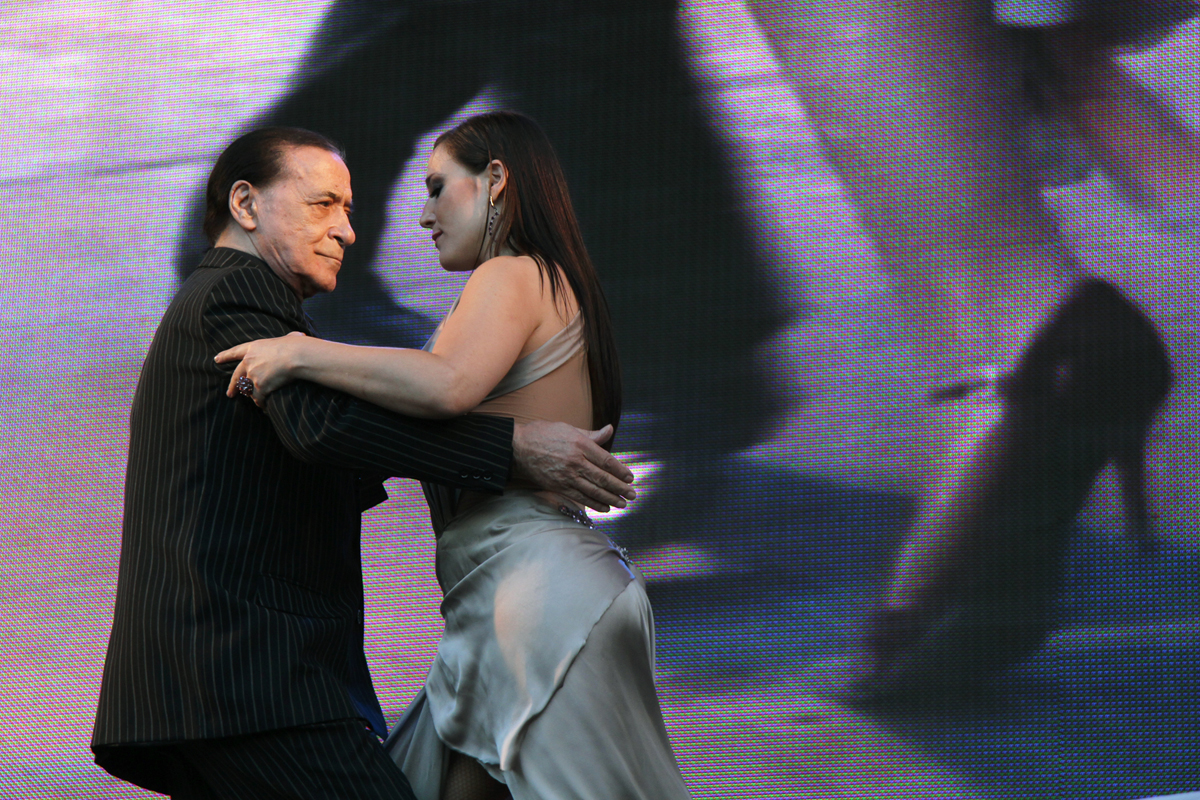
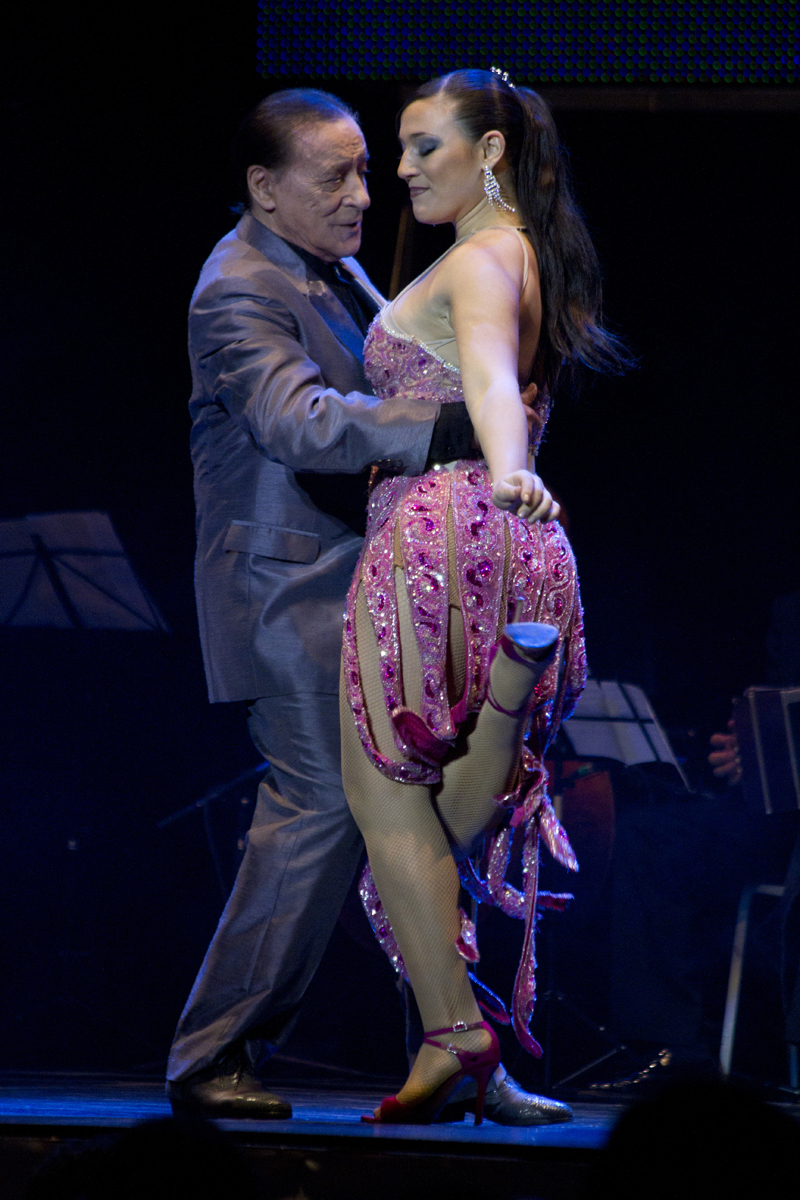
He performed with Johana at major Buenos Aires tango events; four CC BY photographs in this package document his late-career stage presence. Wikimedia Commons. Wikimedia Commons
German Kral’s Our Last Tango presented the Copes–Nieves history through interviews, archives and staged reconstructions. Official trailer. Official trailer
Copes died aged 89; his family’s announcement emphasized his permanent place in tango-dance history. AP. AP
Juan Carlos Copes on screen
Films and television featuring Juan Carlos Copes, with the sequences we have indexed.
 Our Last Tango (2015)2 sequences indexedCopes and Nieves archival stage tangoCopes and Nieves's two-square-metre tabletop tango · chor. Juan Carlos Copes
 Tango (1998)2 sequences indexedRecuerdo — Juan Carlos and Johana CopesImmigration suite — La Cumparsita tango
Poster artwork from TMDB.
 This site uses TMDB and the TMDB APIs but is not endorsed, certified, or otherwise approved by TMDB.
Legacy & Impact
Copes matters because he helped establish Argentine tango as a sustained theatrical language without severing it from the social dance's core. His career demonstrates how a walk, embrace, pause or turn can acquire scale through musical timing, spatial design and character rather than through ornament alone. Yet his legacy remains inseparable from María Nieves, Johana Copes, Claudio Segovia, Héctor Orezzoli and the many distinctive couples of *Tango Argentino*. The strongest historical claim is not that Copes single-handedly invented stage tango, but that he was one of its most consequential organizers, choreographers and performers, and a key agent in its international circulation.


Explore More Legends
Discover the dancers, teachers, choreographers, and cultural icons who shaped how the world moves.
Keep the thread going
Dance history, technique, and the occasional rabbit hole — in your inbox. Thoughtful, infrequent, unsubscribe anytime.
Free. No spam. One click to leave.