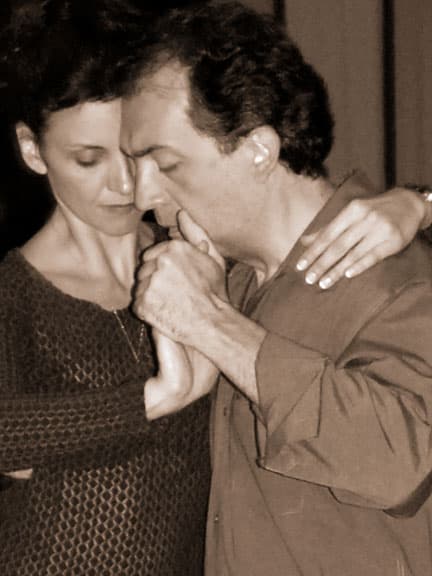
Innovator · Teacher · Performer
Gustavo Naveira
Tango Nuevo Pioneer
Why They Matter
He applied analytical thinking to tango improvisation, revealing the underlying logic of the dance and enabling new movements to be discovered rather than just inherited.
Known For
Styles Gustavo Naveira shaped
Each one links to the style’s own page — its origins, music, tempo and video.
Watch
ATS DOCUMENTALES / El Método Naveira
The Argentine Tango Society
First-party institutional documentary centered on Naveira and Giselle Anne's teaching history.
STMF The Naveira Method
The Argentine Tango Society / Stowe Tango Music Festival
A rights-holder/presenter version useful for an excerpt or trailer placement.
Gustavo Naveira and Giselle Anne – Fueron tres años
030tango
Selected on the artists' official video page and useful for observing mature partnership and phrasing.
Gustavo Naveira and Giselle Anne – Trasnochando
030tango
Shows social-tango vocabulary and compact musical interpretation in a festival setting.
Gustavo Naveira and Giselle Anne – Una fija
030tango
Useful for separating dance vocabulary from musical rhythm and showing a faster social form.
Gustavo Naveira & Giselle Anne - Philadelphia Tango Festival
Philadelphia International Tango Festival
Presenter-identified festival performance to Edgardo Donato's 'Amando en Silencio'.
Biography
Gustavo Naveira was born on 12 August 1960 in Comodoro Rivadavia, in Argentina's Patagonian province of Chubut. His family returned to Buenos Aires when he was one year old. Tango was already present in his household—his parents had met dancing—though his early musical training centered on guitar, including conservatory study. His sustained engagement with tango began around 1980–81 while he was studying economics at the University of Buenos Aires.
Naveira's dance education crossed several forms: Argentine folk dance, and shorter courses in classical, modern and Spanish dance. His first formal tango teachers were Rodolfo and Gloria Dinzel. He also learned from older social dancers including Pepito Avellaneda, Antonio Todaro, Virulazo and Gerardo Portalea. This lineage matters because the later analytical vocabulary grew not from outside social tango but from close study of inherited practices and exchanges with experienced milongueros.
By the early 1980s Naveira was teaching in a municipal course at Buenos Aires's Centro Cultural General San Martín. From 1987 to 1997 he organized a práctica at Cochabamba 444; from 1987 to 1995 he ran the weekly milonga Cuartito Azul. During the 1990s he worked with a research group examining tango movement in small structural units—how partners organize axes, steps, turns, directions and embrace distance—so dancers could understand a larger range of improvisational choices. The work was collective and iterative, involving partners, colleagues and students. What later histories often associated with "tango nuevo" Naveira himself treated as a description of tango's ongoing development rather than a fixed dance style.
Performance and choreography developed alongside teaching. With Olga Besio he founded and directed Senior Ballet. He choreographed Ricardo Monti's *Maratón* (directed by Jaime Kogan) for a Teatro Colón premiere in 1990, and choreographed Kogan's 1993 staging of Julio Cortázar's *Rayuela* at Teatro Payró. In 1997 Sally Potter featured him in *The Tango Lesson*, alongside Potter and Pablo Verón.
Naveira met French dancer and choreographer Giselle Anne at a festival in Sitges, Spain, in 1995. Their professional partnership was formally established in 1999. In that same year, working with Fabián Salas, Naveira helped create Cosmotango and the Congreso Internacional de Tango Argentino (CITA), though he withdrew from the organization after three years. In 2009 the book *Tango: A History of Obsession* published his essay "New Tango," in which he rejected reducing tango's evolution to an "open" versus "closed" embrace binary.
With Giselle Anne, Naveira developed a progressive pedagogy and intensive seminar format, taught internationally, created the multi-couple production *Tango Generations* (performed in versions from 2011 to 2013), and founded Boulder Tango Studio in Colorado in 2013. Together they organized the Boulder Tango Festival over ten editions from 2010 through 2019. In 2021 the Argentine Tango Society produced *The Naveira Method*, a documentary about their work. The durable contribution is a way of asking how improvised tango works, then turning those observations into teachable choices while keeping tradition, partnership and musical interpretation central.
Career Highlights
Began teaching tango in a municipal course at the Centro Cultural General San Martín in Buenos Aires. Official biography
Began the decade-long práctica at Cochabamba 444 and the weekly Cuartito Azul milonga. Official biography
Choreographed Ricardo Monti’s Maratón under director Jaime Kogan for a Teatro Colón premiere. Official biography
Choreographed Kogan’s staging of Julio Cortázar’s Rayuela at Teatro Payró. Official biography
Met Giselle Anne at a tango festival in Sitges; their long-term dance and teaching partnership began. Giselle Anne biography
Appeared as Gustavo in Sally Potter’s The Tango Lesson. British Film Institute
Co-created Cosmotango and CITA with Fabián Salas in Buenos Aires. CITA history
Naveira and Giselle Anne began disseminating their methodology through intensive seminar and progressive-program formats. Official partnership page
Published “New Tango,” an essay arguing that tango nuevo describes continuing development rather than one fixed style. Bibliographic record and context
Began a ten-edition run of the Boulder Tango Festival, organized with Giselle Anne through 2019. Official festival archive
Co-founded Boulder Tango Studio with Giselle Anne. Official partnership page
Became the subject, with Giselle Anne, of the Argentine Tango Society documentary The Naveira Method. Official partnership page
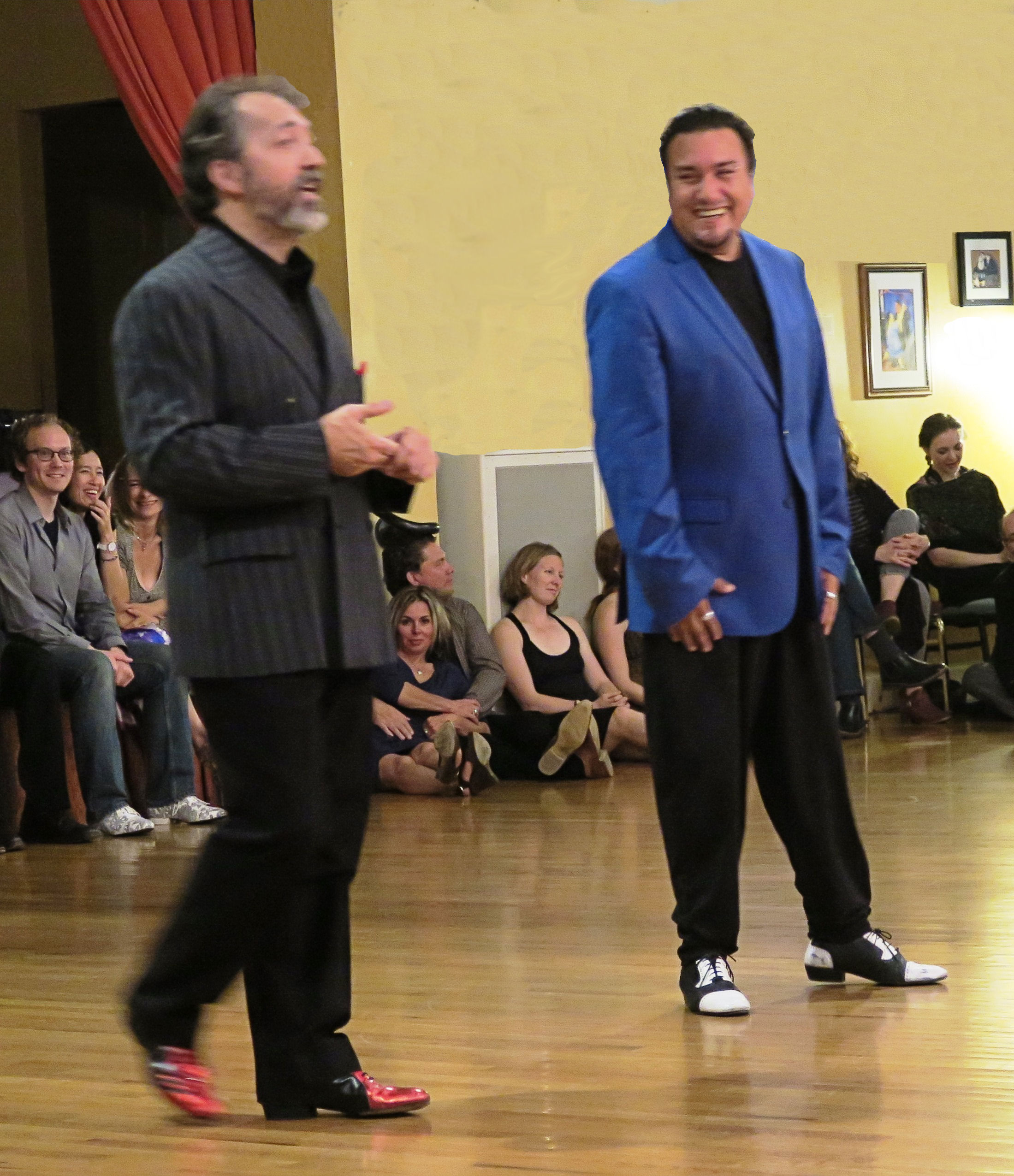
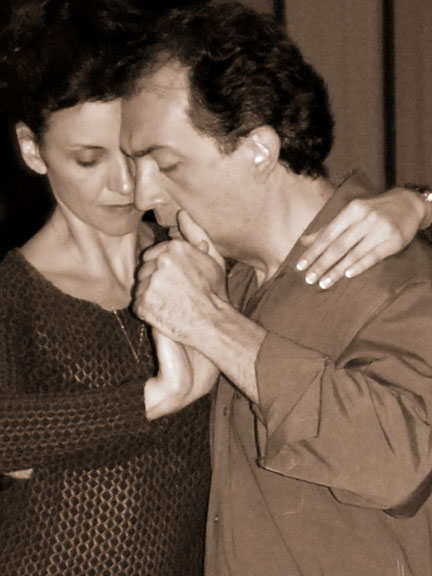
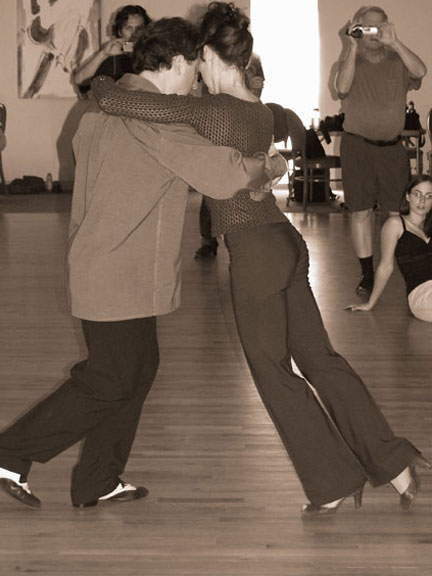
Gallery
Legacy & Impact
Naveira's lasting significance lies in making the internal logic of improvised Argentine tango discussable and transmissible. His teaching gave dancers a language for understanding repeatable relationships—forward, side and back steps; turn architecture; each partner's axis; changing direction; and embrace distance—so they could recognize structural possibilities in real time and test new combinations responsibly. This did not replace social tango or displace older practitioners. His legacy remains inseparable from the teachers and partners who shaped it: Rodolfo and Gloria Dinzel, the milongueros he named, Olga Besio, Fabián Salas, Pablo Verón, Giselle Anne, and the students who carried structural analysis into new communities.


Explore More Legends
Discover the dancers, teachers, choreographers, and cultural icons who shaped how the world moves.
Keep the thread going
Dance history, technique, and the occasional rabbit hole — in your inbox. Thoughtful, infrequent, unsubscribe anytime.
Free. No spam. One click to leave.