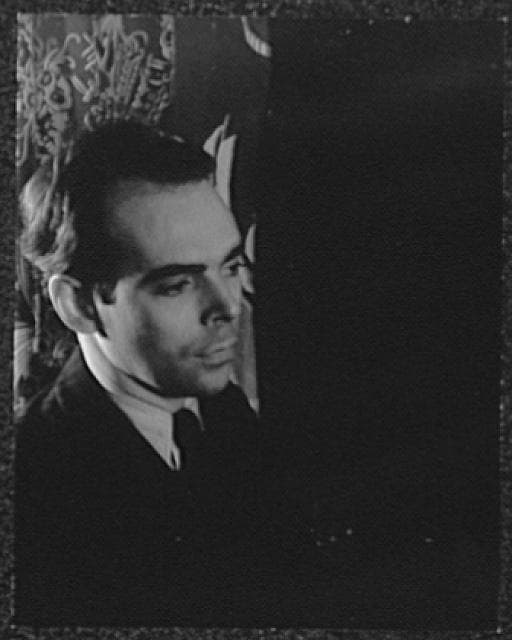
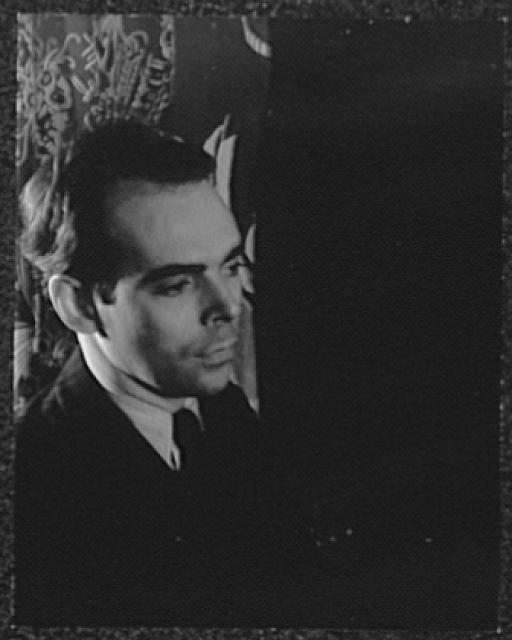
Charles Weidman
Legend of Dance
Why They Matter
Weidman's legacy is both technical and theatrical. With Humphrey, he helped establish a modern-dance language that treats gravity as a creative force rather than an obstacle. On his own, he demonstrated that this language could carry satire, popular entertainment, family memory, religious scale, and
Watch
DNB -- Opening Dance from Opus 51 (1938) by Charles Weidman
Dance Notation Bureau
The official Dance Notation Bureau channel documents a work transmitted through notation.
DNB -- Lynchtown from Atavisms (1936) by Charles Weidman excerpt A
Dance Notation Bureau
The excerpt provides movement evidence for Weidman's anti-lynching work and its reconstructed lineage.
Archive: Chamber Dance Second Generation
University of Washington Chamber Dance Company
University documentation places Weidman's repertory within second-generation transmission.
Biography
Charles Edward Weidman Jr. was born in Lincoln, Nebraska, on July 22, 1901. After seeing Denishawn perform in 1916 and studying locally with Eleanor Frampton, he moved to Los Angeles in 1920 to train at the Denishawn School. His expressive face, comic timing, and gift for mimicry became major assets as a performer; he grew into a leading dancer, partnered Martha Graham, and took important roles associated with Ted Shawn. Yet the experience also sharpened his desire for movement grounded in contemporary American life rather than Denishawn's orientalist spectacles.
In 1927, Weidman and Doris Humphrey left Denishawn, opened a school in New York, and presented their first concert the following year. The Humphrey-Weidman partnership became one of modern dance's defining laboratories, investigating gravity, fall and recovery, suspension, and the dramatic potential of ensemble form while maintaining distinct choreographic voices. Their shared practice established a modern-dance language that treated gravity as a creative force rather than an obstacle.
Weidman's own repertory moved swiftly between registers. *The Happy Hypocrite* (1931) extended pantomime into dance; the 1936 triptych *Atavisms* satirized consumer behavior in *Bargain Counter* and *Stock Exchange*, then responded to mob violence in *Lynchtown*, a work informed by an incident Weidman witnessed as a boy. Autobiography and popular culture supplied another vein: *On My Mother's Side* (1940), *Flickers* (1941), and *And Daddy Was a Fireman* (1943) transformed family memory and silent-film convention into choreographic structure.
When illness forced Humphrey to retire from performing, Weidman formed the Charles Weidman Dance Company in 1945 and continued making concert work, teaching, and choreographing for Broadway, opera, and revues. In the late 1950s, he collaborated with visual artist Mikhail Santaro and developed the Expression of Two Arts Theater, exploring relationships between dance and graphic art. He remained active as a performer, teacher, and choreographer until his death in New York City on July 15, 1975. His archive is preserved in New York Public Library collections, while notation, reconstruction, and foundation work continue to transmit repertory that was never comprehensively filmed.
Career Highlights
Saw Denishawn perform, an encounter that redirected his interests toward dance. Encyclopedia of the Great Plains Encyclopedia of the Great Plains
Moved to Los Angeles to study at the Denishawn School. Encyclopedia of the Great Plains Encyclopedia of the Great Plains
Left Denishawn with Doris Humphrey and established a New York school; their first concert followed in 1928. Encyclopedia of the Great Plains Encyclopedia of the Great Plains
Created The Happy Hypocrite, developing pantomime gesture into danced action. Encyclopedia of the Great Plains Encyclopedia of the Great Plains
Premiered Traditions. University of Washington University of Washington
Premiered Atavisms, including Lynchtown, as well as Men's Dance. Library of Congress; University of Washington Library of Congress
Created the autobiographical On My Mother's Side. Encyclopedia of the Great Plains Encyclopedia of the Great Plains
Created Flickers, a satire of silent-film conventions. Encyclopedia of the Great Plains Encyclopedia of the Great Plains
Formed the Charles Weidman Dance Company after Humphrey retired from performing. Encyclopedia of the Great Plains Encyclopedia of the Great Plains
Began mixed-media experimentation with Mikhail Santaro that led to the Expression of Two Arts Theater. Encyclopedia of the Great Plains Encyclopedia of the Great Plains
Premiered Brahms Waltzes. University of Washington University of Washington
Died in New York City while still teaching and creating. University of Washington University of Washington
Gallery
Legacy & Impact
Weidman demonstrated that gravity-based modern dance could carry satire, social protest, family memory, religious scope, and moral witness. His kinetic pantomime expanded gesture beyond illustration: character emerged from the timing, weight, and transformation of movement itself. With Humphrey, he helped establish a movement language that remains foundational to modern dance. His willingness to draw on popular entertainment, regional memory, and direct political response—alongside abstract and lyrical work—showed that concert dance need not distance itself from American vernacular and urgent contemporary life.


Explore More Legends
Discover the dancers, teachers, choreographers, and cultural icons who shaped how the world moves.
Keep the thread going
Dance history, technique, and the occasional rabbit hole — in your inbox. Thoughtful, infrequent, unsubscribe anytime.
Free. No spam. One click to leave.