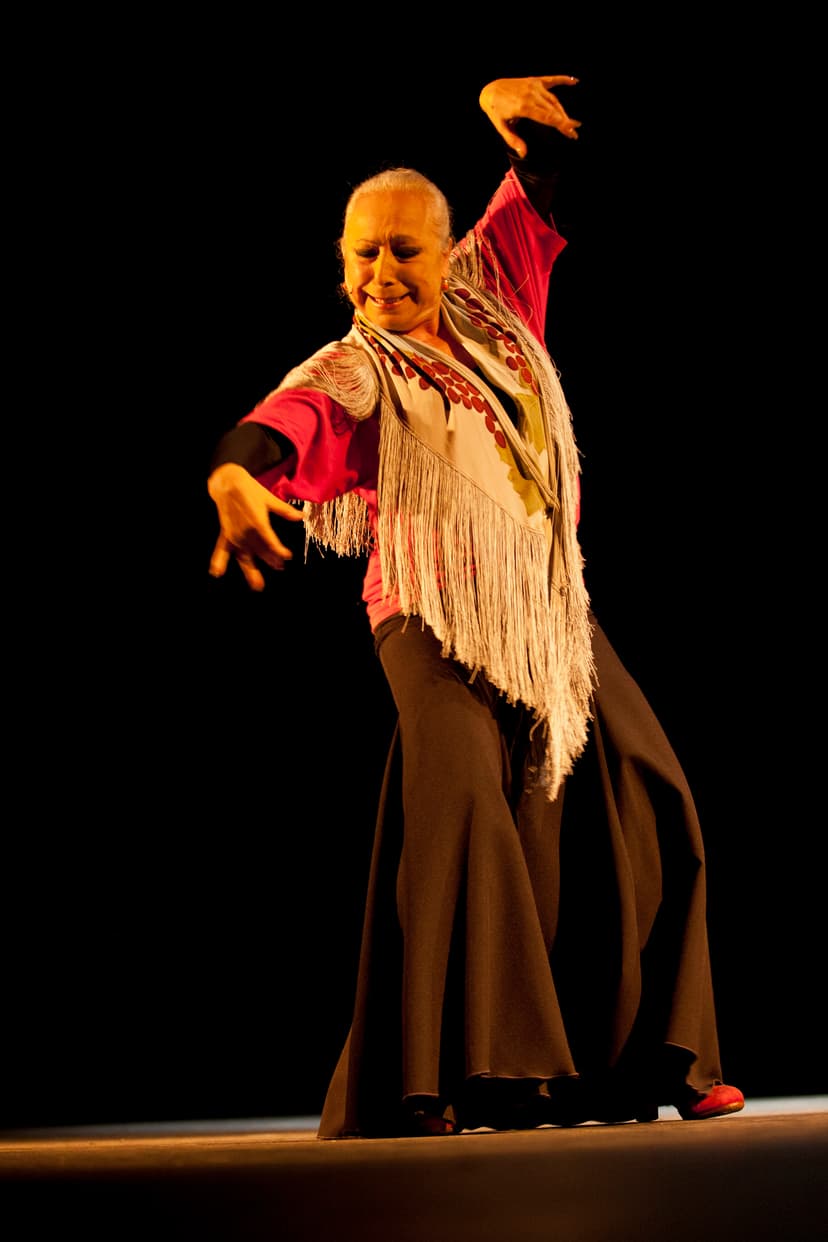
Cristina Hoyos
Legend of Dance
Why They Matter
Cristina Hoyos matters as an unusually complete flamenco institution-builder: virtuoso interpreter, screen actor, choreographer, company director and museum founder. She helped make flamenco legible across tablao, proscenium theatre and cinema, then created a permanent Seville venue where history, p
Watch
Ballet Flamenco Tierra Adentro Compañía Cristina Hoyos 2003
Museo del Baile Flamenco
Documents Hoyos's company repertory and theatrical framing
Biography
Cristina Hoyos Panadero was born in Seville on 13 June 1946, the fourth daughter of Apolimar Hoyos and Cristina Panadero. She began dancing as a child, studying with Adelita Domingo and Enrique "El Cojo," and appeared in *Galas Juveniles* at age 12. Early performances at the Seville venue El Patio Andaluz grounded her in technique, musical responsiveness and the close audience contact that would define her style.
In 1969, Antonio Gades invited Hoyos into his company, beginning an artistic partnership that lasted roughly two decades and placed her on major international stages. She danced as a principal dancer when Gades directed the newly founded Ballet Nacional de España in 1978, a milestone in the history of state-supported Spanish dance.
Hoyos became a major screen interpreter through three landmark films directed by Carlos Saura: *Bodas de sangre* (1981), *Carmen* (1983) and *El amor brujo* (1986). In *Carmen*, she created one of the best-known modern embodiments of the role. These collaborations with Gades and Saura reframed flamenco for global cinema audiences through camera, editing and performance.
After her partnership with Gades ended in 1988, Hoyos launched her own company internationally at the 1989 Paris Festival with *Sueños flamenco*. The company went on to present *Arsa y toma*, *Tierra adentro* and Lorca-based works. Independent leadership shifted her from celebrated interpreter to choreographer-director, shaping ensemble scale and theatrical framing.
In 2003, Hoyos was appointed to lead the Ballet Flamenco de Andalucía, where she presented works including *Yerma*, *Viaje al Sur*, *Romancero gitano* and *Poema del cante jondo en el Café de Chinitas*. She founded the Museo del Baile Flamenco in Seville in 2006, creating a permanent venue that combines exhibitions, educational interpretation and live performance. In 2025, she received the Corral de Comedias Award at the Almagro International Classical Theatre Festival, affirming her continued presence in contemporary cultural conversation.
Career Highlights
Appeared at age 12 in the youth program Galas Juveniles. Museo del Baile Flamenco Museo del Baile Flamenco
Joined Antonio Gades's company and began a two-decade international artistic partnership. Museo del Baile Flamenco Museo del Baile Flamenco
Served as principal dancer of the Ballet Nacional de España under Gades. Museo del Baile Flamenco Museo del Baile Flamenco
Appeared in Carlos Saura's Bodas de sangre with the Gades company. Academia de las Artes Escénicas Academia de las Artes Escénicas
Starred as Carmen in the Gades/Saura Carmen, a landmark dance film. Academia de las Artes Escénicas Academia de las Artes Escénicas
Appeared in Saura's El amor brujo, completing the celebrated film trilogy. Academia de las Artes Escénicas Academia de las Artes Escénicas
Debuted her own company at the Paris Festival with Sueños flamencos. Museo del Baile Flamenco Museo del Baile Flamenco
Received Spain's National Dance Award. Spanish Ministry of Culture Spanish Ministry of Culture
Participated in major Expo '92 and Barcelona Olympic cultural presentations. Andalucía cultural biography Andalucía cultural biography
Was appointed director of the Ballet Flamenco de Andalucía and presented Yerma. Museo del Baile Flamenco and Junta de Andalucía Museo del Baile Flamenco
Opened the Museo del Baile Flamenco in Seville. Museo del Baile Flamenco Museo del Baile Flamenco
Received the Corral de Comedias Award at the Almagro festival. El País El País
Gallery
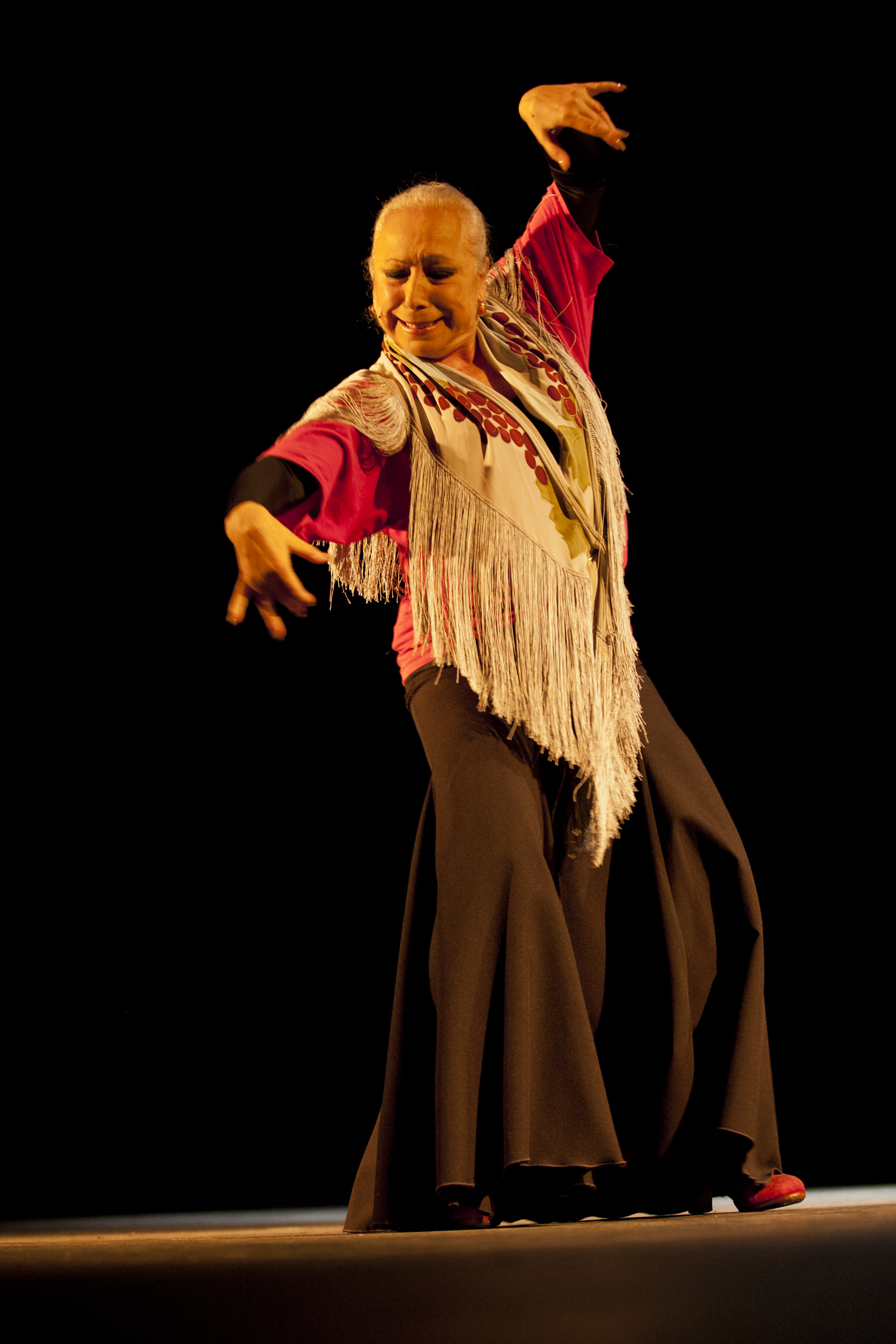
Legacy & Impact
Cristina Hoyos remains essential to flamenco culture as an unusually complete institution-builder: virtuoso interpreter, screen actor, choreographer, company director and museum founder. She made flamenco legible across tablao, proscenium and cinema, then created a permanent educational and performance venue. Her career also offers a crucial model of women's artistic authority in a field often narrated through male directorship.


Explore More Legends
Discover the dancers, teachers, choreographers, and cultural icons who shaped how the world moves.
Keep the thread going
Dance history, technique, and the occasional rabbit hole — in your inbox. Thoughtful, infrequent, unsubscribe anytime.
Free. No spam. One click to leave.