Dolly Jacobs
Legend of Dance
Why They Matter
Jacobs matters to dance and movement history because her aerial practice makes visible the continuum between circus, ballet, gymnastics, and partnered theatrical storytelling. Her larger legacy is transmission: she converted a family-and-apprenticeship tradition into performances, youth education, t
Biography
Dolly Jacobs is an American aerialist and circus arts leader who joined Ringling Bros. and Barnum & Bailey at thirteen as a member of the corps de ballet in 1971, beginning a career that would span performance, international recognition, and the creation of lasting educational infrastructure. She grew up in Sarasota, Florida, within a circus family: her father, Lou Jacobs, was a long-serving Ringling clown, and her mother, Jean Rockwell Jacobs, performed in the circus after a modeling career. She also trained in Sarasota's Sailor Circus youth program, embedding her in a tradition transmitted through family and community apprenticeship rather than formal conservatories alone.
After completing her schooling through tutoring while touring, Jacobs trained a Roman-rings act with her godmother Margie Geiger, progressively raising the apparatus as control and confidence developed. She made her solo rings debut in 1976. Her act combined still positions drawing on flexibility and contortion with swinging sequences using dislocates, rolls, splits, and catches. To achieve solo status, she added a flyaway somersault in which she released the rings and caught a separate rope—a move requiring years of progressive training, engineered rigging, and deliberate risk management.
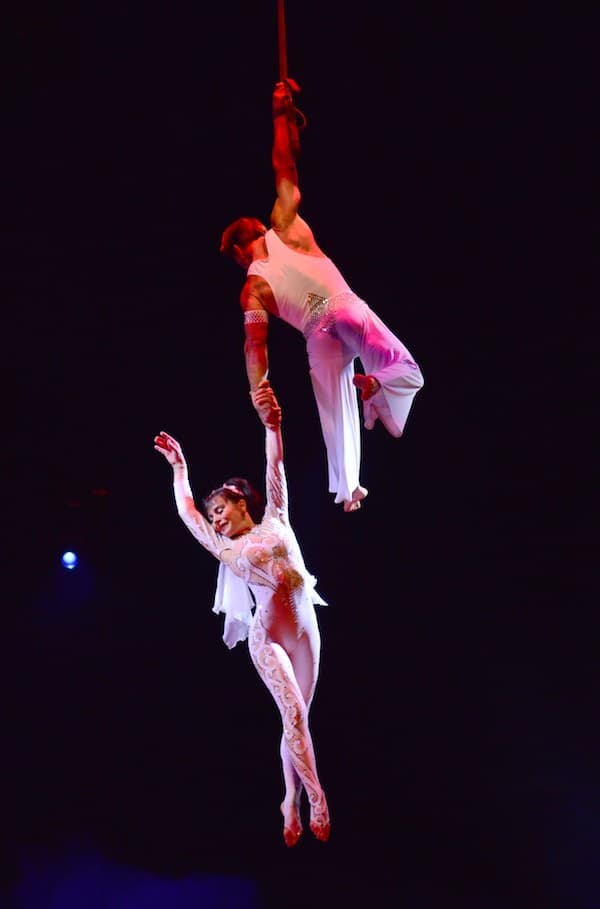
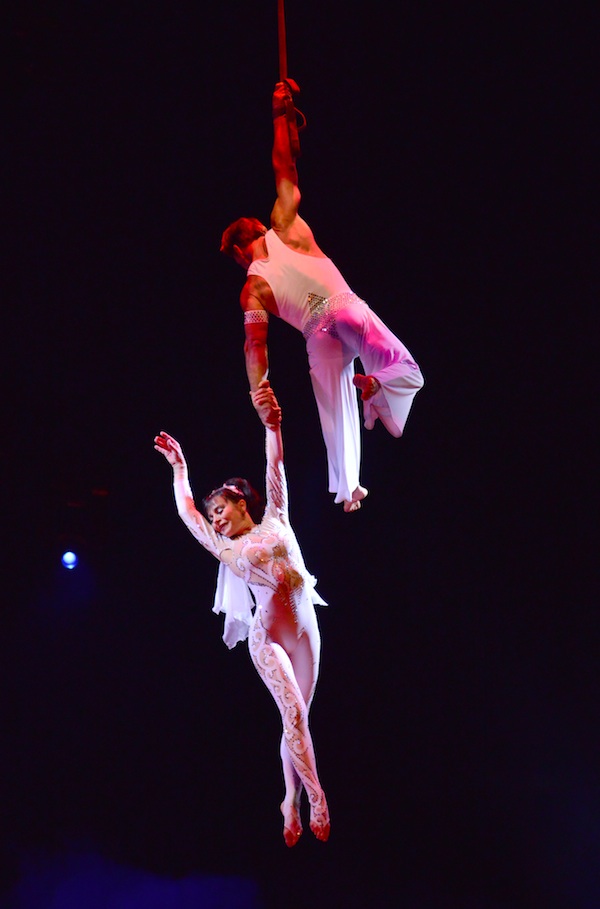
International recognition followed through the 1970s and 1980s. Jacobs appeared twice at the International Circus Festival of Monte-Carlo, receiving the Dame de Cirque distinction on both occasions and winning the Silver Clown in 1988. She later developed aerial-straps work and, with fellow aerialist Pedro Reis, created the pas de deux *On Wings of Love* in 1994, with artistic and choreographic contributions from Gilles Ste-Croix and Jean Léger.
In 1997, Jacobs and Reis founded the organization first known as Circus Sarasota, later reorganized as the Circus Arts Conservatory. The conservatory has supported professional performance, Sailor Circus youth training, school programs, and outreach in health and elder-care settings. Through this work, Jacobs moved from inheriting a family tradition to building durable public infrastructure for its transmission across generations.
Her honors connect performance mastery to stewardship. She was inducted into the Circus Ring of Fame in 1998, received the Florida Folk Heritage Award in 2012, and in 2015 became the first circus artist to receive an NEA National Heritage Fellowship. In 2017, she returned to the air during the Smithsonian Folklife Festival's circus program on the National Mall, demonstrating that her role as teacher and institution-builder did not erase her identity as a performing aerialist.
Career Highlights
Jacobs joined Ringling Bros. and Barnum & Bailey's corps de ballet at age thirteen going on fourteen. National Endowment for the Arts National Endowment for the Arts
She made her solo debut on Roman rings. National Endowment for the Arts National Endowment for the Arts
She made the first of two documented appearances at the International Circus Festival of Monte-Carlo and received a Dame de Cirque distinction. National Endowment for the Arts National Endowment for the Arts
At her second Monte-Carlo appearance, she received the Silver Clown and another Dame de Cirque distinction. National Endowment for the Arts National Endowment for the Arts
Jacobs and Pedro Reis created and toured the aerial pas de deux On Wings of Love. Circus Arts Conservatory Circus Arts Conservatory
Jacobs and Reis founded the organization that became the Circus Arts Conservatory. Circus Arts Conservatory Circus Arts Conservatory
She was inducted into the Circus Ring of Fame. National Endowment for the Arts National Endowment for the Arts
She received the Florida Folk Heritage Award. Florida Department of State Florida Department of State
She became the first circus artist to receive an NEA National Heritage Fellowship. National Endowment for the Arts National Endowment for the Arts
She performed during the circus program at the Smithsonian Folklife Festival on the National Mall. Florida Department of State Florida Department of State
Gallery
Legacy & Impact
Jacobs matters to dancers and movement artists because her aerial practice makes visible the continuum between circus, ballet, gymnastics, and theatrical partnering. Her deeper legacy is transmission: she converted a family-and-apprenticeship tradition into performances, youth education, mentorship, and community programs without stripping circus of its lineage or risk. The NEA fellowship recognized both mastery and stewardship, helping position circus as a living traditional art rather than only commercial spectacle.


Explore More Legends
Discover the dancers, teachers, choreographers, and cultural icons who shaped how the world moves.
Keep the thread going
Dance history, technique, and the occasional rabbit hole — in your inbox. Thoughtful, infrequent, unsubscribe anytime.
Free. No spam. One click to leave.