Performer · Stage Icon
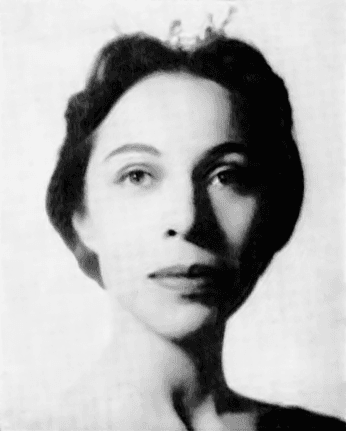
Maria Tallchief
America's First Prima Ballerina
Why They Matter
She proved that world-class ballet talent could emerge from America and broke barriers as a Native American woman in an art form dominated by Europeans.
Styles Maria Tallchief shaped
Each one links to the style’s own page — its origins, music, tempo and video.
Watch
Ballerina Maria Tallchief performs for President John F. Kennedy (1962) | The Kennedy Center
The Kennedy Center
Officially presented archival footage shows Tallchief moving rather than only being described and connects her artistry to the 1962 American Pageant of the Arts.
How Osage dancer Maria Tallchief became America’s 1st major prima ballerina
PBS NewsHour
Concise, recent, source-led overview foregrounding both Tallchief's Osage identity and her contribution to American ballet.
Women's History Minute: Maria Tallchief
National Women's History Museum
A short authoritative introduction suited to younger learners and summary placement.
Balanchine Foundation Interview: Maria Tallchief FIREBIRD and ORPHEUS
George Balanchine Foundation
Tallchief explains and demonstrates the interpretive knowledge behind two works central to her NYCB legacy.
Balanchine Foundation Interview: Maria Tallchief, Paul Mejia — APOLLO and SWAN LAKE
George Balanchine Foundation
Documents Tallchief and Paul Mejia transmitting role-specific knowledge instead of treating style as a list of steps.
Balanchine Foundation Interview: Maria Tallchief THE FOUR TEMPERAMENTS and SYLVIA PAS DE DEUX
George Balanchine Foundation
Broadens the page beyond Tallchief's most famous story ballets and shows the precision of her repertory memory.
Biography
Maria Tallchief, born Elizabeth Marie Tall Chief on January 24, 1925, in Fairfax, Oklahoma, was widely recognized as America's first major prima ballerina. An Osage member from the Grayhorse District, she began lessons as a small child on the reservation while also studying piano, a discipline that would shape her musical understanding of movement throughout her career. When her family moved to Los Angeles in 1933, she trained first with Ernest Belcher and then, from about age twelve, with Bronislava Nijinska, the dancer and choreographer who had worked with Serge Diaghilev's Ballets Russes. Nijinska demanded complete commitment to ballet as a lived discipline, and this exacting training, combined with Tallchief's musical foundation and stage experience in the émigré ballet community, prepared her for a professional world still governed by European conventions.
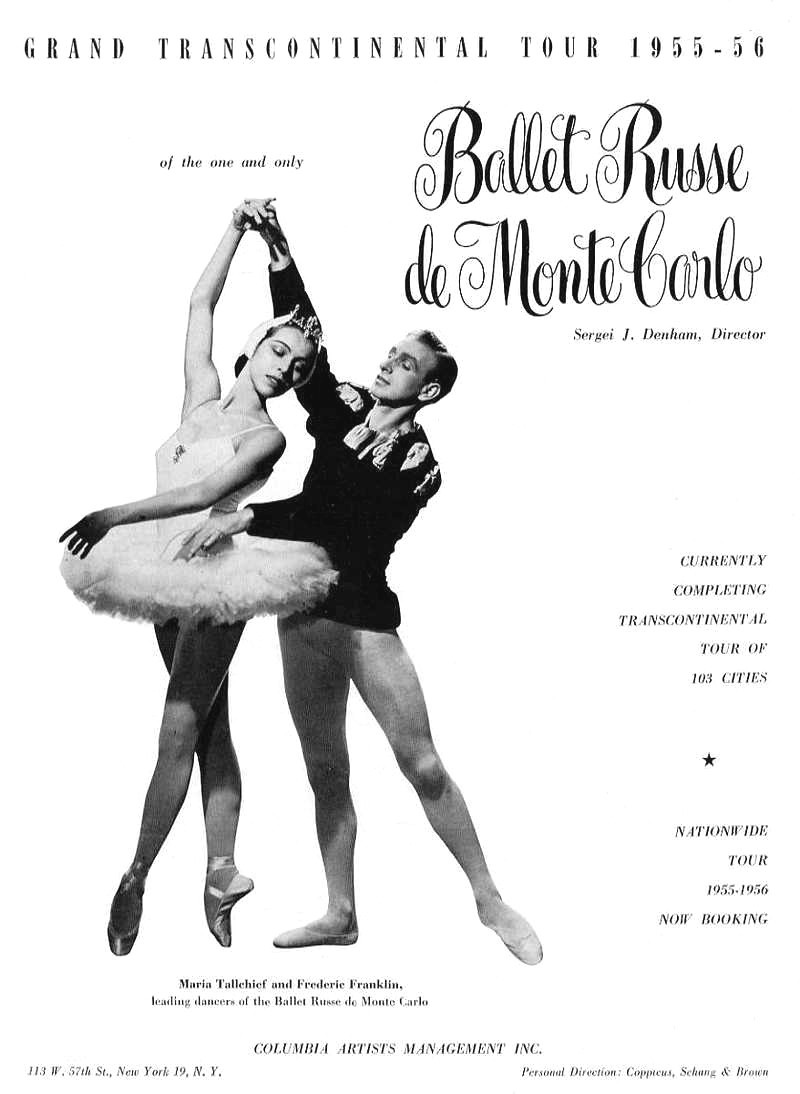
At seventeen, Tallchief moved to New York in 1942 and joined the Ballet Russe de Monte Carlo as an apprentice, advancing through corps and featured roles with coaching from Alexandra Danilova. When colleagues urged her to adopt a Russified stage name like "Tallchieva," she refused, keeping Tallchief as her professional surname—an early assertion of her family identity and heritage. By 1946 she originated a role in Balanchine's *Night Shadow* alongside Danilova and Nicholas Magallanes, and her technical authority and speed were drawing serious attention.
Balanchine's work with Ballet Russe de Monte Carlo from 1944 onward placed Tallchief at the center of his emerging American vocabulary. They married in 1946 (annulled in the early 1950s), but their artistic association proved historically decisive. In 1947, Tallchief danced with the Paris Opera Ballet before joining Ballet Society, the company Balanchine and Lincoln Kirstein founded before it became New York City Ballet in 1948. At NYCB's inaugural performance on October 11, 1948, she appeared in *Orpheus* and *Symphony in C*, anchoring the institution's founding repertory. Her 1949 title role in Balanchine's *Firebird*—with designs by Marc Chagall and Francisco Moncion as Prince Ivan—became her breakthrough and one of early New York City Ballet's defining performances.
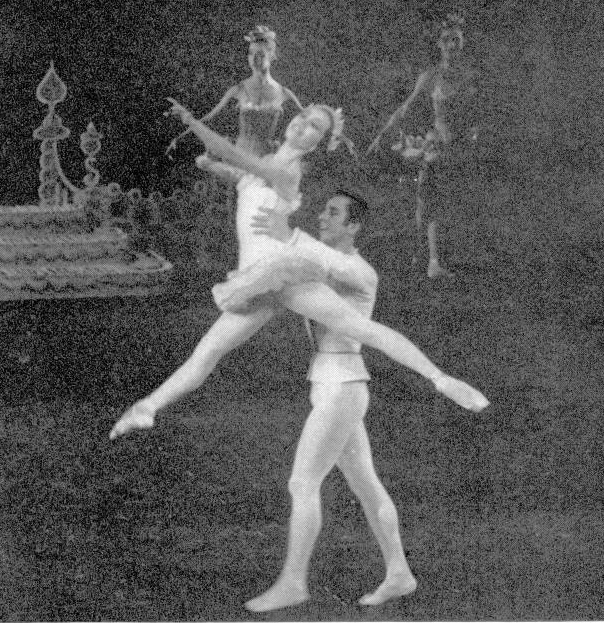
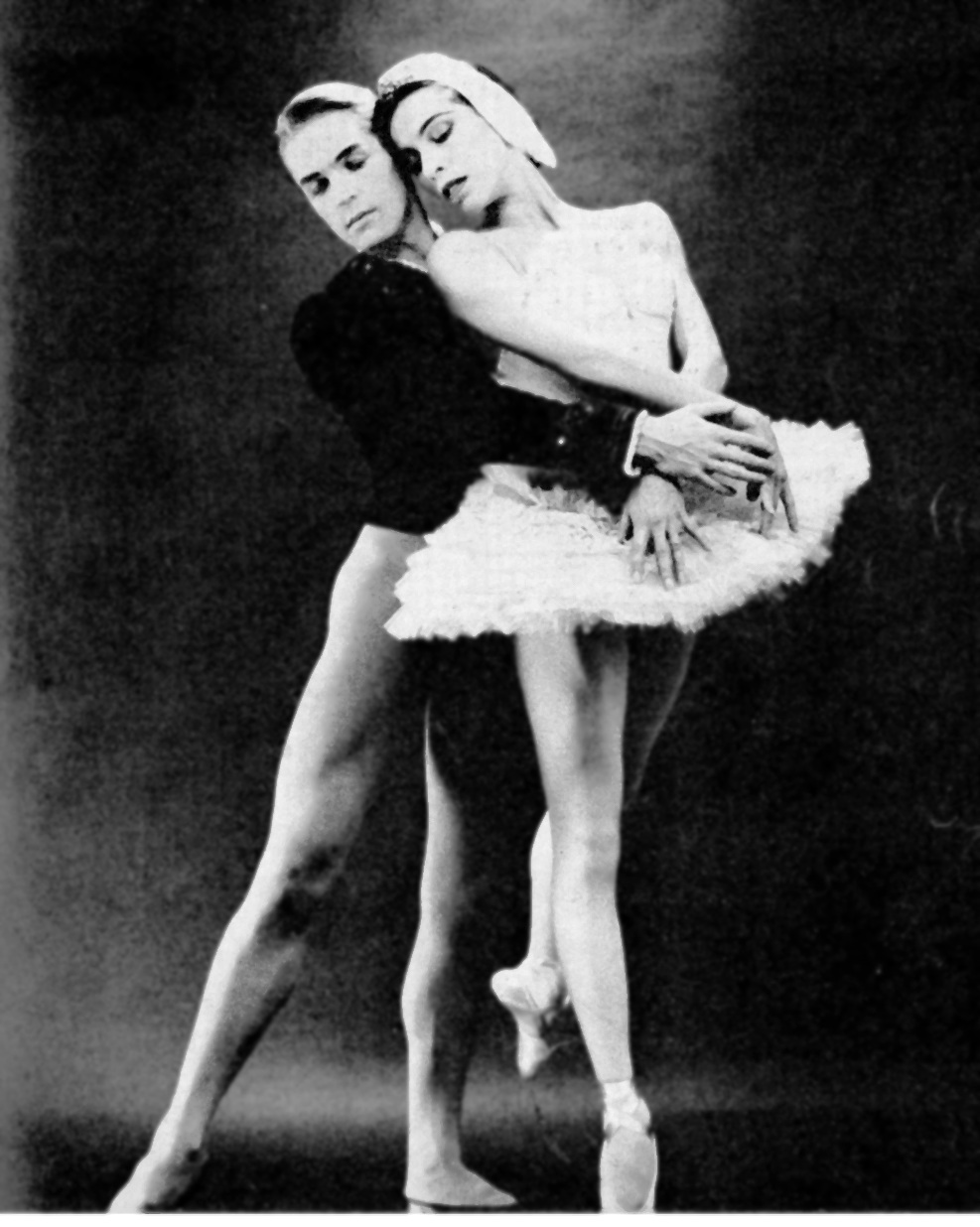
Tallchief originated leading roles across Balanchine's expanding canon. She danced Odette/Odile in his one-act *Swan Lake* in 1951, became the original Sugarplum Fairy in his full-length *Nutcracker* in 1954 (partnered by Nicholas Magallanes), and created the ballerina role in *Allegro Brillante* in 1956, again with Magallanes. These achievements were collaborative: Balanchine choreographed; Stravinsky and Tchaikovsky supplied scores; designers including Karinska shaped the stage; and Tallchief's partners and fellow dancers made the works live. Her career extended beyond one company—she appeared in film and television, returned to Ballet Russe de Monte Carlo as a guest, worked with partners including Erik Bruhn, and in 1960 joined American Ballet Theatre's historic first American dance-company tour of the Soviet Union, carrying American ballet identity into the heart of the Cold War. She left New York City Ballet in 1965 and made her final American televised performance in 1966.
Settling in Chicago marked a second major phase. In 1973, Tallchief was appointed director of ballet at the Lyric Opera of Chicago, where she created and oversaw a new ballet corps and established a school, transmitting Balanchine's standards to younger dancers. In 1981, Maria and her sister Marjorie Tallchief founded Chicago City Ballet, with Maria serving as an artistic leader until the company closed in 1987. Though short-lived, the venture expanded Chicago's ballet infrastructure and joined performance, teaching, and institution-building. Video records from the George Balanchine Foundation preserve another dimension of her legacy: coaching footage shows Tallchief guiding later dancers through *Firebird*, *Orpheus*, *Apollo*, *Swan Lake*, *The Four Temperaments*, *Sylvia*, and *The Nutcracker*.
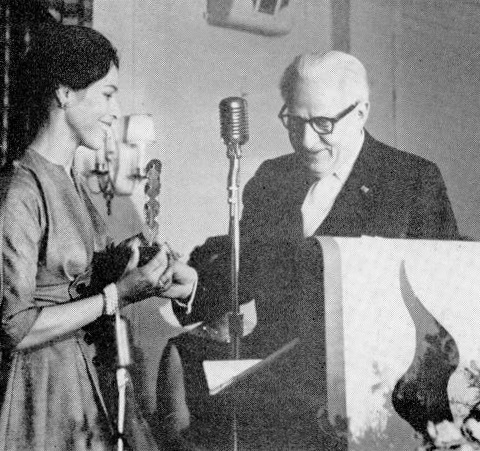
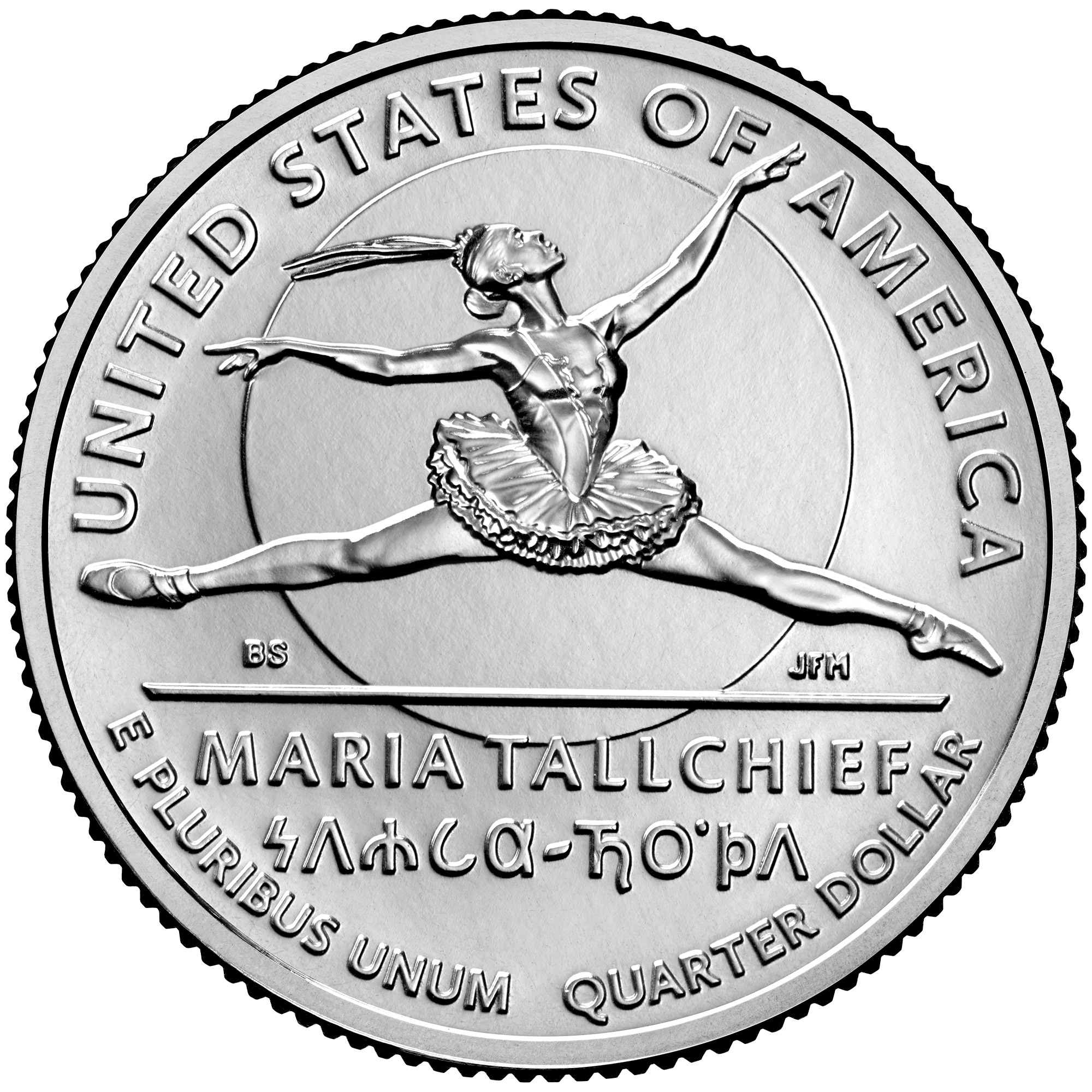
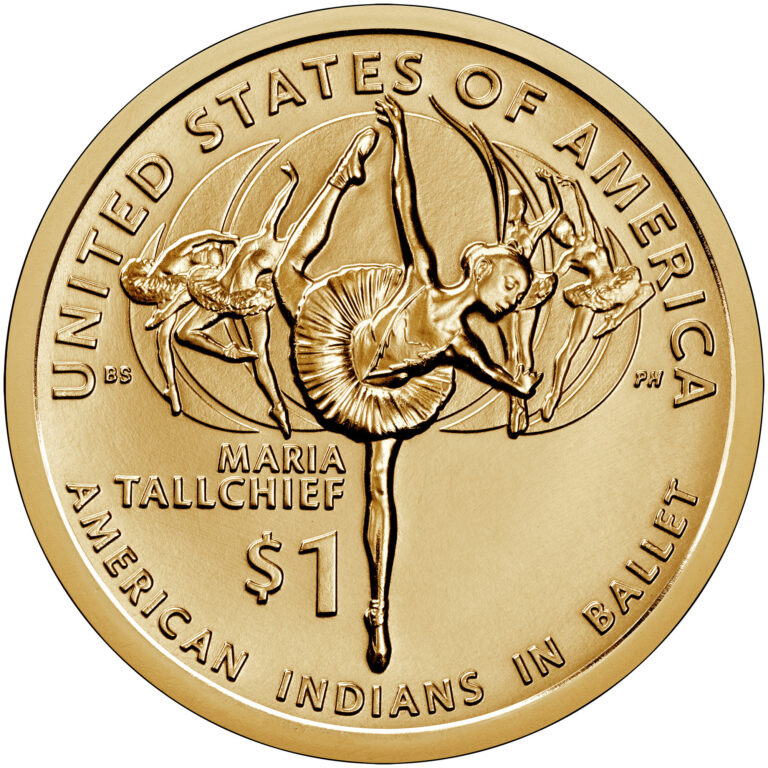
Tallchief received the Kennedy Center Honors and was inducted into the National Women's Hall of Fame in 1996, followed by the National Medal of Arts in 1999. She died in Chicago on April 11, 2013, at eighty-eight. Public commemoration has continued through the Osage Nation, museums, and dance institutions. In 2023, the U.S. Mint released two designs honoring her: an American Women quarter and a Native American dollar that pairs her with the Five Moons, the celebrated Native ballerinas from Oklahoma tribal nations. Her quarter carries the Osage name *Wa-Xthe-Thoṉba*, translated by current Osage Nation and U.S. Mint sources as "Two Standards"—a recognition of the dual identities Tallchief held together without allowing either to diminish the other.
Career Highlights
Moved to New York at seventeen and joined Ballet Russe de Monte Carlo. School of American Ballet
Appeared in the original Ballet Russe de Monte Carlo cast of Balanchine’s Night Shadow. New York City Ballet
Danced with the Paris Opera Ballet and then joined Balanchine and Kirstein’s Ballet Society. School of American Ballet
Appeared in Orpheus and Symphony in C during the repertory that established New York City Ballet. New York City Ballet — *Orpheus*
Created the leading role in Balanchine’s Firebird for New York City Ballet. New York City Ballet
Originated Odette/Odile in Balanchine’s one-act Swan Lake for New York City Ballet. New York City Ballet
Originated the Sugarplum Fairy in Balanchine’s full-length The Nutcracker, partnered by Nicholas Magallanes. New York City Ballet
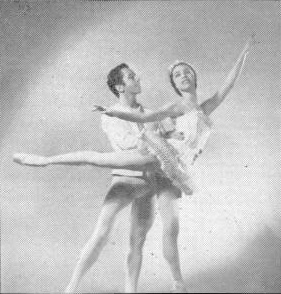
Created the ballerina role in Balanchine’s Allegro Brillante, again with Magallanes. New York City Ballet
Starred on American Ballet Theatre’s historic first American-company tour of the Soviet Union. American Ballet Theatre
Left New York City Ballet in 1965 and made her final American televised performance in 1966. School of American Ballet
Became Lyric Opera of Chicago’s director of ballet in 1973 and later led Chicago City Ballet, founded with Marjorie Tallchief, from 1981 to 1987. Lyric Opera of Chicago
Received the Kennedy Center Honors and National Women’s Hall of Fame induction in 1996, followed by the National Medal of Arts in 1999. Kennedy Center
Gallery
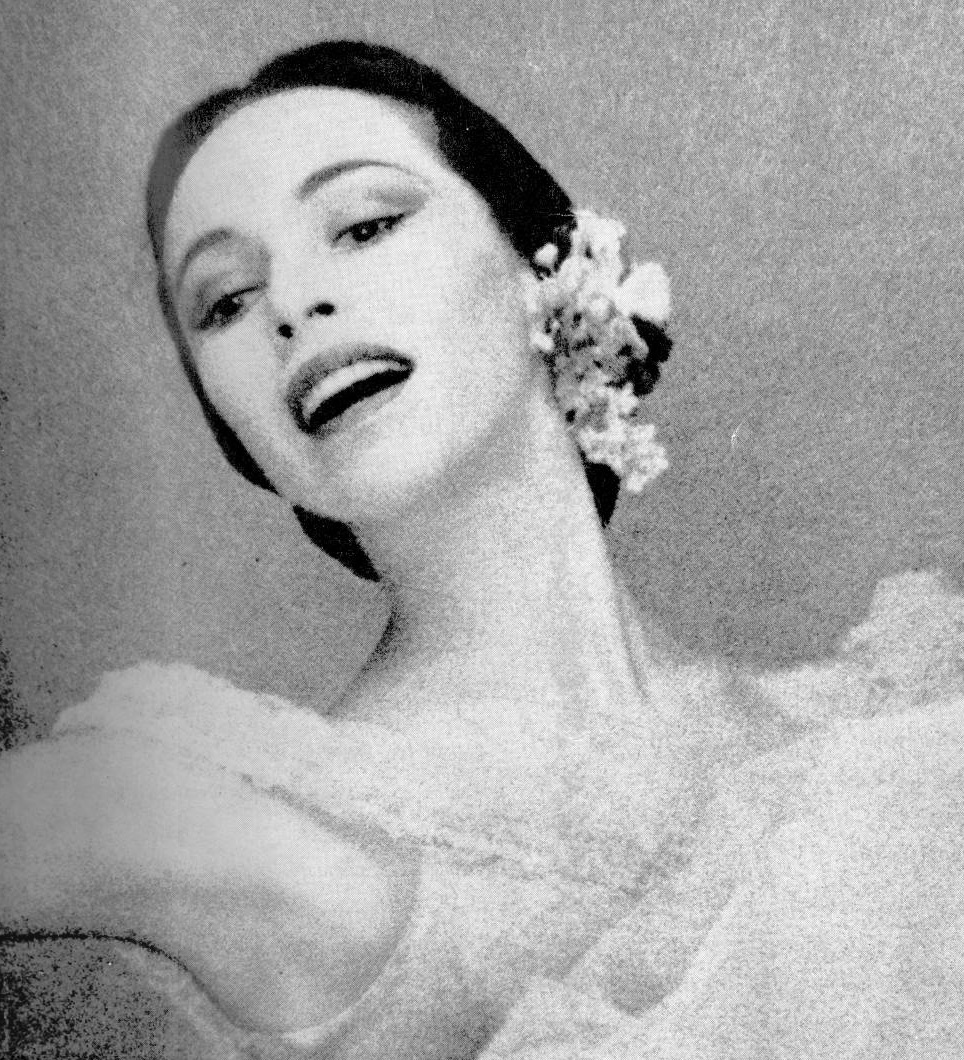
Legacy & Impact
Maria Tallchief matters because her artistry helped make American ballet artistically self-confident. She did not merely occupy a symbolic position: in New York City Ballet's founding years, her musicality, technical command, and theatrical conviction helped Balanchine and his collaborators define what their repertory could become. Works like *Firebird*, *Swan Lake*, *The Nutcracker*, and *Allegro Brillante* preserve distinct facets of that achievement, while her teaching, coaching, and institutional leadership in Chicago extended it across generations. Her refusal to hide the Tallchief name and her sustained identification with the Osage Nation also made her success legible as Indigenous achievement without reducing her to ethnicity alone. Later Native dancers inherited both the visibility of her triumph and the argument that they, too, deserved to be judged as complete artists.


Explore More Legends
Discover the dancers, teachers, choreographers, and cultural icons who shaped how the world moves.
Keep the thread going
Dance history, technique, and the occasional rabbit hole — in your inbox. Thoughtful, infrequent, unsubscribe anytime.
Free. No spam. One click to leave.