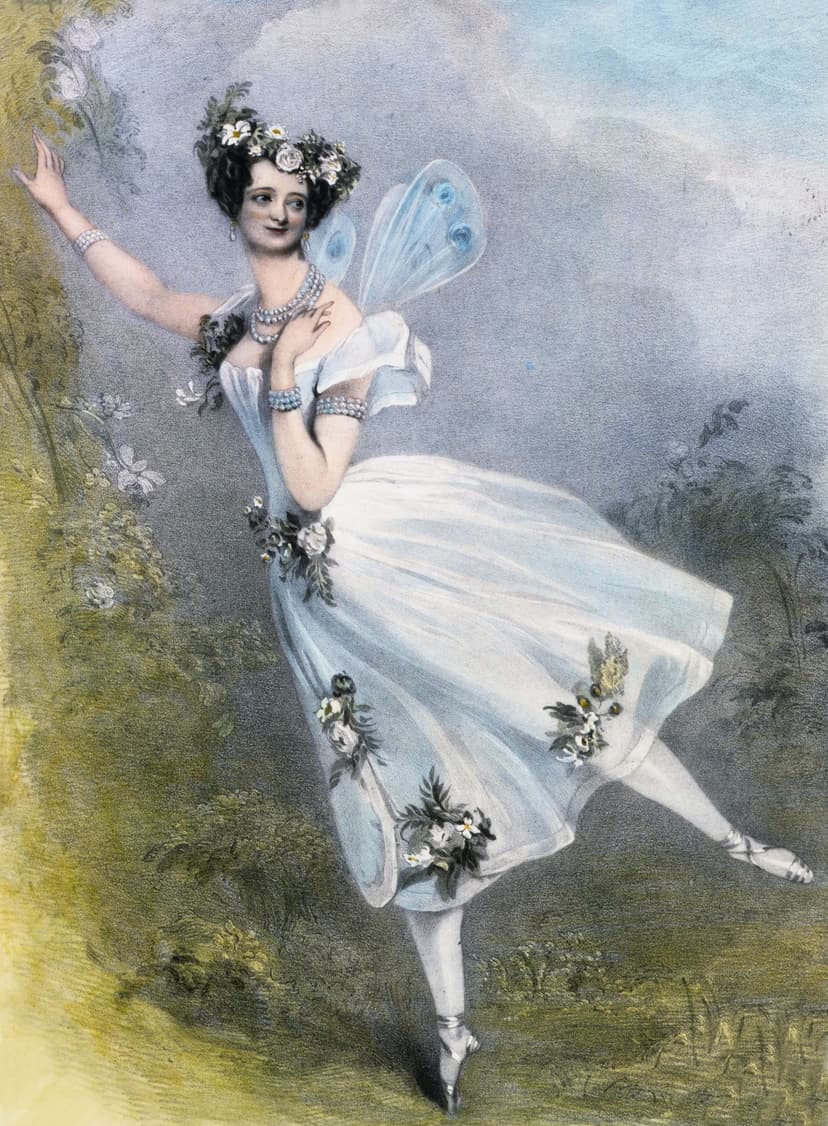
Marie Taglioni
Legend of Dance
Why They Matter
Taglioni matters because she changed how virtuosity could signify. Pointe work was no longer merely a feat to be displayed; in her most influential roles it suggested suspension, distance, and a being not fully bound by gravity. Her image joined technique, costume, theatrical lighting, and Romantic
Biography
Marie Taglioni was born in Stockholm in 1804 into the Taglioni theatrical family. Her father, the Italian dancer and choreographer Filippo Taglioni, supervised her training and shaped much of her early repertory; her brother Paul also became a dancer and choreographer. This Swedish-born dancer from an Italian family would carry the Romantic ballerina ideal across Europe, Russia, and Britain throughout a career that fundamentally changed how virtuosity could function in ballet.
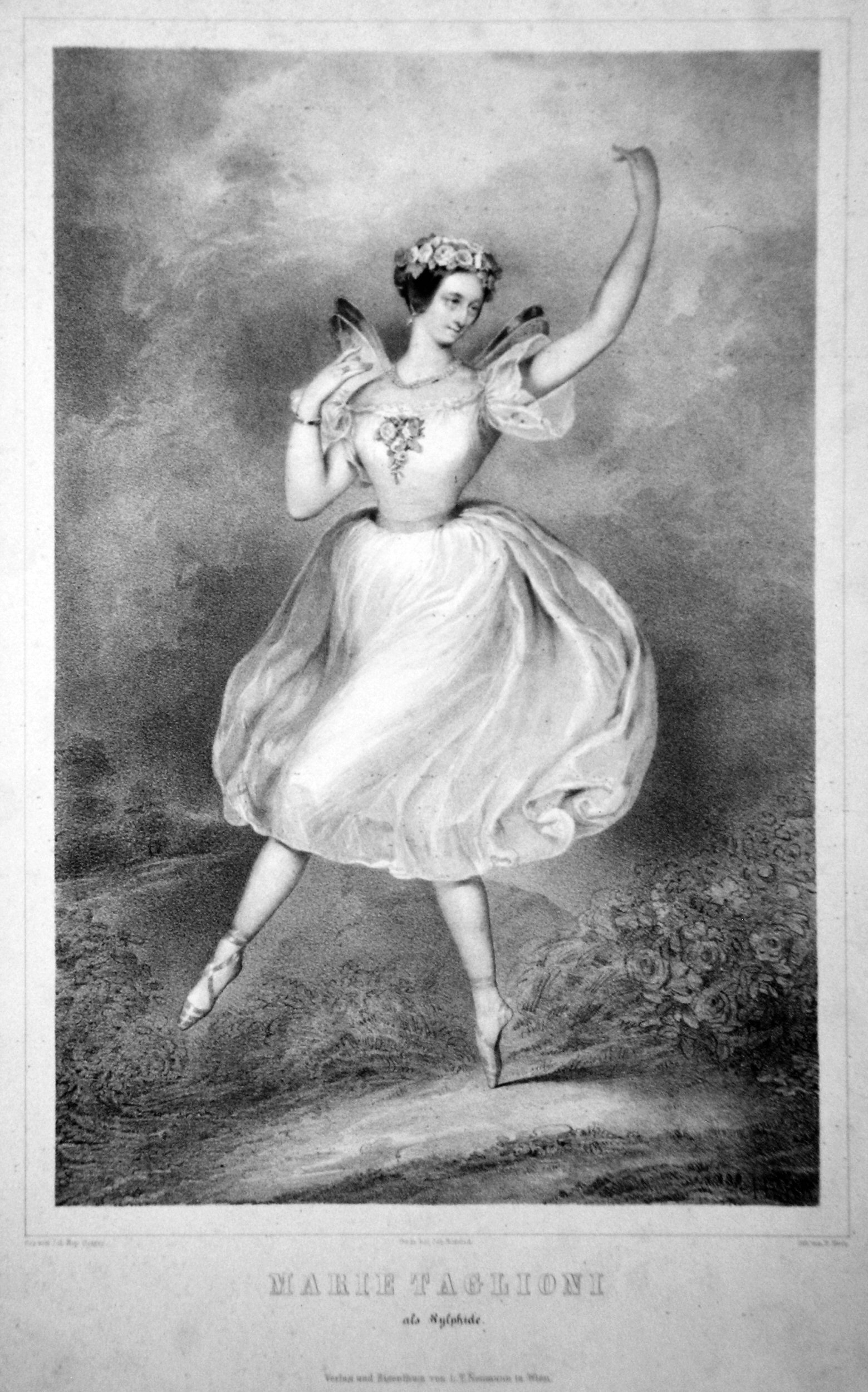
After early appearances in central Europe, including a Vienna debut in 1822, Taglioni entered the Paris Opera in 1827 under a three-year contract tightly linked to her father's choreography. Her public identity developed through works conceived specifically around her movement qualities. The decisive moment came with the 1832 Paris Opera premiere of Filippo Taglioni's *La Sylphide*, in which she originated the title role of the Sylph. The ballet is recognized as the first danced throughout on pointe, and Eugène Lami's long white costume became a model for the Romantic tutu. More significantly, Taglioni refined pointe into an expressive language across the full arc of a ballet, making sustained work on the toes integral to both character and dramatic illusion rather than a momentary display of technique.
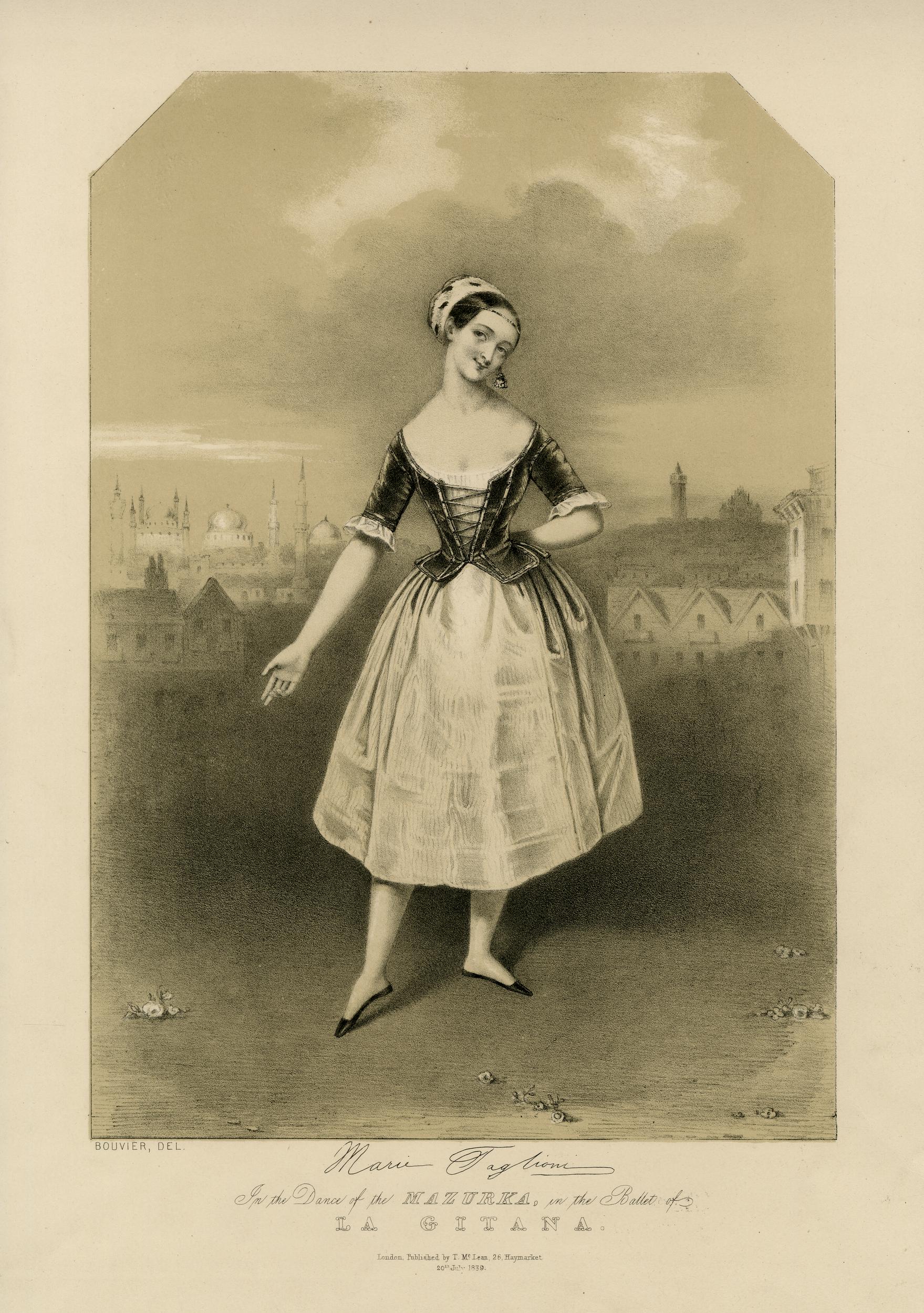
Taglioni's fame spread rapidly through London, where she made her debut in 1830 in Charles Didelot's *Flore et Zéphire*, and to Russia, where she began an important engagement with the Imperial Ballet in Saint Petersburg in 1837. Her repertory extended beyond ethereal roles: period images document her dancing a mazurka in *La Gitana*, evidence of a character range that outlasted the sylph. In 1845 she joined Lucile Grahn, Carlotta Grisi, and Fanny Cerrito in Jules Perrot's *Pas de Quatre*, a landmark display of four leading ballerinas whose differing personae helped define the cult of the Romantic ballerina.
After retiring from stage performance in 1847, Taglioni remained active as a teacher and institutional figure. She led the Paris Opera Ballet School from 1860 to 1870 and created *Le Papillon* in 1860 for Emma Livry, her sole documented choreographic work. She died in Marseille in 1884, leaving an unusually durable influence through style, pedagogy, imagery, and the idea of the ballerina as the imaginative center of a ballet.
Career Highlights
Made an early Vienna debut in a work prepared by her father, according to the NYPL dance-history guide. NYPL dance-history guide
Appeared successfully at the Paris Opera and entered a three-year contract shaped around Filippo Taglioni's choreography. NYPL
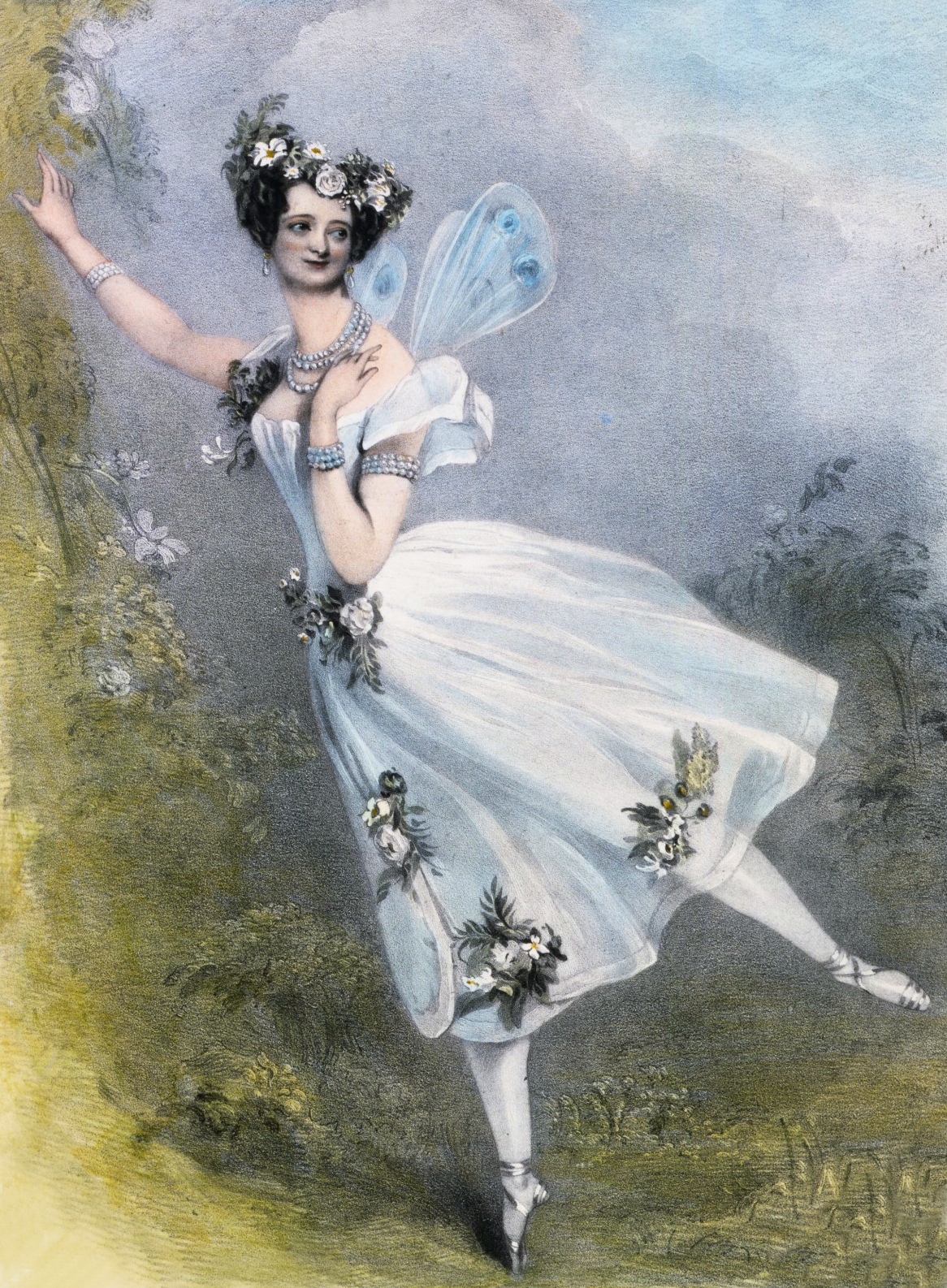
Made her London debut in Charles Didelot's Flore et Zéphire, a role preserved in period lithography. Wikimedia Commons file record
Her performance in the ballet of nuns in Meyerbeer's Robert le Diable helped make her an international sensation. Metropolitan Museum of Art
Originated the title role in Filippo Taglioni's La Sylphide at the Paris Opera, making sustained pointe work integral to character and dramatic illusion. Paris Opera
Began an important Russian engagement with the Imperial Ballet in Saint Petersburg; the period is documented in the NYPL Taglioni archive. NYPL Taglioni archive
Was depicted dancing a mazurka in La Gitana, evidence of her character repertory beyond ethereal roles (British Museum / Commons record.jpg)). British Museum / Commons record
Appeared with Grahn, Grisi, and Cerrito in Jules Perrot's Pas de Quatre; the BnF catalogue identifies all four dancers. BnF catalogue
Retired from stage performance after a career that had carried the Romantic ballerina ideal across Europe.
Choreographed Le Papillon for Emma Livry, her sole documented choreographic work. Paris Opera
Led the Paris Opera Ballet School and participated in preserving its training tradition. Paris Opera
Gallery
Works
One stage work credited to Marie Taglioni.
- Le papillon (1860)Ballet · Choreographer
Credits sourced from Wikidata (CC0), one citation per field. Works without a recorded premiere date are listed last. Titles link to the work in Limelight.
Legacy & Impact
Taglioni matters because she transformed how virtuosity could signify. Pointe work became not merely a feat but a vehicle for theatrical meaning—suggesting suspension, lightness, and a being not fully bound by gravity. Her image joined technique, costume, lighting, and Romantic supernatural narrative into a coherent ballerina ideal that shaped ballet aesthetics for generations. That ideal later became restrictive when treated as the only legitimate model, but its historical force in establishing the ballerina as the expressive heart of ballet remains unmistakable.


Explore More Legends
Discover the dancers, teachers, choreographers, and cultural icons who shaped how the world moves.
Keep the thread going
Dance history, technique, and the occasional rabbit hole — in your inbox. Thoughtful, infrequent, unsubscribe anytime.
Free. No spam. One click to leave.