Choreographer · Innovator
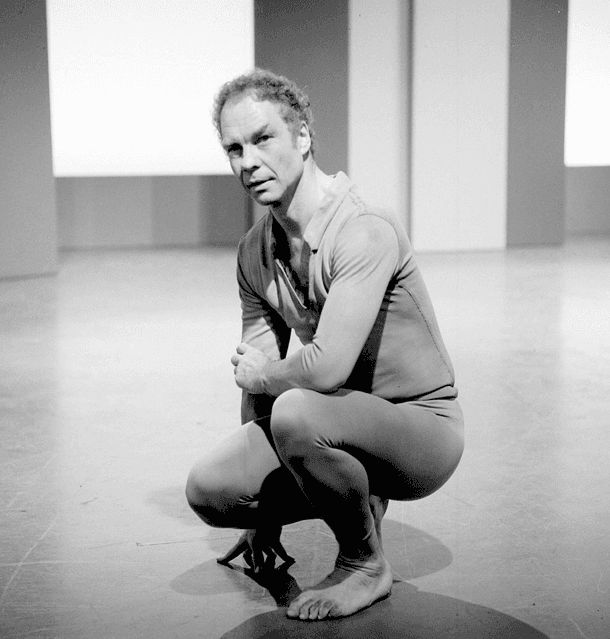
Merce Cunningham
Dance's Abstract Revolutionary
Why They Matter
He liberated choreography from the need to tell stories or illustrate music, opening dance to pure abstraction.
Known For
Styles Merce Cunningham shaped
Each one links to the style’s own page — its origins, music, tempo and video.
Watch
Exchange (1978) - Merce Cunningham Dance Company
Merce Cunningham Trust
Charles Atlas's film based on Cunningham's 1978 dance shows choreography shaped for the camera.
Variations V (1966) - Merce Cunningham Dance Company
Merce Cunningham Trust
Documents a landmark collaboration involving Cage, Tudor, Stan VanDerBeek, Nam June Paik, and electronic sensing.
Beach Birds for Camera (1993) - Merce Cunningham Dance Company
Merce Cunningham Trust
A complete camera work that makes framing and editing part of the choreography's reception.
Merce Cunningham Dance Company at BAM: BIPED
Merce Cunningham Trust
Shows Cunningham's late-career synthesis of demanding live movement and motion-capture-derived décor.
Sounddance (1975) at Wolf Trap, part 1
Merce Cunningham Trust
Captures the kinetic density of a canonical Cunningham work late in the company's history.
Sounddance rehearsal, May 7 2008
Merce Cunningham Trust
Shows Cunningham transmitting detail in rehearsal rather than only the finished stage image.
Biography
Mercier Philip Cunningham was born in Centralia, Washington, on April 16, 1919. His earliest dance experience came through tap, vaudeville, and exhibition ballroom dancing before he entered Seattle's Cornish School in 1937. There, Bonnie Bird introduced him to modern dance, and the school's interdisciplinary environment brought him into contact with composer John Cage—a meeting that became decisive both artistically and personally. Cage would remain Cunningham's closest collaborator and life partner until Cage's death in 1992.
Martha Graham invited Cunningham to New York, and in 1939 he joined the Martha Graham Dance Company as a soloist, where he remained for six years. Graham's technical seriousness shaped his training, but Cunningham rejected her premise that movement must serve plot, character, or musical phrase. By 1944, he and Cage presented a New York concert of six Cunningham solos with Cage's music—the beginning of their radical premise: dance and music could be created independently, meet in performance, and retain equal integrity rather than one illustrating the other.
At Black Mountain College, Cunningham and Cage found an unusually fertile community. They participated in a 1952 untitled theatrical event often considered a precursor to the Happening, alongside Robert Rauschenberg, David Tudor, M. C. Richards, Charles Olson, and others. In 1953 Cunningham formed what became the Merce Cunningham Dance Company. Early members included Carolyn Brown, Viola Farber, Marianne Preger-Simon, Paul Taylor, and Remy Charlip; Cage served as music director and Tudor as musician. The company became a laboratory where choreography, sound, and visual design could be made by different artists without forced narrative unity. Rauschenberg served as resident designer during the company's first decade, establishing a pattern of collaboration that later included Jasper Johns, Andy Warhol, Robert Morris, Rei Kawakubo, and many others.
Cunningham and Cage used chance procedures to disrupt habit—determining continuity, rhythm, timing, spatial direction, casting, or the order of phrases. This did not mean dancers improvised freely; Cunningham built exacting movement material, and performers trained to execute it with clarity even when its context changed. His "Events," first developed to adapt repertory material to unconventional sites, rearranged excerpts into one-time performance structures. The company's 1964 international tour brought this demanding aesthetic to wider audiences, and its residence at Westbeth in New York from 1971 provided a long-term home. According to the Trust, Cunningham created 190 dances and more than 700 Events across his career.
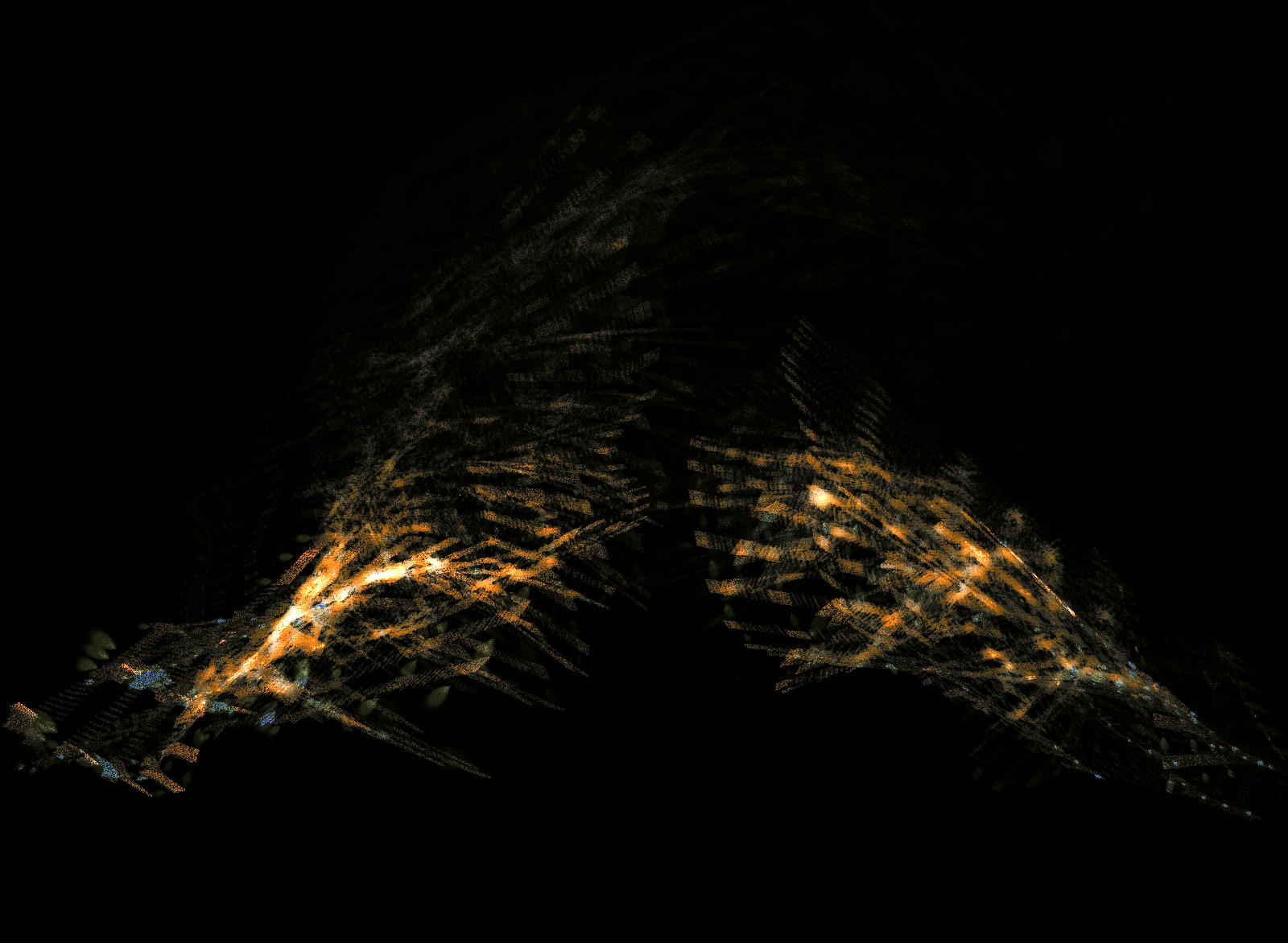
Cunningham's curiosity repeatedly moved beyond the conventional proscenium. With filmmaker Charles Atlas, he explored choreography made specifically for the camera, including *Westbeth* (1974), using framing, scale, editing, and viewpoint as compositional tools. Beginning in his seventies, Cunningham used LifeForms—later known as DanceForms—to investigate positions and transitions before teaching them to dancers. Motion capture, created with digital artists Paul Kaiser and Shelley Eshkar, contributed to *Hand-drawn Spaces* (1998) and the projected décor of *BIPED* (1999). *Loops*, derived from motion capture of Cunningham's hands, later became a digital resource. These experiments extended his question: what movement becomes possible when familiar habits and viewpoints are suspended?
Cunningham received a MacArthur Fellowship and Kennedy Center Honors in 1985, the National Medal of Arts in 1990, and major international distinctions. He continued choreographing into his final year, premiering *Nearly Ninety* at the Brooklyn Academy of Music in April 2009. He died in New York City on July 26, 2009, aged ninety. A carefully prepared Legacy Plan guided the company through a two-year international farewell tour. The Merce Cunningham Dance Company gave its final performances at the Park Avenue Armory on December 29–31, 2011. The Merce Cunningham Trust, established in 2000, became custodian of the choreography, licensing stagings and supporting transmission through authorized teachers and stagers. The Walker Art Center acquired roughly 4,300 costumes, décor elements, photographs, posters, and sketches representing about 150 works, while other institutions including the New York Public Library hold additional archival materials. Cunningham's dances now live through reconstructions, classes, film, and new performances—an afterlife structured around documentation and responsible transmission.
Career Highlights
Joined the Martha Graham Dance Company, beginning a six-year tenure as a soloist. Merce Cunningham Trust Merce Cunningham Trust
Presented the first New York program consisting entirely of his dances, six solos with music by John Cage. Merce Cunningham Trust Merce Cunningham Trust
Participated at Black Mountain College in Cage’s untitled multimedia event, with Robert Rauschenberg, David Tudor, M. C. Richards, Charles Olson, and others. Merce Cunningham Trust Merce Cunningham Trust
Formed the Merce Cunningham Dance Company at Black Mountain College. Merce Cunningham Trust Merce Cunningham Trust
The company undertook its first international tour across Europe and Asia. Merce Cunningham Trust Merce Cunningham Trust
Created Westbeth with Charles Atlas, a major early dance-for-camera work rather than a straightforward stage record. Electronic Arts Intermix Electronic Arts Intermix
Received both a MacArthur Fellowship and Kennedy Center Honors. MacArthur Foundation; Kennedy Center MacArthur Foundation
Received the United States National Medal of Arts. National Endowment for the Arts National Endowment for the Arts
Premiered BIPED, with projected décor derived from motion-capture work by Paul Kaiser and Shelley Eshkar. Merce Cunningham Trust Merce Cunningham Trust
Established the Merce Cunningham Trust to preserve and steward his repertory. Walker Art Center Walker Art Center
Premiered Nearly Ninety at the Brooklyn Academy of Music during his ninetieth-birthday season. Merce Cunningham Trust Merce Cunningham Trust
The company completed its Legacy Tour and gave its final performances at New York’s Park Avenue Armory on December 29–31. Merce Cunningham Legacy Plan Merce Cunningham Legacy Plan
Gallery
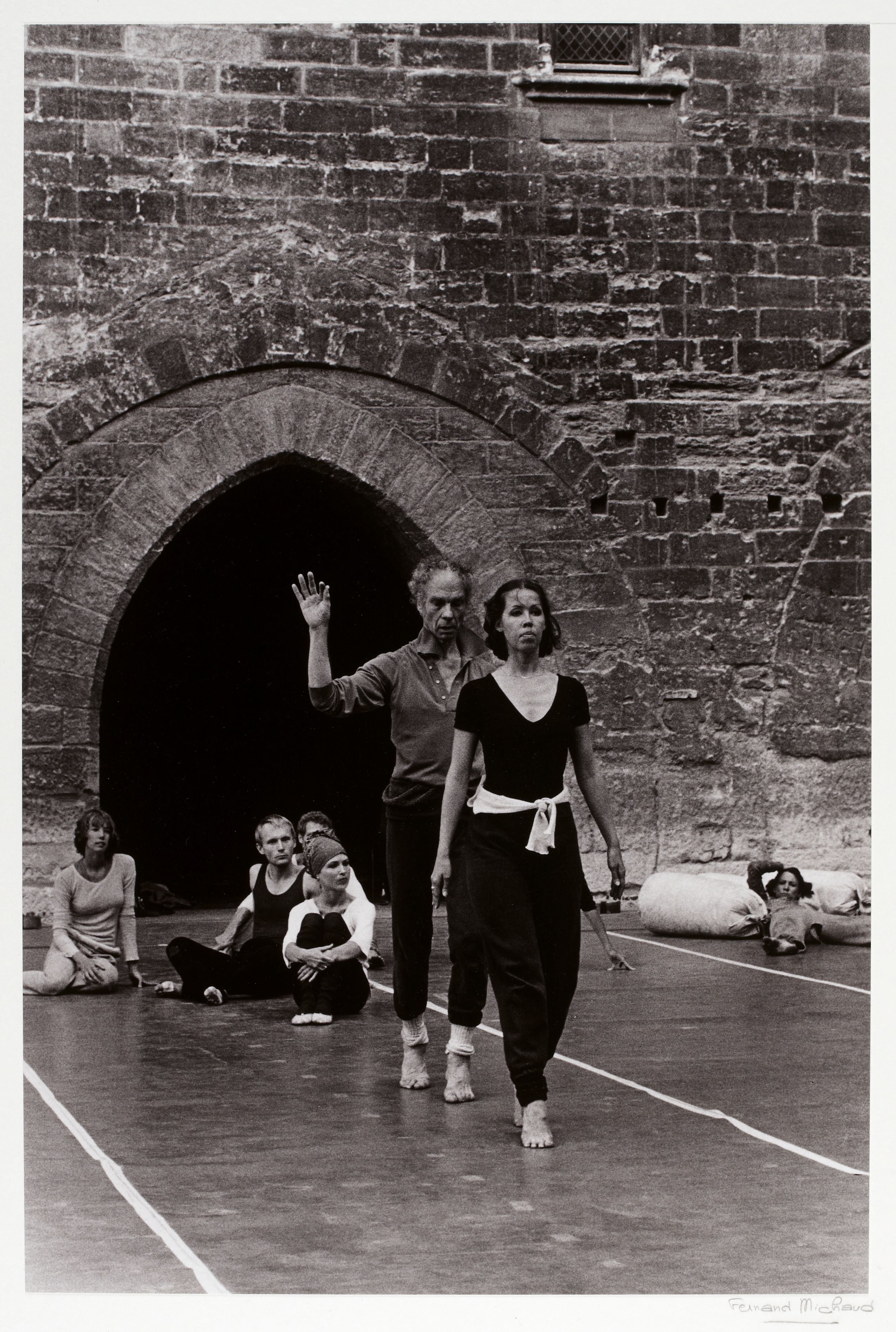
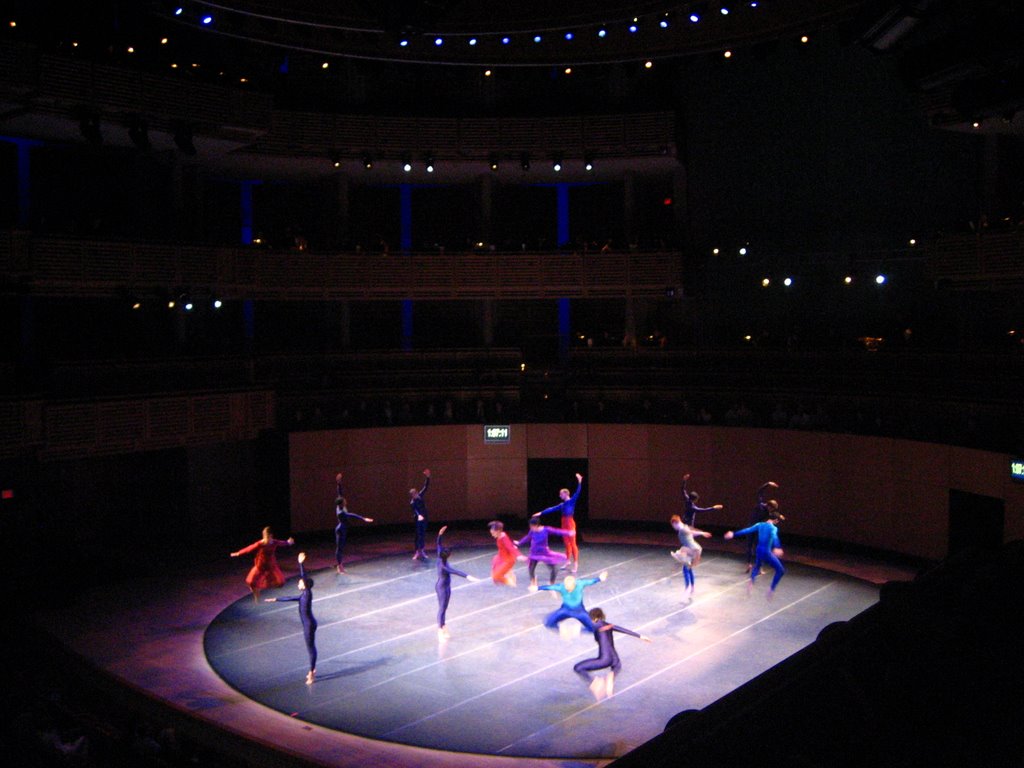
Works
50 stage works credited to Merce Cunningham, 1945–2002.
- Experiences (1945)Ballet · Choreographer
- A Diversion (1948)Ballet · Choreographer
- Collage (1952)Ballet · Choreographer
- Fragments (1953)Ballet · Choreographer
- Galaxy (1956)Ballet · Choreographer
- Antic Meet (1958)Ballet · Choreographer
- Gambit (1959)Ballet · Choreographer
- Field Dances (1963)Ballet · Choreographer
- Cross Currents (1964)Ballet · Choreographer
- Second Hand (1970)Ballet · Choreographer
- Travelogue (1977)Ballet · Choreographer
- Exchange (1978)Ballet · Choreographer
- Fractions (1978)Ballet · Choreographer
- Fielding Sixes (1980)Ballet · Choreographer
- 10's with shoes (1981)Ballet · Choreographer
- Gallopade (1981)Ballet · Choreographer
- Grange Eve (1986)Ballet · Choreographer
- Fabrications (1987)Ballet · Choreographer
- Five Stone Wind (1988)Ballet · Choreographer
- Field and Figures (1989)Ballet · Choreographer
- Ground Level Overlay (1995)Ballet · Choreographer
- Fluid Canvas (2002)Ballet · Choreographer
- AeonBallet · Choreographer
- ArcadeBallet · Choreographer
- August PaceBallet · Choreographer
- BanjoBallet · Choreographer
- Beach BirdsBallet · Choreographer
- BipedBallet · Choreographer
- Borst ParkBallet · Choreographer
- BreakersBallet · Choreographer
- CanfieldBallet · Choreographer
- Cargo XBallet · Choreographer
- CarousalBallet · Choreographer
- Change of AddressBallet · Choreographer
- ChangelingBallet · Choreographer
- Changing StepsBallet · Choreographer
- Channels/InsertsBallet · Choreographer
- Coast ZoneBallet · Choreographer
- CrisesBallet · Choreographer
- CRWDSPCRBallet · Choreographer
- Dime a DanceBallet · Choreographer
- DoublesBallet · Choreographer
- DoubletossBallet · Choreographer
- DreamBallet · Choreographer
- DromenonBallet · Choreographer
- DuetsBallet · Choreographer
- ElevenBallet · Choreographer
- EnterBallet · Choreographer
- EtoshaBallet · Choreographer
- EventBallet · Choreographer
Credits sourced from Wikidata (CC0), one citation per field. Works without a recorded premiere date are listed last. Titles link to the work in Limelight.
Merce Cunningham on screen
Films and television featuring Merce Cunningham, with the sequences we have indexed.
 Cunningham (2019)15 sequences indexedIdyllic Song (1944) · chor. Merce CunninghamTotem Ancestor (1942) · chor. Merce CunninghamSuite for Two (1950s) · chor. Merce Cunningham
 If the Dancer Dances (2018)4 sequences indexedFirst studio rehearsal: a new Cunningham physicality · chor. Merce CunninghamGino Grenek learns Cunningham's role · chor. Merce CunninghamRainForest at The Joyce: Silver Clouds performance · chor. Merce Cunningham
Poster artwork from TMDB.
 This site uses TMDB and the TMDB APIs but is not endorsed, certified, or otherwise approved by TMDB.
Legacy & Impact
Cunningham transformed twentieth-century dance by freeing movement from compulsory musical illustration and dramatic explanation, making time and space primary subjects in their own right. His collaborations with musicians, designers, and filmmakers did not collapse multiple arts into single authored statements but allowed independently conceived elements to meet under shared performance conditions. Chance procedures challenged choreographic habit while demanding heightened dancer intelligence. His sustained experiments with cameras, software, and motion capture made technology part of choreographic inquiry. The Trust's model of licensing, teaching, digitization, and archival partnership has become influential for preserving an impermanent art without pretending repertory can remain frozen.


Explore More Legends
Discover the dancers, teachers, choreographers, and cultural icons who shaped how the world moves.
Keep the thread going
Dance history, technique, and the occasional rabbit hole — in your inbox. Thoughtful, infrequent, unsubscribe anytime.
Free. No spam. One click to leave.