Performer · Film / Screen Icon · Partnership Icon · Innovator
The Nicholas Brothers
Gravity-Defying Flash Dancers
Why They Matter
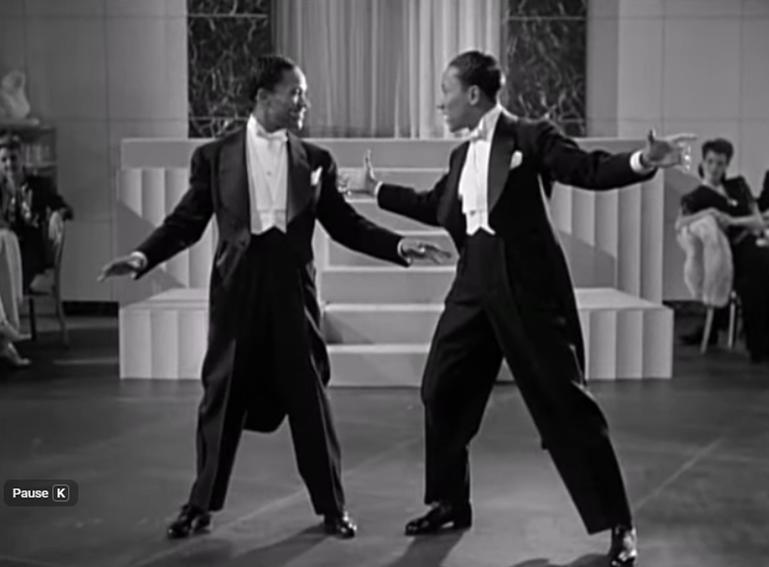
Their Stormy Weather staircase sequence is widely considered the greatest dance number ever filmed, combining tap, acrobatics, and showmanship at an unmatched level.
Biography
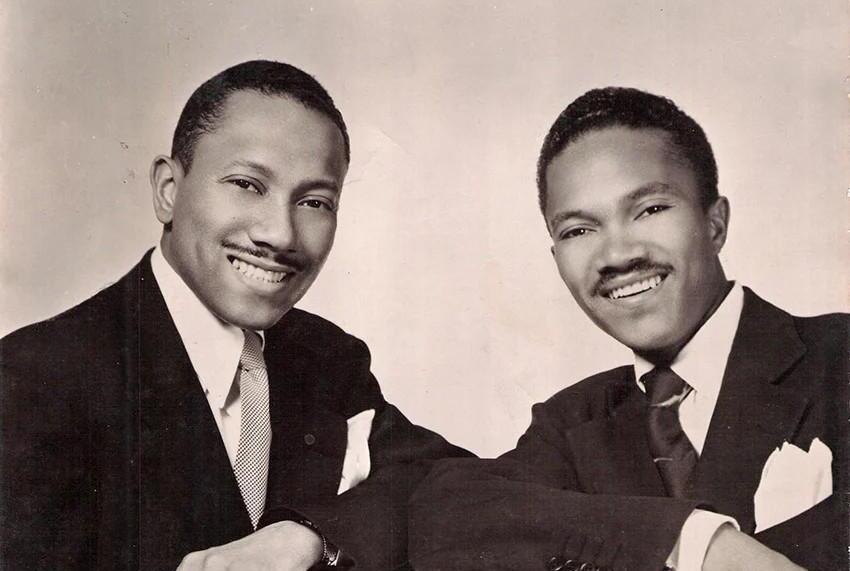
Fayard Antonio Nicholas (born in Mobile, Alabama, in 1914) and his younger brother Harold Lloyd Nicholas (born in Winston-Salem, North Carolina, in 1921) grew up inside a working musical world: their parents performed in the pit orchestra at Philadelphia's Standard Theatre, where Fayard watched leading Black vaudeville entertainers at close range. He had no formal dance schooling, learning instead by observing performers, listening to musicians and testing movement himself, and then teaching the younger Harold. Billed first as the Nicholas Kids and then as the Nicholas Brothers, they reached Harlem's Lafayette Theatre and the Cotton Club in 1932, sharing programs with Cab Calloway and Duke Ellington while still boys.
Their film record began in 1932 with the short Pie, Pie, Blackbird, and Samuel Goldwyn brought them to Hollywood for Kid Millions in 1934. Broadway followed with Ziegfeld Follies of 1936 and Rodgers and Hart's Babes in Arms in 1937, exposing them to choreographers and teachers beyond tap, including George Balanchine and Buddy Bradley, even as they kept authorship of the act's core identity. The result was a broad theatrical vocabulary - jazz rhythm, synchronized footwork, eccentric comedy, lifts, turns, split jumps and spatial designs built for large stages - rather than ballet training disguised as tap.
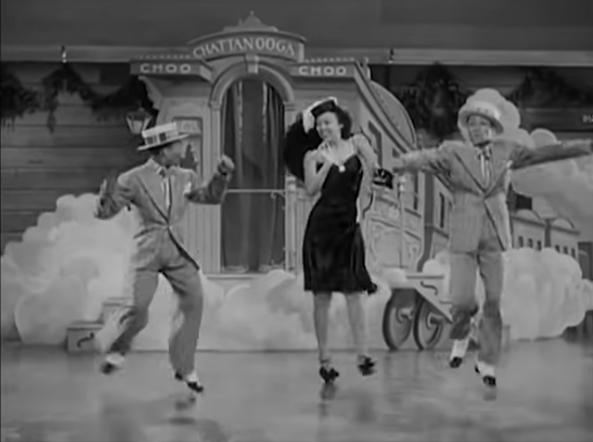
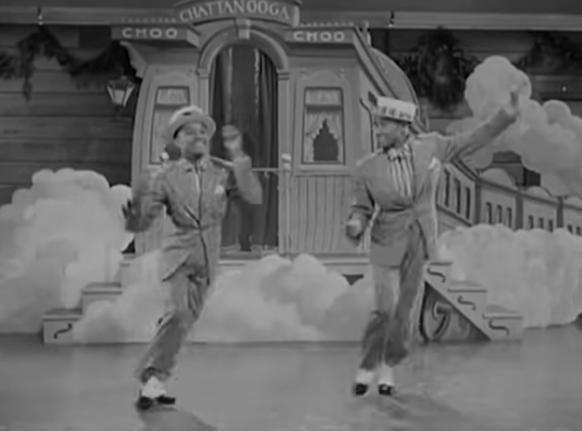
At 20th Century-Fox in the early 1940s, working with the dance director Nick Castle, they made a run of sequences that turned the camera into an ally, using bandstands, walls, suitcases and staircases as choreographic architecture. Down Argentine Way in 1940 established their Fox-era screen image; Sun Valley Serenade in 1941 paired them with Dorothy Dandridge in Chattanooga Choo Choo; and Orchestra Wives in 1942 sent their Kalamazoo routine through multiple levels of the set. Because Hollywood often cast Black entertainers in self-contained specialty numbers, distributors could cut those sequences for segregated Southern markets - so the brilliance of the performances coexisted with an industry structure that limited their narrative roles.
Their culminating Fox sequence came in Stormy Weather in 1943. Entering after Cab Calloway's Jumpin' Jive, the brothers accelerate from swinging tap into traveling jumps, leapfrog passages and the celebrated staircase descent, alternately vaulting over one another and landing in splits, with the athletic risk inseparable from musical timing and elegant unison. Credit must remain precise: the Library of Congress names Nick Castle and Clarence Robinson as stagers of the ensemble tap numbers and treats Katherine Dunham's choreography as a separate contribution, with the Nicholas Brothers performing the closing duet. The film entered the National Film Registry in 2001.
In 1948 they joined Gene Kelly for Be a Clown in Vincente Minnelli's The Pirate, a rare and landmark integrated trio that let them dance in direct exchange with a white Hollywood star rather than in an isolated insert. Their careers diverged in the 1950s - Harold worked extensively in Europe while Fayard remained active as performer, teacher and choreographer - before reunions on television and in nightclubs. Fayard shared the 1989 Tony Award for choreographing Black and Blue with Cholly Atkins, Henry LeTang and Frankie Manning, and Harold appeared that year in the film Tap. They were Kennedy Center Honorees in 1991; Harold died in 2000 and Fayard in 2006, and their family home movies were selected for the National Film Registry in 2011.
Career Highlights
Appeared at Harlem's Lafayette Theatre and the Cotton Club and made their film debut in the short Pie, Pie, Blackbird. American Tap Dance Foundation
Presented by Samuel Goldwyn in the feature musical Kid Millions. official estate
Made their Broadway debut in Ziegfeld Follies of 1936. IBDB
Appeared in the original Broadway production of Rodgers and Hart's Babes in Arms. IBDB
Performed Chattanooga Choo Choo with Dorothy Dandridge in Sun Valley Serenade. TCM
Closed Stormy Weather with the Jumpin' Jive staircase duet. Library of Congress
Played Barney and Li'l Augie in the Broadway musical St. Louis Woman. IBDB
Danced with Gene Kelly in Be a Clown in The Pirate, a landmark integrated trio. TCM
Fayard shared the Tony Award for choreographing Black and Blue with Cholly Atkins, Henry LeTang and Frankie Manning; Harold appeared in the film Tap. Tony Awards
Received Kennedy Center Honors. Washington Post
Nicholas Brothers Family Home Movies were selected for the National Film Registry. Library of Congress
Gallery
Follow & Links
Legacy & Impact
The Nicholas Brothers expanded what audiences imagined tap could do onstage and on film. Their legacy lies not in spectacular tricks alone but in the fusion of rhythmic intelligence, polish, comedy, ensemble trust and full-body articulation that made virtuosity read as joy. Their filmed dances remain unusually clear teaching documents for musical phrasing and spatial invention, while their careers also expose the racial constraints that governed how Black artistry could appear in studio-era musicals - making them essential both to tap history and to a responsible history of American screen dance.


Explore More Legends
Discover the dancers, teachers, choreographers, and cultural icons who shaped how the world moves.
Keep the thread going
Dance history, technique, and the occasional rabbit hole — in your inbox. Thoughtful, infrequent, unsubscribe anytime.
Free. No spam. One click to leave.