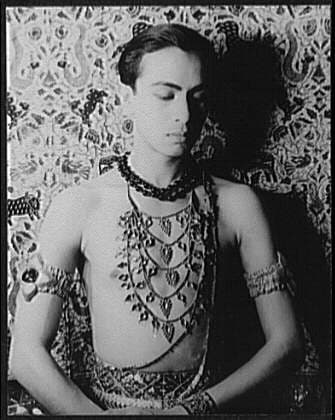
Ram Gopal
Legend of Dance
Why They Matter
Ram Gopal matters because he made the international solo recital a vehicle for sustained, serious engagement with Indian dance. He insisted on discipline, form-specific characterization, stage design, and audience explanation, while also reshaping presentation for modern concert venues. His archive
Biography
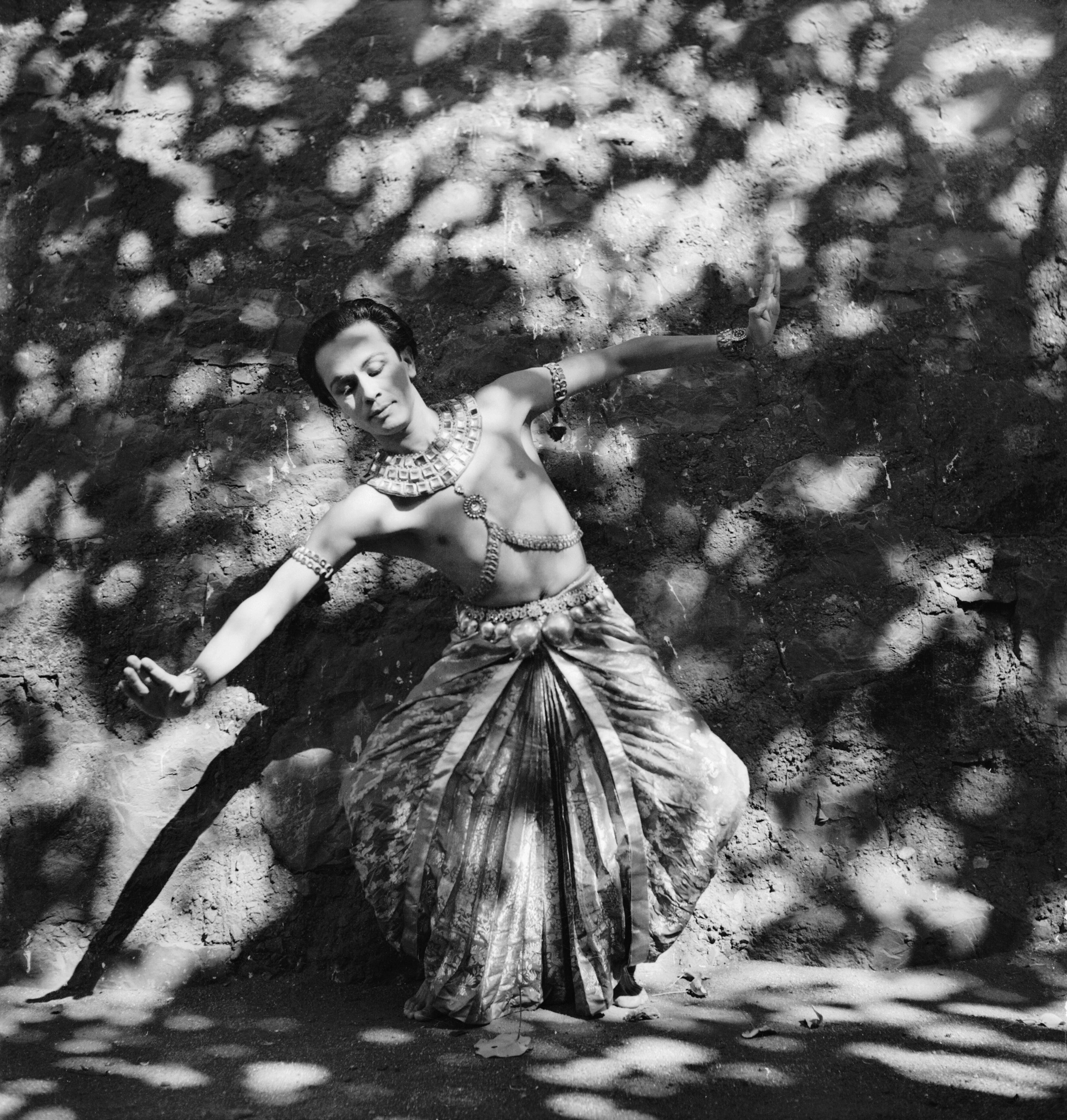
Ram Gopal was born in Bangalore on 20 November in either 1912 or 1917—his passport and India's Sangeet Natak Akademi record cite 1917, while contemporaries and later scholars have argued for 1912. He grew up in a prosperous household and pursued dance despite social resistance to it as a profession for a man of his background. Royal patronage in Mysore enabled further study. His training crossed several established systems: he studied Bharatanatyam with Pandanallur Meenakshisundaram Pillai and trained in Kathakali, while archival scholarship also traces Kathak and other influences. Rather than remaining within a single hereditary lineage, Gopal developed a stage identity grounded in presenting these forms as distinct yet coherently programmed expressions.
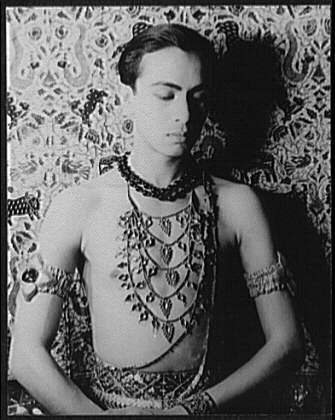
The American dancer La Meri helped open an international circuit to him beginning in 1936. Gopal performed in New York in 1938, where photographer Carl Van Vechten made an extensive portrait series, and brought his company to London's Aldwych Theatre in 1939. Strong public response extended the London engagement, establishing a career built on the mobility of the soloist, company director, lecturer, and cultural intermediary rather than on permanent institutional appointment.
After the Second World War, Gopal continued touring and publishing. His programs framed individual items through carefully differentiated costume, music, gesture, and explanatory context. He published *Indian Dancing* in 1951 and the autobiography *Rhythm in the Heavens* in 1957, extending his interpretation of Indian dance beyond the theatre. He also appeared in Sarah Erulkar's 1947 dance film *Lord Siva Danced*. Archival collections now preserve programs, photographs, correspondence, and costumes that reveal the production labor supporting the apparently self-contained solo.
In 1960 Gopal choreographed and performed *Radha-Krishna* with British ballerina Alicia Markova at the Prince's Theatre and the Edinburgh Festival. The partnership demonstrated his facility for negotiating different theatrical trainings while maintaining Indian narrative and gestural priorities. The National Portrait Gallery treats it as a pioneering artistic collaboration.
Institutional recognition consolidated his standing in his later years. Sangeet Natak Akademi elected him a Fellow in 1990, and he was appointed OBE in 1999 for services to dance. Gopal died in Croydon, London, on 12 October 2003. Subsequent conservation and exhibition projects—including the V&A and South Asian Diaspora Arts Archive conservation of his *Garuda* costume and the Museum of Croydon's exhibition *I Saw a God Dance*—have reframed him not simply as an "ambassador," but as a modernist artist whose performance identities crossed form, nation, gender presentation, and theatrical convention.
Career Highlights
Began an important international touring association with La Meri, expanding his access to Asian and Western stages. Sangeet Natak Akademi
Performed in New York and sat for Carl Van Vechten’s extensive photographic series. Library of Congress
Made a celebrated London engagement with his company at the Aldwych Theatre; demand extended the run. The Guardian
Appeared in Sarah Erulkar’s short dance film Lord Siva Danced. SADAA finding aid
Published Indian Dancing, extending his educational and interpretive work into print. VADS
Published his autobiography, Rhythm in the Heavens. SADAA finding aid
Choreographed and performed Radha-Krishna with Alicia Markova at the Prince’s Theatre and Edinburgh Festival. National Portrait Gallery
Elected a Fellow of Sangeet Natak Akademi. Sangeet Natak Akademi
Appointed OBE for services to dance. Sahapedia
Museum of Croydon presented I Saw a God Dance, an exhibition connecting his Bangalore origins, global career, and final years in Croydon. Museum of Croydon
Gallery
Legacy & Impact
Ram Gopal remains significant because he established the international solo recital as a vehicle for sustained, serious engagement with Indian dance. He insisted on discipline, form-specific characterization, stage design, and audience explanation while reshaping presentation for modern concert venues. His archive complicates the simple "cultural ambassador" narrative: he was also a choreographic author, image-maker, writer, and modernist who negotiated how Indian bodies and traditions were framed under colonial and postcolonial spectatorship. For dancers today, his work models how cross-form training and rigorous theatrical production can serve rather than dilute artistic integrity.


Explore More Legends
Discover the dancers, teachers, choreographers, and cultural icons who shaped how the world moves.
Keep the thread going
Dance history, technique, and the occasional rabbit hole — in your inbox. Thoughtful, infrequent, unsubscribe anytime.
Free. No spam. One click to leave.