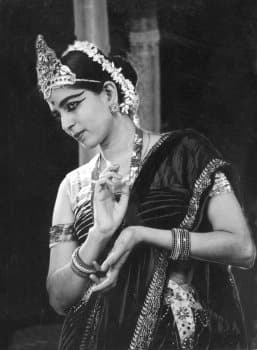
Rukmini Devi Arundale
Legend of Dance
Why They Matter
Rukmini Devi matters because she joined performance, teaching, stage design, administration, and public advocacy into a durable cultural institution. Kalakshetra’s training system and repertory influenced generations of artists in India and abroad and helped establish Bharatanatyam as a major concer
Biography
Rukmini Devi Arundale was born in Madurai in 1904 into a family connected to the Theosophical Society. In 1920, she married the British Theosophist George Arundale—a controversial union at the time because of their age, nationality, and caste differences. Travel with Arundale exposed her to international artists and educational movements that would shape her artistic direction.
A turning point came through an encounter with ballerina Anna Pavlova, who encouraged Rukmini's interest in dance. She directed her focus toward the South Indian form then commonly called *sadir*, studying first with Mylapore Gowri Ammal and then with the celebrated Pandanallur teacher Meenakshisundaram Pillai. The knowledge and traditions of her teachers—and the hereditary communities they represented—were foundational to her practice.
In 1935, Rukmini Devi gave a landmark public performance of Bharatanatyam at the Theosophical Society's Diamond Jubilee Convention, a gesture that challenged elite stigma surrounding the form and demonstrated that a Brahmin woman could perform it publicly. The following year, in January 1936, she founded the institution that became Kalakshetra. The school brought dance, music, visual design, craft, and education into a coordinated environment and developed a repertory centered on dance-drama productions based on the *Ramayana*.
Kalakshetra's influence extended beyond performance. It helped standardize teaching and stage presentation, emphasizing geometry, clarity, ensemble discipline, carefully designed costumes and scenery, and devotional narratives. This institutional project participated in the upper-caste systematization of an art historically carried by devadasi and nattuvanar communities, and it often de-emphasized erotic or *sringara* dimensions—a legacy of both artistic achievement and contested historical consequence.
Public service became a second major focus. Rukmini Devi was the first woman nominated to the Rajya Sabha and served from 1952 to 1962. During her parliamentary years, her advocacy and private-member legislative initiative contributed to the development of national animal-cruelty legislation. In 1962, she became founding chair of the Animal Welfare Board of India, extending an ethical concern rooted in her vegetarianism and Theosophical commitments. She received the Padma Bhushan in 1956.
Rukmini Devi guided Kalakshetra and its repertory until her death in Madras in 1986. Her impact was institutional and enduring: the school's survival, its alumni network, and the continuing performance of its dance-dramas became a living legacy larger than any individual performance career. Her work bridged dancing, choreography, pedagogy, stagecraft, administration, and public advocacy.
Career Highlights
Married George Arundale and entered a life of international travel and Theosophical educational work. Kalakshetra Foundation Kalakshetra Foundation
Gave a landmark public Bharatanatyam performance at the Theosophical Society’s Diamond Jubilee Convention. Kalakshetra Foundation Kalakshetra Foundation
Founded the institution later named Kalakshetra, initially at Adyar. Kalakshetra Foundation Kalakshetra Foundation
Became the first woman nominated to the Rajya Sabha. Rajya Sabha FAQ Rajya Sabha FAQ
Served two nominated terms in the Rajya Sabha as an artist. Rajya Sabha, Nominated Members list Rajya Sabha, Nominated Members list
Received the Padma Bhushan for distinguished service. Kalakshetra Foundation Kalakshetra Foundation
Her parliamentary animal-welfare advocacy contributed to the legislative path culminating in the Prevention of Cruelty to Animals Act. Rajya Sabha publication Rajya Sabha publication
Became founding chair of the Animal Welfare Board of India. Animal Welfare Board of India Animal Welfare Board of India
Died in Madras shortly before her eighty-second birthday, leaving Kalakshetra as an enduring national institution. Kalakshetra Foundation Kalakshetra Foundation
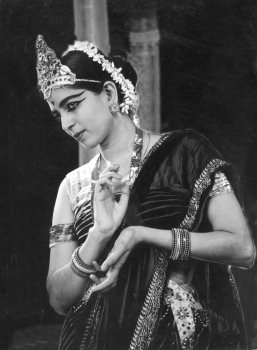
Gallery
Legacy & Impact
Rukmini Devi's significance lies in the institutional imagination she brought to Bharatanatyam—binding performance, teaching, stage design, administration, and cultural policy into a durable system. Kalakshetra's training methods and repertory influenced generations of artists in India and internationally, helping establish Bharatanatyam as a major concert form. That legacy is inseparable from the hereditary artists and communities whose knowledge enabled the project, and from ongoing historical debate about caste, respectability, and the role of aesthetic reform in shaping which dimensions of dance survive in the concert hall.


Explore More Legends
Discover the dancers, teachers, choreographers, and cultural icons who shaped how the world moves.
Keep the thread going
Dance history, technique, and the occasional rabbit hole — in your inbox. Thoughtful, infrequent, unsubscribe anytime.
Free. No spam. One click to leave.