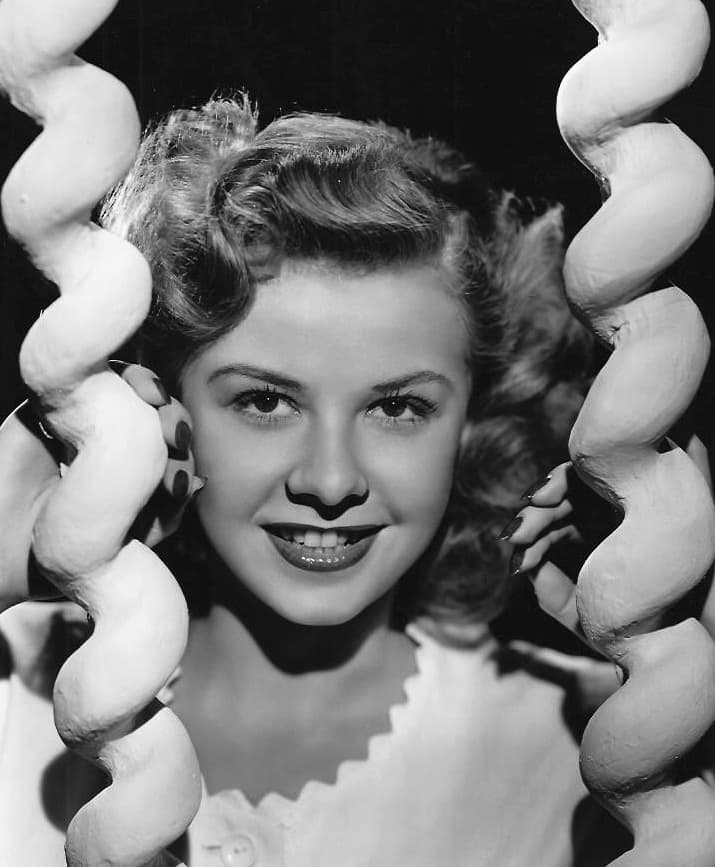
Vera Ellen
Legend of Dance
Why They Matter
Vera-Ellen matters because her films preserve a rare bridge among theatrical traditions that are often separated in modern training. She could make ballet line, tap articulation, jazz attack, character comedy and close partnering coexist inside a single screen persona. Her best sequences also demons
Watch
Mr. and Mrs. Hoofer At Home | Three Little Words
Warner Archive
Shows Vera-Ellen matching Fred Astaire's phrasing and understated comic timing in a studio-authorized excerpt.
Seeings Believing | The Belle of New York
Warner Archive
Provides an authorized example of Vera-Ellen's stylistic clarity opposite Fred Astaire.
Biography
Vera-Ellen was born in Norwood, Ohio, on 16 February 1921 and began dance training as a child. Her professional path moved quickly from local study and amateur contests to New York performance. By the late 1930s she was dancing at Radio City Music Hall and on Broadway, where musical theatre required an unusually broad command of tap, ballet line, comedy and ensemble precision.
She appeared in *Very Warm for May* (1939), *Panama Hattie* (1940), *By Jupiter* (1942), and the 1943 revival of *A Connecticut Yankee*, establishing herself as a specialist dancer who could also carry character and comedy. Producer Samuel Goldwyn brought her to Hollywood for *Wonder Man* in 1945, beginning a compact but influential screen career.
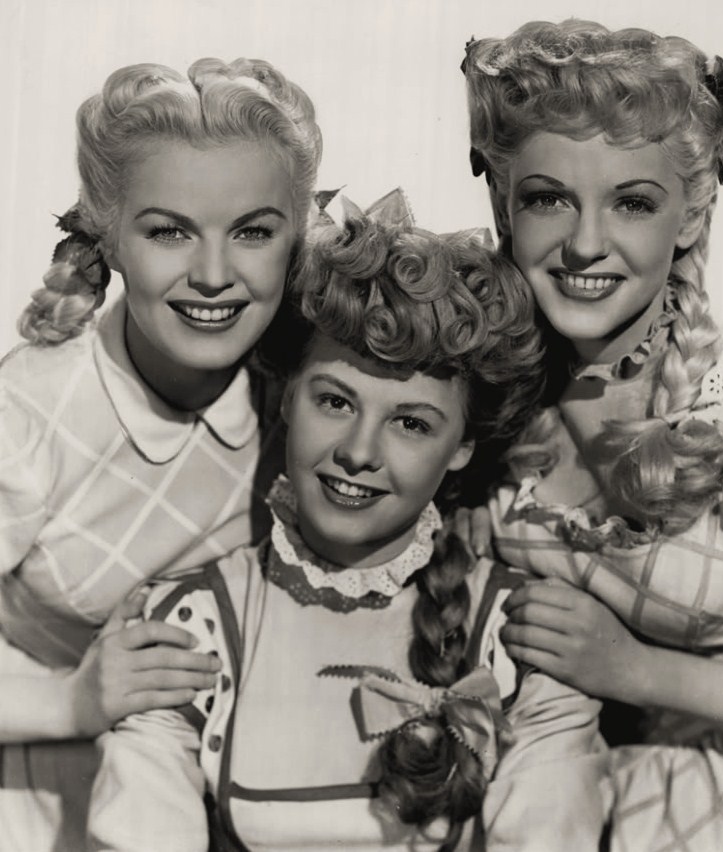
Her film work paired her with different movement personalities. With Gene Kelly in *Words and Music* and *On the Town* (1949), she met grounded athleticism and ballet-inflected narrative dance. With Fred Astaire in *Three Little Words* (1950) and *The Belle of New York*, her attack became lighter, rhythmically conversational and exceptionally precise. *Call Me Madam* (1953) placed her opposite Donald O'Connor, while *White Christmas* (1954) featured her with Danny Kaye and John Brascia. She also appeared with June Haver and Vivian Blaine in *Three Little Girls in Blue* (1946).
Vera-Ellen's value to the studio musical was versatility rather than one signature trick. She could move from pointe-influenced line to fast tap, acrobatic accents and partnered social-dance vocabulary while maintaining a clear character. Her face, timing and directional focus often kept the dancing legible even when the choreography was dense. After *White Christmas*, she made the British musical *Let's Be Happy* in 1957 and appeared on television before retiring from performance near the end of the decade. She lived largely outside public view thereafter and died in Los Angeles on 30 August 1981. Continued circulation of the films has made her technique more visible to later generations than it was during her retirement.
Career Highlights
Appeared on Broadway in Very Warm for May. Source Source
Joined the original Broadway production of Panama Hattie. Source Source
Performed in Rodgers and Hart's By Jupiter. Source Source
Appeared in the Broadway revival of A Connecticut Yankee. Source Source
Made her feature-film debut in Wonder Man opposite Danny Kaye. Source Source
Appeared with June Haver and Vivian Blaine in Three Little Girls in Blue. Source_1.jpg) Source
Played Ivy Smith in the MGM musical On the Town, directed by Gene Kelly and Stanley Donen. Source Source
Co-starred with Fred Astaire in Three Little Words. Source Source
Co-starred with Ethel Merman and Donald O'Connor in Call Me Madam. Source Source
Played Judy Haynes in White Christmas with Bing Crosby, Danny Kaye and Rosemary Clooney. Source Source
Starred in Let's Be Happy, her final feature film. Source Source
Gallery
Legacy & Impact
Vera-Ellen matters because her films preserve a rare bridge among theatrical traditions that are often separated in modern training. She could make ballet line, tap articulation, jazz attack, character comedy and close partnering coexist inside a single screen persona. Her sequences demonstrate how camera-aware focus and rhythmic detail can make difficult choreography read as spontaneous play. Dancers still study her work to understand how stylistic range and technical clarity work together.


Explore More Legends
Discover the dancers, teachers, choreographers, and cultural icons who shaped how the world moves.
Keep the thread going
Dance history, technique, and the occasional rabbit hole — in your inbox. Thoughtful, infrequent, unsubscribe anytime.
Free. No spam. One click to leave.