Dance in Film · 2010
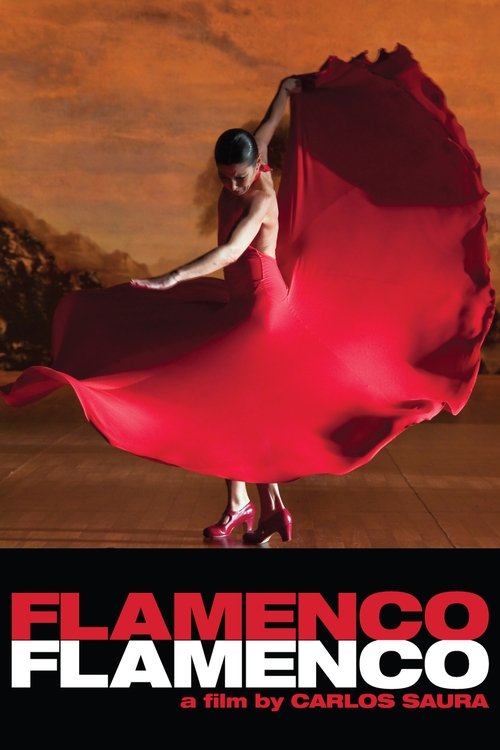
Flamenco, Flamenco (2010)
Carlos Saura stages eight explicitly danced flamenco numbers as sculpted encounters among artists, musicians, light and compás, from Sara Baras’s alegría and Rocío Molina’s garrotín to Israel Galván’s “Silencio.”
Flamenco, Flamenco is a 2010 dance feature film centred on Flamenco. For dancers, it's a chance to see the style performed on screen — the phrasing, partnering, and musicality that the same dances carry onto a real floor.
Jump to the 8 indexed dance sequences ↓
Dance styles featured
Where to watch: Music Box Films DVD/Blu-ray, in stock through Target and ImportCDs as of 2026-08-05; no U.S. digital stream verified, and Prime Video's listing was currently unavailable.
The dance sequences in Flamenco, Flamenco
8 sequences — what is danced, by whom, and where to find it.
“El Tiempo” ensemble
Danced by Karen Rubio; Marta Nogal; Mayte Beltrán; Estefanía Ruiz; Olga Aznar; Verónica Llavero · Choreography Javier Latorre
Six dancers locking into repeated patterns as “El Tiempo” gathers momentum.
Latorre shapes six dancers into an ensemble meditation on time, using repeated pathways and collective accents to make duration visible. The choreography expands the film beyond star solos and shows flamenco functioning as rigorously organized group form.
Not currently available to stream; timestamp is for reference.
“Llanto” — Soleá
SoleáDanced by Eva Yerbabuena
Eva Yerbabuena holding stillness until a soleá accent breaks it open.
Yerbabuena lets the soleá accumulate through weighted pauses, grounded turns and concentrated gesture instead of chasing display. The restraint makes each rhythmic accent feel consequential and gives the lament its dramatic architecture.
Not currently available to stream; timestamp is for reference.
“Silencio” — Israel Galván
Danced by Israel Galván
Israel Galván alone, making silence feel as percussive as footwork.
Galván strips the encounter down to a lone body and the pressure of silence, making breath, balance and minute weight changes read as rhythmic events. The absence of conventional accompaniment sharpens flamenco’s internal pulse rather than erasing it.
Not currently available to stream; timestamp is for reference.
Alegría — Sara Baras
AlegríasDanced by Sara Baras
Sara Baras cutting bright, percussive accents through the alegría.
Baras drives the alegría with buoyant compás, crisp accents and decisive upper-body phrasing, turning a full musical accompaniment into a focused solo statement. The staged presentation keeps the rhythmic lift and shifts of weight legible.
Not currently available to stream; timestamp is for reference.
Bulería — El Carpeta
BuleríasDanced by Manuel Fernández “El Carpeta”
El Carpeta firing compact footwork into a ring of voice, guitar and palmas.
El Carpeta meets bulería’s quick compás with youthful attack, rapid footwork and a responsive exchange with singers, guitar and palmas. The number works as a generational handoff without sanding away the improvisatory tension of the form.
Not currently available to stream; timestamp is for reference.
Garrotín — Rocío Molina
Danced by Rocío Molina
Rocío Molina’s taut, mercurial garrotín framed as a self-contained portrait.
Molina treats garrotín as a compact study in rhythmic attack and theatrical control, answering voice and guitar with exact footwork and elastic phrasing. The sequence shows how a traditional palo can carry an unmistakably individual body.
Not currently available to stream; timestamp is for reference.
Guajira — Arcángel with Estévez, Paños and Guerrero
GuajiraDanced by Rafael Estévez; Nani Paños; Patricia Guerrero
Estévez, Paños and Guerrero trading poised, lilting guajira phrases.
Three dancers give Arcángel’s guajira a shifting ensemble geometry, balancing the palo’s lilting ease with clean rhythmic definition. Their contrasting lines let the camera register both individual style and coordinated conversation.
Not currently available to stream; timestamp is for reference.
Holy Week ensemble
Danced by Marta Nogal; Mayte Beltrán; Estefanía Ruiz; Olga Aznar; Verónica Llavero; Berta Temiño · Choreography Javier Latorre
Six dancers advancing with the measured force of a Holy Week procession.
Latorre converts the ceremonial gravity of a Holy Week march into ensemble flamenco, using procession, formation and shared accents to bind six distinct dancers. The group structure makes devotion and spectacle operate at the same time.
Not currently available to stream; timestamp is for reference.
More dance films
Poster artwork from TMDB.
 This site uses TMDB and the TMDB APIs but is not endorsed, certified, or otherwise approved by TMDB.