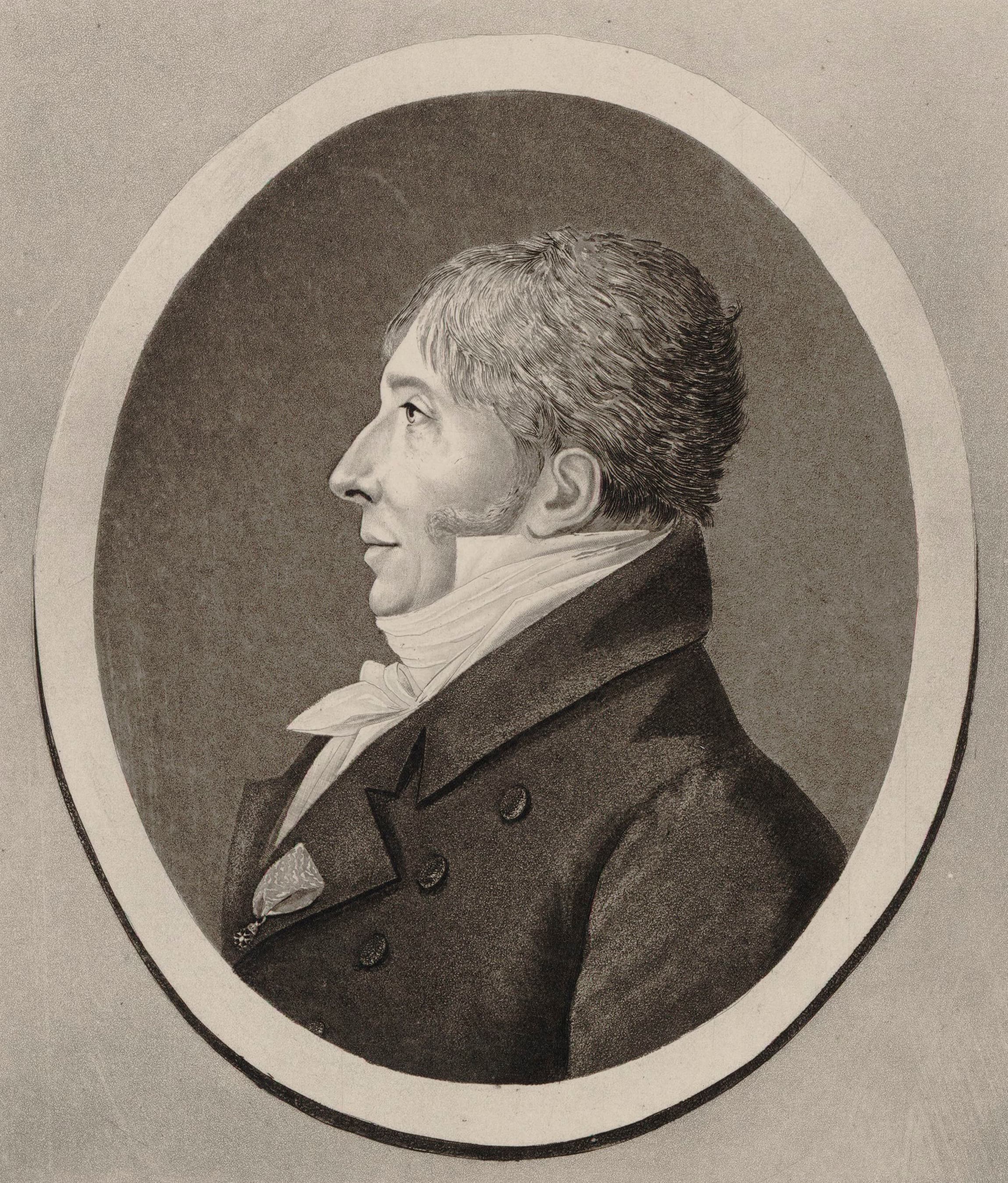
Edme Quenedey des Ricets — This image has been extracted from another file · Public domain
La mort d'Adam is a three-act tragédie lyrique by Jean-François Le Sueur, with a libretto by Nicolas-François Guillard adapted from Klopstock, first staged at the Paris Opéra (Académie impériale) on 21 March 1809. It belongs to the catalogue as a dance work because its production divided choreographic responsibility between two named figures of the period, Louis Milon and Pierre Gardel, each responsible for different acts.
What is danced
The source article does not describe any specific step, hold, formation or set-piece dance number within the opera. It records only that Louis-Jacques Milon choreographed act 1 and Pierre-Gabriel Gardel choreographed acts 2 and 3, without detail on what was danced, by whom, or in what style. Given the subject matter — described as encompassing 'the entire human race... the total population of heaven and hell' — the production plausibly involved large ensemble movement for crowd and celestial/infernal tableaux, but this is inference from the opera's scale rather than anything the article states about choreography or vocabulary. No dancer or choreographer researching this entry will find concrete movement information here; a Limelight reader wanting technical detail would need to consult separate sources on Milon's and Gardel's danse d'action practice at the Opéra in this period.
Context
The work was mounted at the Paris Opéra in 1809, a period when Pierre Gardel was the dominant choreographic authority there and Louis Milon was an active contemporary; both worked within the noble/demi-caractère ballet-pantomime idiom that preceded Romantic ballet proper. Winton Dean's assessment that the opera is 'the most comprehensive and spectacular opera ever conceived' situates it as an ambitious, large-scale spectacle whose staging (including its choreography) would have needed to match a score built on a twelve-theme leitmotiv system and vast dramatic scope spanning Genesis, Milton and Klopstock.
Staging history
The opera reached the stage only after a delay: Le Sueur had written it a few years earlier, lost an initial Conservatoire production to Catel's Sémiramis, was dismissed from the Conservatoire in 1802, and did not see La mort d'Adam performed until 1809, once he had become maître de chapelle to the First Consul. Despite the eventual production, it 'failed to arouse much enthusiasm and had to be dropped from the repertory permanently on 4 February 1810 after 16 performances.' The article records no subsequent revivals.
How to watch it
Nothing in the surviving record permits reconstruction of the danced portions, so there is no performance convention to point a viewer toward; this entry exists to flag the choreographic credit rather than to guide viewing of specific numbers. Anyone encountering a modern staging should treat any dance sequences as reconstructions or new inventions rather than transmitted period choreography.
More from Pierre Gardel
Other staged works in the register connected to this one by author or lineage.


