Ballet de Cour (Court Ballet)
Also known as: Court ballet, Ballet de cour
- Origin
- France / Italy
- Era
- 1581–1700
- Rhythm
- Set by score (varies)
- Tempo
- Stately to moderate
- Character
- Noble, ceremonial, geometric
History & Cultural Context
Ballet de cour was the lavish danced court spectacle of Renaissance and Baroque France and Italy, blending dance, music, poetry, and elaborate scenery. The Ballet Comique de la Reine (1581) is conventionally cited as the first integrated example. Louis XIV danced leading roles, founded the Académie Royale de Danse in 1661, and through his ballet master Pierre Beauchamp saw the five positions of the feet and the principle of turnout codified—the technical seed of all later classical ballet. In 1672 the dance academy merged into the Académie Royale de Musique (the future Paris Opera), beginning ballet's move from ballroom to professional stage.
Cultural Significance
Court ballet was an instrument of royal self-representation; participation expressed rank and the danced order of the court.
Characteristic Movement & Technique
Noble carriage, measured traveling figures, and the earliest turned-out positions, danced in heeled court shoes rather than on the modern flat or pointe.
Common Misconceptions
Ballet did not begin on pointe or on the theatrical stage; it began as participatory court spectacle danced by aristocrats.
Signature Figures
- Louis XIV
- Pierre Beauchamp
- Jean-Baptiste Lully
Notable Codifiers
- Pierre Beauchamp
- Raoul-Auger Feuillet
Dance Lineage
Ballet de Cour (Court Ballet) Music & Tempo
Drawn from 15 Ballet de Cour (Court Ballet) tracks in the LODance music library.
Example tracks at practice tempo
- Le ballet-comique de la reine: La petite entrée — Les Boréades de Montréal & Francis Colpron
- Ballet Royal de la Nuit - Deuxiesme partie: IV. Entrée "Toute la Compagnie" — Ensemble Correspondances & Sébastien Daucé
- Le ballet-comique de la reine: La première entrée — Les Boréades de Montréal & Francis Colpron
- Ballet Royal de la Nuit - Première partie: Ouverture du Ballet — Ensemble Correspondances & Sébastien Daucé
- Ballet Royal de la Nuit - Première partie: XIV. Entrée "La Cour des Miracles" — Ensemble Correspondances & Sébastien Daucé
- Ballet Royal de la Nuit - Première partie: II. Entrée "Prothée" — Ensemble Correspondances & Sébastien Daucé
Ballet de Cour (Court Ballet) in performance
6 staged works in the Limelight catalogue contain Ballet de Cour (Court Ballet), 1581–1721 — 2 of them in a named act or number.
- Psyché1671Ballet · defining styleAct V
Act five, the finale as the scene changes from Hell to Heaven — A grand ensemble ballet is danced by figures representing the followers of Apollo, Bacchus, Momus and Mars, the customary large closing dance of a tragédie-ballet marking the resolution of the…
- Les élémens1721Ballet · defining styleAct Prologue · Chaos
Prologue (Chaos), 1721 court version — The king in person danced a formal divertissement alongside twelve other young noble courtiers, the hallmark court-ballet practice of royal and aristocratic amateur performers dancing set pieces within the entertainmen…
- Ballet · defining style
The entire spectacle, from the Queen's fountain entrance to the closing restoration of peace — A full court spectacle combining sung verse, instrumental music, scenic design and processional/allegorical dance staged for royalty and courtiers, with the Queen…
- Ballet · defining style
The entire work, as staged for the 1608 Mantuan wedding festivities — A sung mythological frame (Venus, Cupid, Pluto) built around a single choreographed processional episode, performed as a dynastic wedding entertainment with court nobles among the dancers…
- Ballet · Louis XIII of France · defining style
The whole work, as a ballet à entrées — Structured as successive character entrées danced by courtiers and the king himself, who performed a woman, a merchant, a tax collector, and a mischievous blackbird — the defining role-based, type-driven dancing of th…
- Ballet · Pierre Beauchamp · defining style
the entire work, across all four Watches and its forty-five entrées — a courtly spectacle built from forty-five discrete entrées and three ballets-within-the-ballet, performed by courtiers and professional dancers including the king himself, in the entrée-a…
Every claim above is quoted from a cited source and names where in the work the style appears. Claims we could not place or could not quote are held back from this list and shown on the work’s own page instead. Browse the full performance catalogue →
Sources & Further Reading
Cultural & Historical Context
Ballet de Cour (Court Ballet) emerged from France / Italy during 1581—1700s. Understanding the cultural roots, musical traditions, and social circumstances of this era enriches appreciation for the dance's characteristics and significance.
Formative Influences
Codifiers & Standardizers:
Pierre Beauchamp, Raoul-Auger Feuillet
Signature Movement Vocabulary:
Louis XIV, Pierre Beauchamp, Jean-Baptiste Lully
Primary Source Documents
The Library of Dance contains public-domain primary sources for dance history. Copyrighted modern syllabi are indexed with purchase links to their respective copyright owners. Search by dance name or codifier to discover primary source documents.
Last reviewed: September 2026 — This dance profile synthesizes historical research, cultural documentation, and contemporary practice knowledge to provide authoritative context.
Related Dances
More in Ballet
Romantic Ballet
The early-19th-century era that introduced pointe work, the ethereal 'white ballet,' and the ballerina as central figure, exemplified by La Sylphide (1832) and Giselle (1841).
Classical Ballet
The full-evening story-ballet style perfected by Marius Petipa in Imperial Russia—Swan Lake, The Sleeping Beauty, The Nutcracker—that defines the core ballet repertory and codified virtuoso classical technique.
Neoclassical Ballet
The 20th-century style—pioneered by George Balanchine with Apollo (1928)—that retained classical technique while stripping narrative and scenery for speed, line, extension, and pure response to music.
Contemporary Ballet
The late-20th-century-onward fusion of classical ballet technique with modern and contemporary dance, associated with choreographers such as William Forsythe and Jiří Kylián.
Pre-Ballet & Creative Movement
The early-childhood foundation class that introduces rhythm, spatial awareness and basic ballet vocabulary through imaginative, imagery-led movement rather than formal syllabus work.
Vaganova Method
A pedagogical system for training classical ballet dancers, not a choreographic style or a period repertoire. Agrippina Vaganova built it by analysing what the French, Italian and older Russian teachers of the Imperial school had each done well, and fixing the result as a progressive year-by-year course. It is the training behind the Kirov and Bolshoi companies and, in diluted or borrowed form, behind a large share of ballet teaching worldwide.
Cecchetti Method
A training method rather than a style of choreography, built on a fixed weekly cycle of set exercises so that the whole vocabulary is covered every six days and no muscle group is overworked. Enrico Cecchetti taught it to a generation that included Pavlova, Nijinsky and Karsavina; it was written down by his London pupils and admirers in the 1920s. Its concern is anatomical economy: strength built without strain, and the same effort available on the sixth day as on the first.
Royal Academy of Dance (RAD) Method
A graded teaching and examination syllabus rather than a technical school descended from one master, assembled in 1920 by teachers of five different national traditions who wanted a common standard for ballet teaching in Britain. Its structure is a ladder of examined levels, each with set exercises, taken by children and by vocational students. It is now the most widely examined ballet syllabus in the world.
Balanchine Method
A way of training dancers for a specific body of choreography, developed by George Balanchine at the School of American Ballet from 1934 and refined over five decades to serve New York City Ballet. It prizes speed, clarity at high tempo, extreme range of movement and a willingness to go off the vertical and recover. Unlike the older European schools it was never written into a syllabus by its founder, and is transmitted by teachers who danced for him.
Bournonville Method
The training developed by August Bournonville for the Royal Danish Ballet, built to serve his own ballets and preserved in Copenhagen long after the French style it descends from had disappeared in Paris. It trains a jump that appears to cost nothing, intricate beaten footwork, and an upper body that stays modest while the legs do difficult things. It is the closest surviving link to early nineteenth-century French classroom practice.
Ballet de Cour (Court Ballet) in art
Browse the gallery →Works our catalogue identifies as depicting ballet de cour (court ballet).
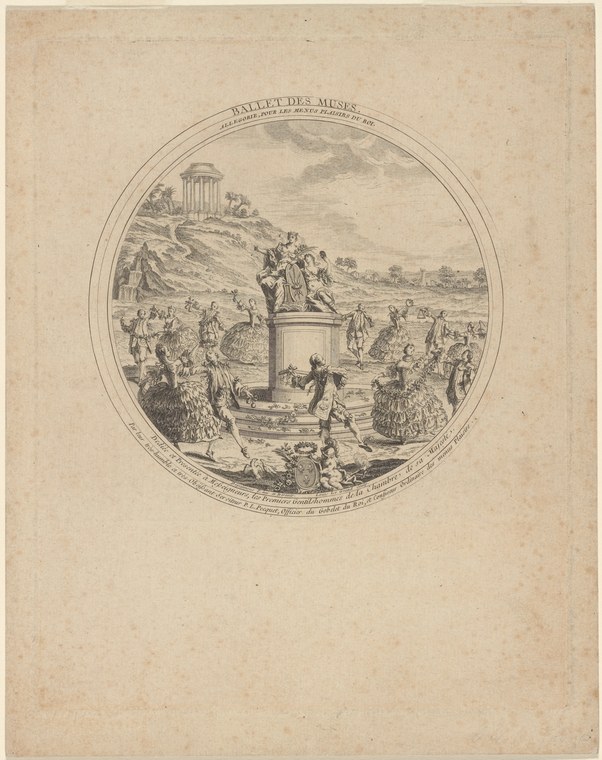
Ballet des muses
Unknown artist
public_domain
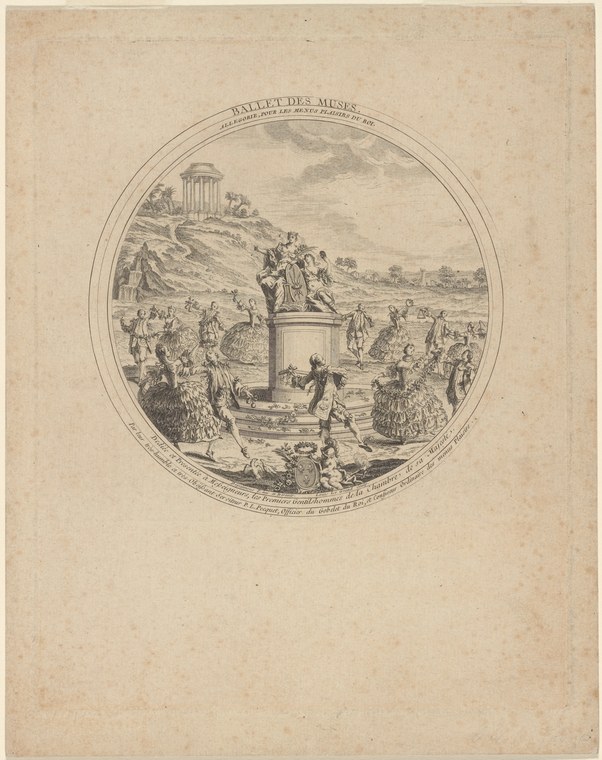
Ballet des muses
Unknown artist · 2013
public_domain
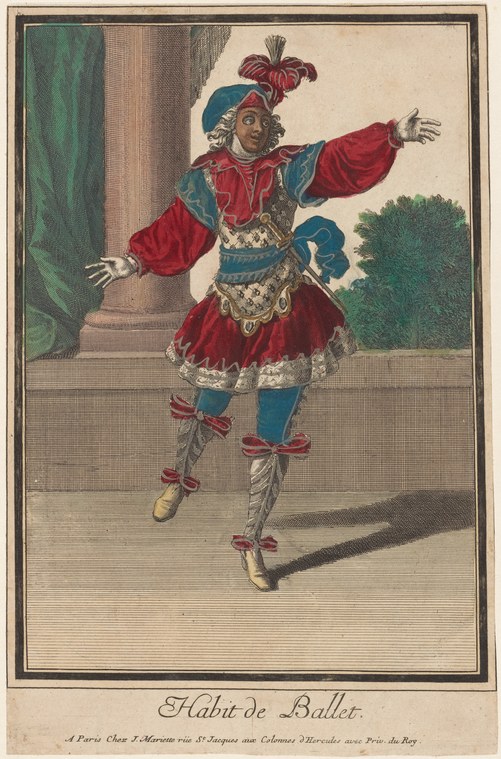
Habit de ballet
Unknown artist · 2013
public_domain
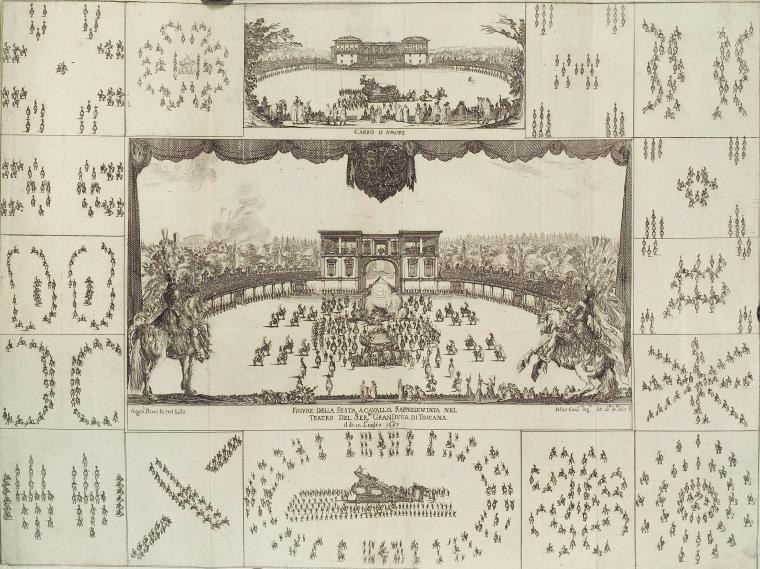
Horse ballet
Unknown artist
public_domain
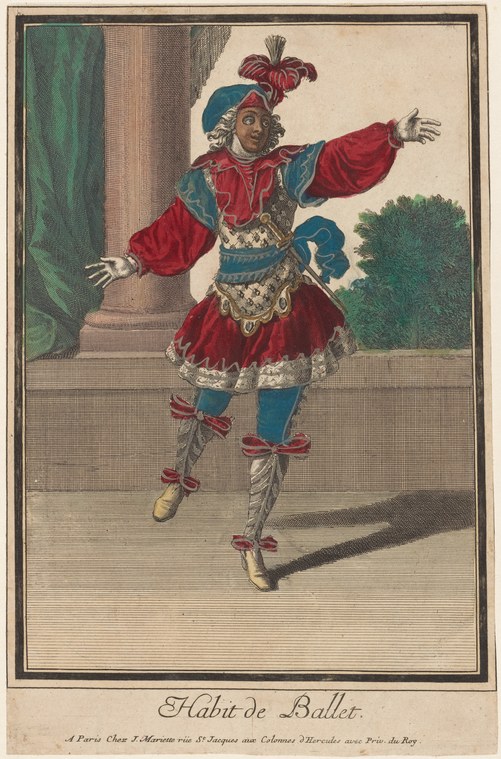
Habit de ballet
Unknown artist
public_domain
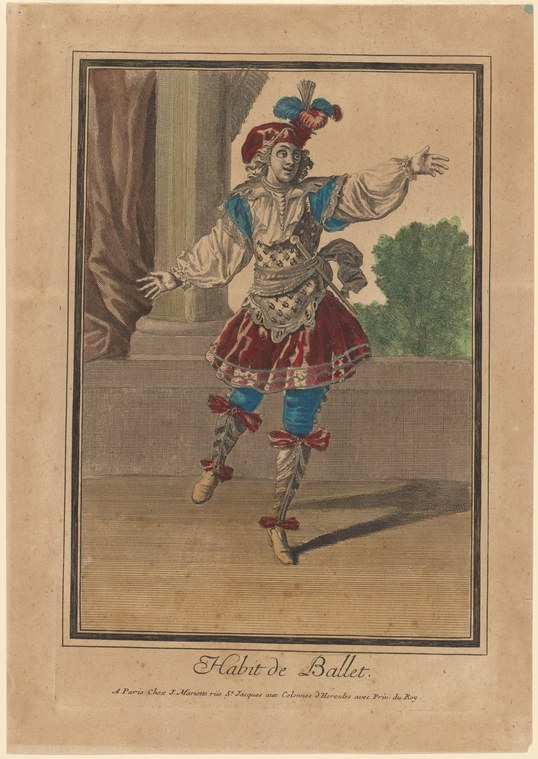
Habit de ballet
Unknown artist
public_domain
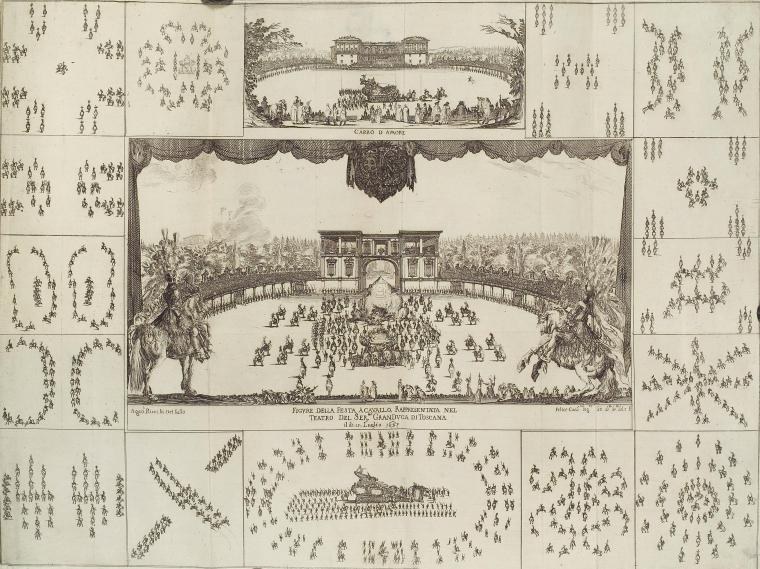
Horse ballet
Unknown artist · 2021
public_domain
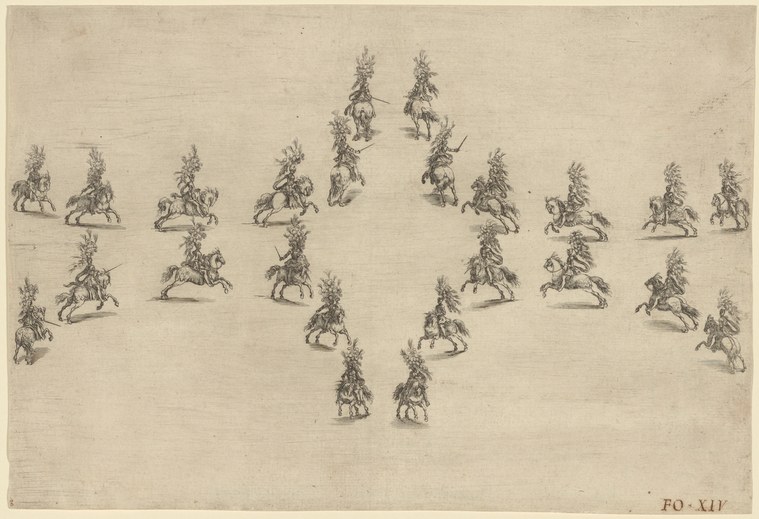
Horse ballet
Unknown artist
public_domain
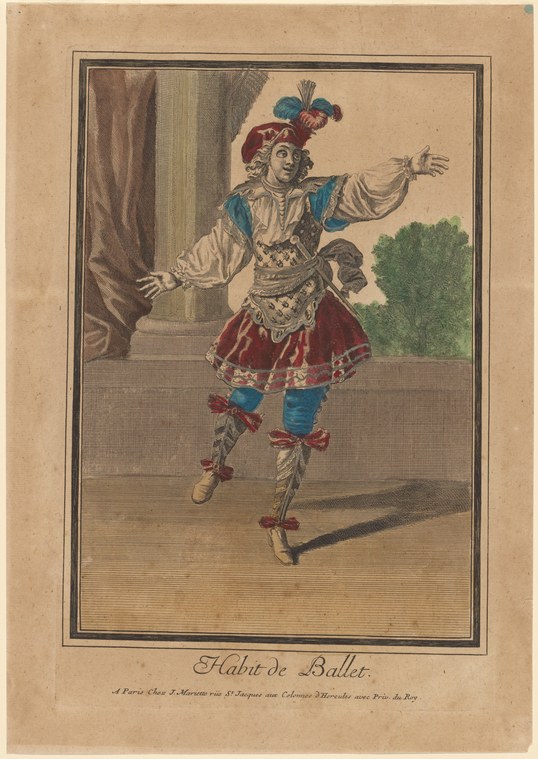
Habit de ballet
Unknown artist · 2013
public_domain
Continue Exploring
Lineage of Dance
500 years of dance evolution
Champions of Dance
Winners of marquee national & world titles
Language of Dance
161 dance terms & translations
Listening of Dance
Tempo, timing & musicality tools
Gallery of Dance
5,700+ artworks from museum collections
Attire of Dance
Evolution of dance dress across eras
Keep the thread going
Dance history, technique, and the occasional rabbit hole — in your inbox. Thoughtful, infrequent, unsubscribe anytime.
Free. No spam. One click to leave.