49 works in this view — arrow keys or swipe to move between them.
Dance in Art
Paysan galant
Unknown artist
- Collection:
- Prints depicting dance
- Source:
- New York Public Library
- Rights:
- Public domain — free to use, share and adapt.
- Recorded as:
- Public Domain
This print preserves a tradition of comic dance and physical theater that left few textual records; the image itself is evidence of how rustic or peasant roles were performed on the 18th-century stage. For historians of theatrical dance, it demonstrates the existence of a parallel tradition to courtly and balletic movement—one based on exaggeration, mimicry, and social satire rather than technical refinement. The print format ensured wide circulation and made this performance tradition visible to audiences beyond those who attended the theater.
What you are looking at
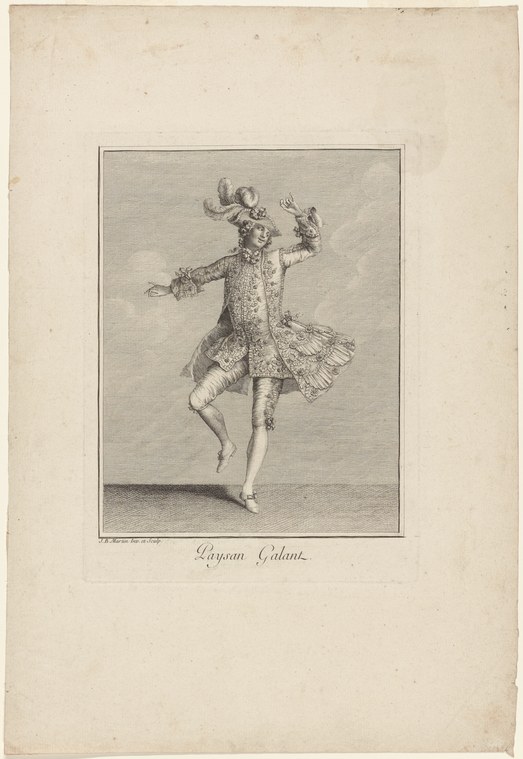
A single male dancer in aristocratic dress occupies the entire composition against a plain background. He wears a richly patterned coat with elaborate embroidery or brocade, knee breeches, stockings, and heeled shoes; his hair is styled in the formal curls typical of the 18th century, topped with a small hat or cap. His posture is one of exaggerated theatricality: one leg is extended high and bent at the knee in a vigorous kick or leap, while his torso twists energetically, one arm extended outward and the other raised. His expression and dynamic pose suggest comic exaggeration—the kind of buffoonish energy associated with rustic or peasant comedy roles on the stage. The engraving is finely detailed and rendered in a technique characteristic of 18th-century theatrical portraiture, with precise cross-hatching for shadow and texture.
The dancing
A single dancer shown in a moment of vigorous movement, captured mid-leap or high kick. His weight appears to be transferring; one leg drives upward while the other remains planted or in transition. Both arms are thrown outward in an expansive, uninhibited manner that reads as comedic abandon rather than controlled technique. The posture is deliberately ungainly and exaggerated—knees bent awkwardly, body twisted—which suggests a pantomimic or character dance rather than a codified ballroom or ballet vocabulary.
The dance depicted
This appears to be a theatrical character dance, likely a 'paysan' or peasant role from 18th-century French stage comedy or comic opera (opéra comique). The title 'Paysan galant' (the gallant peasant) suggests a stock character—a rustic attempting to behave with aristocratic manners, creating comic incongruity. The exaggerated pose, the burlesque energy, and the theatrical costuming all point to a comic theatrical tradition rather than courtly dance. The specific movements—the high kick and the sprawling arm positions—are characteristic of the energetic, unrestrained style associated with rustic or servant roles in 18th-century stage comedy.
How it was made
This is an engraving, likely hand-colored or intended for coloring after printing. The technique employs fine cross-hatching and careful line work to model the figure and create tonal depth, particularly in the rendering of fabric texture and the dramatic costume. Such engravings served as theatrical portraits and souvenirs, circulated among audiences and collectors to commemorate popular performers and roles. This mode of circulation—a single figure against a plain ground, inscribed with a character name—is characteristic of 18th-century theatrical documentation, where such prints functioned as both promotional material and a record of performance tradition.
About this work
This engraving documents a comic theatrical character—the Paysan galant or gallant peasant—from 18th-century French stage culture. It captures the exuberant, burlesque physicality of a character dance role, showing a performer in a moment of ungainly, energetic movement that reads as comic rather than graceful. The work belongs in a dance archive because it is a primary document of how theatrical comedy employed dance and physical comedy as central tools of characterization and humor. It shows the performer's body as an instrument of satire and entertainment, not as a vehicle for virtuosity or formal beauty.
How to look at it
Observe the moment the engraver chose: not a pose of rest, but a moment of peak action and comic distortion. The extended leg, the twisted torso, and the splayed arms are all exaggerated beyond what a realistic depiction of human movement would capture—this is intentional, meant to convey the character's buffoonish energy and the performer's skill at physical comedy. Notice how the richness of the costume—the elaborate coat and the formal curling hair—contrasts with the undignified posture and movement; this visual incongruity was the whole point of the role.
The period
In the 18th century, comic theater and opéra comique were thriving forms throughout Europe, and the paysan (peasant) character was a stock figure in comedy. These roles provided contrast to aristocratic protagonists and allowed for physical and linguistic humor based on the pretensions of rustics attempting to move or speak 'above their station.' The tradition drew on commedia dell'arte and folk performance, adapted for theatrical stages. Theatrical engravings like this one were a major form of celebrity documentation and performance preservation, since performance itself was ephemeral; actors and dancers were known partly through the images that circulated after their popular roles.
Where it lives
The work is held in the New York Public Library's collection of prints depicting dance. It is an 18th-century engraving, likely French, documenting a theatrical character and its performance tradition through a single figure portrait inscribed with the character's name.
Dance in this work
Questions about this work
Is this ballet?
No. This is a comic theatrical character dance from 18th-century stage comedy or opéra comique. It belongs to a tradition of physical and pantomimic theater that was contemporary with ballet but distinct from it—more concerned with satire and burlesque than with the refined, virtuosic technique that ballet was developing.
What does 'Paysan galant' mean?
It means 'the gallant peasant' or 'the courteous rustic'—a character type in 18th-century comedy based on the comic contrast between a peasant or servant and aristocratic manners or pretensions. The comedy comes from the character's attempt to behave refinedly while being fundamentally uncouth.
Why is his pose so exaggerated?
The exaggeration is deliberate and part of the character's humor. The twisted posture, the high kick, and the wild arm positions convey comic abandon and physical clumsiness—they show the audience that this is a satirical role meant to make them laugh, not a 'proper' performance of refined dance technique.
More dance artwork





