49 works in this view — arrow keys or swipe to move between them.
Dance in Art
Jim Crow
Unknown artist
- Collection:
- Prints depicting dance
- Source:
- New York Public Library
- Rights:
- Public domain — free to use, share and adapt.
- Recorded as:
- Public Domain
For historians of dance and performance, this image provides direct visual evidence of how Jim Crow was physically performed: the exaggerated postures, the distorted framing of the body, the theatrical setting and costume. For historians of race in America, it documents the mechanics of minstrelsy—how racist caricature was enacted through the body and circulated through mass-market prints. Neither use should ignore the other: this is simultaneously a historical document of an important (if shameful) American performance tradition and a record of systematic racial dehumanization.
What you are looking at
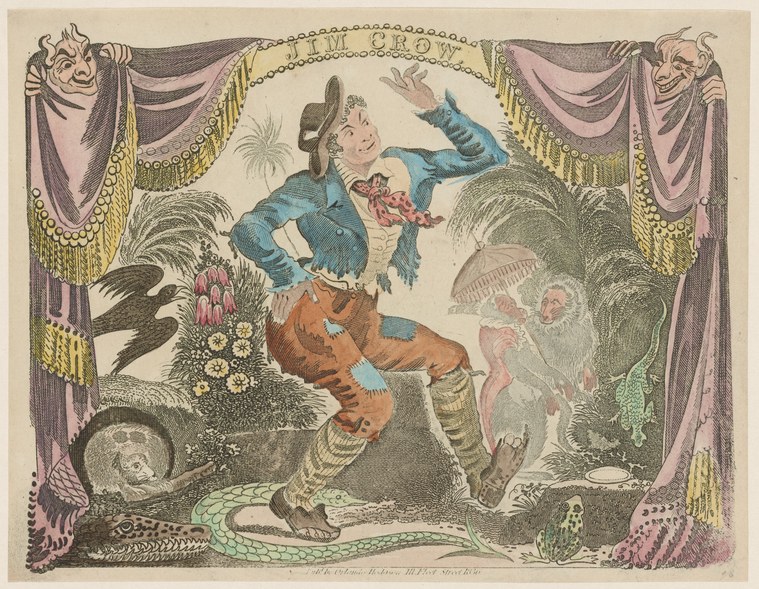
A hand-colored engraving framed by elaborate theatrical drapery shows a caricatured figure in a grotesque performance. The central figure wears blue-coat dress with brown breeches and striped stockings, striking an exaggerated pose with one leg raised high and one arm flung upward while holding a small doll or puppet. The dancer's face is rendered as a caricature with exaggerated features. The setting is a lush, densely detailed landscape populated with animals—an ostrich with elaborate plumage dominates the left side, while an elephant and serpent appear in the background. Tropical plants, flowers, and a cockatoo complete the theatrical wilderness. The entire scene is enclosed in a decorative frame of swag curtains with theatrical ornaments (masks) at the top corners, gold tassels, and beaded borders, marking this as an image of theatrical performance rather than realistic documentation.
The dancing
The single dancer occupies the center in a highly stylized, contorted pose that emphasizes grotesque exaggeration rather than technical control. The raised leg and extended arms suggest energetic, unrestrained movement; the body is twisted and the posture is deliberately comic rather than graceful. The figure's frame is entirely isolated—no partners or other dancers are present. The pose reads as deliberately untrained or deliberately mocking of training, with weight distributed asymmetrically and the overall silhouette suggesting parody or burlesque performance rather than refined technique.
The dance depicted
This is a caricatural image of 'Jim Crow' or a Jim Crow-style performance, likely dating to the early-to-mid nineteenth century. The Jim Crow character originated in American minstrelsy and was performed as an exaggerated, grotesque caricature of enslaved African Americans, typically using a combination of contorted dance steps, facial caricature, and buffoonery. The image documents the performance style rather than authentic dance: the twisted posture, raised leg, and held puppet are characteristic of the theatrical exaggeration and deliberate physical distortion central to the minstrel tradition. The tropical setting and exotic animals suggest the 'exotic' framing that accompanied such performances. This was not a dance of skill but of mockery.
How it was made
This is a hand-colored engraving, likely produced through intaglio printing and colored after printing by hand. The fine detail visible in the drapery, animals, and background landscape indicates professional engraving technique. Hand coloring was common for popular theatrical and entertainment prints of this period, allowing for wider circulation and appeal than oil painting while maintaining visual richness. The theatrical frame and ornamental elements were printed as part of the plate, indicating this was designed for sale as a popular print—a mass-market object for public entertainment rather than fine art collection.
About this work
This is a hand-colored engraving documenting the Jim Crow character and performance style that dominated American minstrelsy in the nineteenth century. The image captures the grotesque physicality and exaggerated caricature fundamental to the genre: the contorted posture, the theatrical wilderness setting populated with exotic animals, and the decorative theatrical framing all mark this as a document of popular entertainment aimed at a paying audience. The work is historically significant as evidence of a major American performance tradition, though its subject matter—the mocking caricature of Black Americans through exaggerated dance and facial distortion—is deeply offensive and rooted in racism. Understanding this image requires confronting both what it shows (a specific performance style) and what it expresses (systematic racial mockery). The engraving format and hand coloring indicate this was a widely distributed popular print, making it documentation of what paying audiences went to theaters to see.
How to look at it
Observe the deliberate distortion in the body: the raised leg is not a technical movement but an exaggerated pose designed for mockery. The contorted frame, the facial caricature, and the theatrical staging all work together to mark this as performance designed to ridicule rather than to display skill. The framing device—the theatrical drapery and masks—signals to the viewer that they are looking at entertainment, at spectacle. Notice what animals are present and how they relate to the human figure: they mark this as a fantasy of 'exotic' performance. The hand coloring, visible in the blues and browns of the costume and the detailed naturalism of the animals, indicates this was a luxury object meant for repeat viewing and display.
The period
Jim Crow performances emerged in American theaters in the 1820s and dominated popular entertainment through the nineteenth century. The character—performed by both white actors in blackface and, later, by Black performers—combined distorted dance steps, exaggerated facial caricature, and crude buffoonery. Minstrelsy became the most popular form of American theatrical entertainment, spawning touring companies and wide circulation of images. Hand-colored engravings like this one were sold separately to audiences as souvenirs and advertisements for performances, making them among the most widely distributed images of American performance. The tropical setting and exotic animals in this print reflect the period's fascination with 'exotic' performance—a framework used to further distance and render other the caricatured subject.
Where it lives
The work is held in the New York Public Library's collection of prints depicting dance. The catalogue record identifies it only as 'Jim Crow,' undated and of unknown artist and medium, indicating it entered the collection without full documentation. The NYPL's prints collection contains similar hand-colored theatrical engravings from the nineteenth century, many of which document popular entertainment.
Dance in this work
Questions about this work
What was the Jim Crow dance?
The Jim Crow was a performance character in American minstrelsy—a theatrical tradition centered on the mockery of enslaved African Americans through exaggerated dance, facial caricature, and buffoonery. The character combined contorted body positions, distorted facial features, and crude comic business. Despite its origins as a racist caricature performed by white actors in blackface, Jim Crow became so popular that Black performers were later forced to adopt the same demeaning roles. The dance was not a real cultural form but a theatrical fiction designed to ridicule.
Why is this image in a dance collection?
Because minstrelsy, however offensive, was a major American performance tradition and Jim Crow dancing was its central attraction. Dance historians and performers need to understand how bodies were moved, costumed, and framed in this context. Collections that document dance history must include traditions that are now recognized as harmful—ignoring them does not erase them. This image is valuable precisely because it shows, in visual detail, what audiences paid to watch.
Who performed Jim Crow?
The character originated with white performers in blackface, most famously Thomas D. Rice in the 1820s. Minstrelsy companies toured widely and the role became standardized. By the mid-nineteenth century, Black performers were also forced to perform Jim Crow in blackface, perpetuating the caricature. The character remained popular in American entertainment until well into the twentieth century.
How do we display this responsibly?
Historical accuracy requires showing what audiences watched and what was widely circulated. This image must be contextualized: identified as a racist caricature, explained in its historical moment, and not presented as documentation of actual African American culture or dance. Viewers need to understand both what this shows (a specific performance style) and what it expresses (systematic racial mockery).
More dance artwork





