49 works in this view — arrow keys or swipe to move between them.
Dance in Art
Garth Fagan Dance
Unknown artist
- Collection:
- Prints & Photographs
- Source:
- Library of Congress
- Rights:
- Rights vary by item — check the source record before reusing this image. Source record ↗
- Recorded as:
- Library of Congress — no known restrictions (verify per item)
Garth Fagan Dance was one of the most innovative American dance companies of the late 20th century, and this photograph documents the balletic foundation of their distinctive fusion practice at the height of the company's influence. For anyone studying contemporary ballet or the intersection of classical technique with Caribbean and African dance forms, this image provides visual evidence of how that synthesis actually looked in motion.
What you are looking at
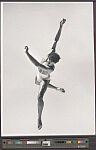
A single male dancer is captured mid-leap against a plain light background, his body in a dramatic vertical extension. He wears dark performance attire—a dark shirt and tights—and his musculature is taut and controlled. The photograph is taken from a three-quarter view that emphasizes the height and athleticism of the jump. His body forms a dynamic line, with arms and legs extended in a balletic shape; one leg is lifted high while the other provides the thrust of the leap. The lighting is even and shadowless, typical of studio photography, isolating the figure completely and focusing all attention on the purity of the movement.
The dancing
One male dancer, isolated in the frame. His body is fully extended in a vertical jump with classical balletic alignment—the torso is upright and controlled, one leg extended upward in an attitude or développé position, while the supporting side generates the propulsive force. The arms are positioned with balletic carriage, creating a composed frame rather than a wild or modern gesture. The photograph freezes the apex of the leap, where control and weightlessness appear simultaneously present.
The dance depicted
This is theatrical contemporary or neoclassical ballet, photographed during or immediately after a performance. The movement vocabulary—the balletic port de bras, the precise line of the extended leg, the controlled verticality—belongs firmly to academic ballet training and its post-Balanchine American variants. Garth Fagan (1940–2023) was a renowned African American choreographer and dance educator who founded Garth Fagan Dance in 1969 and famously choreographed for musical theatre, most notably *The Lion King*. His company was known for blending Caribbean and African movement vocabularies with contemporary and ballet techniques. This image likely documents a dancer from his company in a moment that exemplifies his fusion approach—balletic form meeting contemporary athleticism.
How it was made
This is a black-and-white photograph, likely gelatin silver print or modern photographic reproduction. The even, studio lighting and shadowless background suggest a controlled studio session or professionally lit stage documentation. The photograph was made for circulation as a press or archival image—the clarity and composition indicate it was taken intentionally for reproduction and publication rather than casual documentation. Photographs of this era became the primary way dance was documented and circulated, especially for companies seeking to build reputation and record their work.
About this work
This is a studio photograph of a dancer from Garth Fagan Dance, taken in 1989. It documents a moment of balletic extension in mid-leap, isolating the dancer against a neutral background to emphasize the purity and control of the movement. The image belongs in a gallery of dance art because it represents both the technical vocabulary of classical ballet and the contemporary performance practice of a major African American dance company that challenged and expanded what ballet could be. The photograph itself is an artwork—a deliberate composition that freezes and frames a live moment, creating something that exists only in the photograph.
How to look at it
Notice the moment the photographer chose: not the landing or the preparation, but the apex of the jump, where the dancer appears suspended. The balletic frame of the arms and the precise line of the extended leg reveal years of classical training, yet the sheer power and verticality of the leap suggest a body trained for contemporary demands. The plain background forces the viewer to read the movement itself, without distraction—this is a technique borrowed from ballet documentation photography but used here to showcase the athleticism and control that defines contemporary dance. Observe how the photographer has composed the body to fill the frame: every part of the dancer's extension is visible, creating a complete statement of the movement.
The artist
Garth Fagan (1940–2023) was born in Kingston, Jamaica, and later established himself in Rochester, New York, where he founded his company in 1969. He trained extensively in Caribbean vernacular dance, modern dance, and ballet, and his choreography synthesized all three in a distinctive vocabulary that was neither purely classical nor purely modern. His work gained international recognition, culminating in his choreography of *The Lion King* (1997), which brought his movement vocabulary to a global audience. He was known for working collaboratively with musicians and for creating physically demanding, joyful work that celebrated Black and Caribbean movement traditions within a concert dance context.
The period
In 1989, American concert dance was in the midst of significant demographic and aesthetic diversification. While the Balanchine and Graham traditions still dominated institutional ballet and modern dance, companies like Garth Fagan Dance, Alvin Ailey American Dance Theater, and others were proving that Black choreographers and dancers could build major, sustained companies with their own aesthetic visions. Simultaneously, there was growing interest in fusion forms—the integration of vernacular, ethnic, and classical vocabularies—which reflected both artistic experimentation and broader cultural conversations about representation and authenticity. Photography and video were becoming the primary means of documenting and promoting dance, creating an archival record that had not existed before.
Where it lives
The photograph is held in the Prints & Photographs Online Catalog of the Library of Congress. It appears to be a professional documentation photograph from 1989, likely made for archival and promotional purposes by or for Garth Fagan Dance, and subsequently acquired by the Library of Congress.
Dance in this work
Questions about this work
Who was Garth Fagan?
Garth Fagan (1940–2023) was a Jamaican-American choreographer and dance educator who founded Garth Fagan Dance in 1969. He is best known for choreographing *The Lion King* (1997) and for creating a distinctive fusion of Caribbean vernacular dance, African movement, modern dance, and classical ballet. His company was influential in proving that Black choreographers could build major concert dance institutions with their own artistic visions.
What dance technique is shown here?
The movement combines classical ballet technique—visible in the balletic port de bras, the turned-out extended leg, and the upright torso—with the high-flying athleticism and power of contemporary dance. This fusion of vocabularies is characteristic of Garth Fagan Dance's distinctive style. The dancer's body shows years of classical training, but the sheer verticality and force of the jump reflect training for contemporary performance demands.
Why photograph dance this way?
Studio photographs with plain backgrounds isolate the dancer's body and movement from any narrative or decorative context. This approach allows viewers to see the pure movement vocabulary and the dancer's technical control. For companies seeking to document and circulate their work, such photographs serve as both archival records and promotional materials. They became especially important as dance, a live ephemeral art, sought permanent documentation.
What does this image tell us about 1989 American dance?
The photograph documents a moment when Black choreographers were building major concert dance companies that challenged the dominance of Balanchine ballet and the Graham tradition. It shows how fusion forms—blending classical ballet with Caribbean, African, and modern vocabularies—had become central to American contemporary dance, not peripheral. The professional quality of the photograph reflects how photography had become essential to how dance companies built reputation and circulated their work beyond live performance.
More dance artwork





