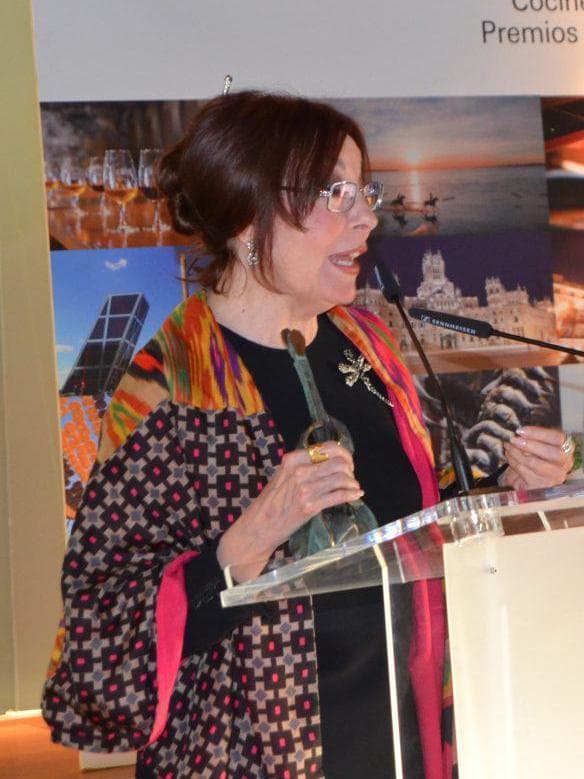
Blanca Del Rey
Legend of Dance
Why They Matter
Blanca del Rey’s legacy joins individual performance, repertory, and institution. The Soleá del mantón made the shawl an active choreographic partner rather than decoration, and its adoption by the Ballet Nacional de España gave the work a transmission path beyond its creator. At Corral de la…
Styles Blanca Del Rey shaped
Each one links to the style’s own page — its origins, music, tempo and video.
Watch
SOLEÁ DEL MANTÓN (2015). BNE HISTORIA
Ballet Nacional de España
Documents the work Blanca del Rey ceded to the Ballet Nacional de España and its institutional repertory life.
Blanca del Rey: Soleá del mantón en Flamenco Pa Tós
DeFlamenco TV
Shows Del Rey herself performing the choreography most closely identified with her.
Biography
Blanca del Rey is a major interpreter and choreographer of postwar flamenco whose career spans six decades of performance, creation, and mentorship. Born María Blanca Ávila Molina in Córdoba in 1946, she began dancing in childhood under the name La Platera before debuting professionally at the tablao El Zoco around age twelve. At fourteen she moved to Madrid and entered the capital's tablao circuit, working in venues including Cuevas de Nemesio and Corral de la Morería, where she married the founder Manuel del Rey and took the surname by which she became known.
Del Rey left performance for roughly a decade while raising her children, then returned through occasional substitutions at the Corral and a television invitation. Rather than resume her earlier manner, she used the interval to develop a mature choreographic voice. Her repertory embraced Córdoba-associated alegrías as well as caña and guajira, but her signature became the *Soleá del mantón*, a sustained encounter between dancer, cante, guitar, and shawl that made the fabric an active choreographic partner rather than decoration.
In 1983 she founded Ballet Flamenco Blanca del Rey and produced touring stage programs including *Pasión flamenca*, *Renacer*, and *Flamenco a bocajarro*. Her performances took her from Madrid's Teatro Real to European houses and international dance galas, where she worked alongside artists from other traditions. These encounters expanded her theatrical scale without erasing her grounding in flamenco musical form. In 2015 she gave *Soleá del mantón* to the Ballet Nacional de España, which incorporated the choreography into its repertory, making the work available for teaching, restaging, and reinterpretation across generations.
Del Rey remained closely associated with Corral de la Morería as proprietor and artistic director, nurturing performers in the daily ecology of a working tablao. Recognition accumulated across dance, flamenco, and civic honors, including Spain's Gold Medal of Merit in the Fine Arts in 2016 and Madrid's "Madrileños de Andalucía" recognition in 2018. In July 2026, Córdoba's Festival de la Guitarra presented *La Reina Blanca*, a multi-artist tribute marking her eightieth year. The event gathered younger artists who described her not as a monument but as an open, demanding mentor whose influence extended beyond her signature work into the culture of a living institution.
Career Highlights
Debuted professionally at the Córdoba tablao El Zoco at about age twelve. DeFlamenco DeFlamenco
Moved to Madrid at about fourteen and entered the capital’s tablao circuit. El País El País
Founded Ballet Flamenco Blanca del Rey and developed touring stage productions. DeFlamenco DeFlamenco
Represented Spanish flamenco in international dance-gala contexts, according to her official career biography. Official site Official site
Performed Soleá del mantón at the Flamenco Pa Tós festival in a surviving official DeFlamenco TV recording. DeFlamenco TV DeFlamenco TV
Presented Soleá del mantón during her announced farewell at the Festival Internacional del Cante de las Minas. Festival recording Festival recording
Gave Soleá del mantón to the Ballet Nacional de España, which added the choreography to its repertory. Ballet Nacional de España Ballet Nacional de España
Was awarded Spain’s Gold Medal of Merit in the Fine Arts. DeFlamenco DeFlamenco
Was recognized in Madrid’s “Madrileños de Andalucía” honors for Andalusians whose careers developed in the capital. Diario de Madrid / Commons_Madrile%C3%B1os_de_Andaluc%C3%ADa.jpg) Diario de Madrid / Commons
Was honored in Córdoba by La Reina Blanca, a multi-artist gala marking her eightieth year and more than six decades in flamenco. Teatro Córdoba Teatro Córdoba
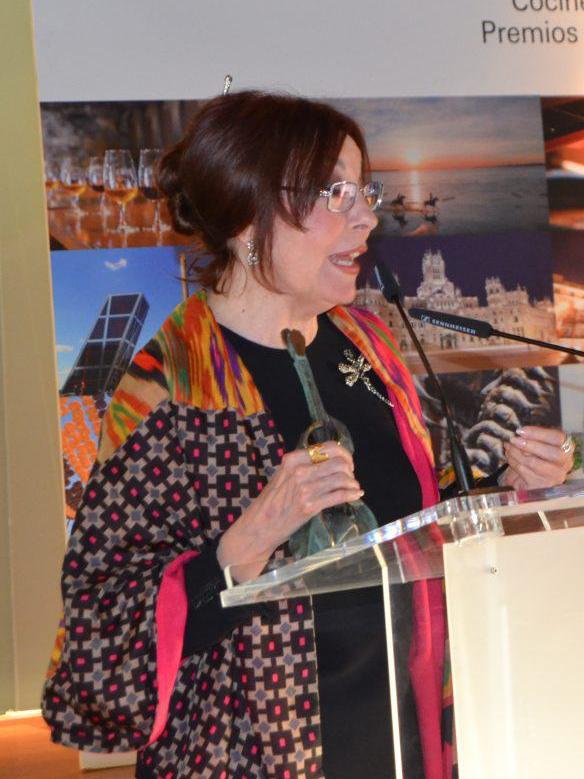
Legacy & Impact
Blanca del Rey's influence joins individual performance, institutional leadership, and transmitted choreography. The *Soleá del mantón* became the framework through which many dancers encounter the shawl as an active partner in musical phrasing rather than as decoration. Her gift of the work to the Ballet Nacional de España ensured its survival and evolution beyond her own body. At Corral de la Morería, she helped sustain the tablao as a place where established and emerging artists meet, embedding her authority not only in what dancers see but in how they are taught to listen, mark, and respect flamenco's musical form.


Explore More Legends
Discover the dancers, teachers, choreographers, and cultural icons who shaped how the world moves.
Keep the thread going
Dance history, technique, and the occasional rabbit hole — in your inbox. Thoughtful, infrequent, unsubscribe anytime.
Free. No spam. One click to leave.