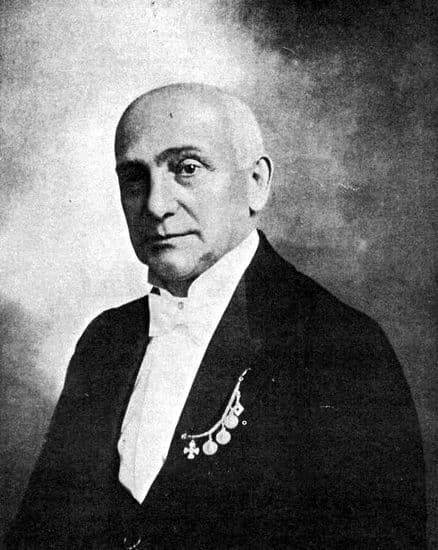
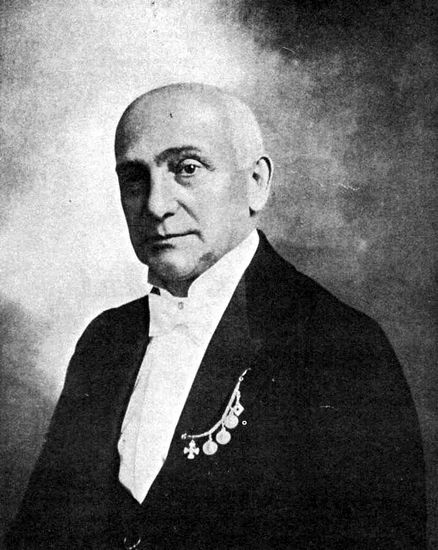
Enrico Cecchetti
Legend of Dance
Why They Matter
Cecchetti matters because he connected several ballet worlds that are too often narrated separately: Italian virtuoso training, Imperial Russian repertory, Ballets Russes modernism and the institutional formation of British ballet. His method gave teachers a progressive architecture for daily work,
Styles Enrico Cecchetti shaped
Each one links to the style’s own page — its origins, music, tempo and video.
Watch
Ballet Evolved - Enrico Cecchetti 1850-1928
Royal Opera House
A first-party Royal Opera House demonstration connects the historical method to visible movement principles.
Biography
Enrico Cecchetti was born in Rome on 21 June 1850 into a theatrical family. He trained first with his father, then with Giovanni Lepri, Cesare Coppini and Filippo Taglioni—a lineage that traced back to the analytical tradition of Carlo Blasis, whose writings helped establish ballet technique as a subject of systematic study. After touring Europe as a young dancer, Cecchetti made a prominent La Scala debut around age twenty, where accounts of his performing style emphasized batterie, elevation, multiple turns and dramatic characterization.
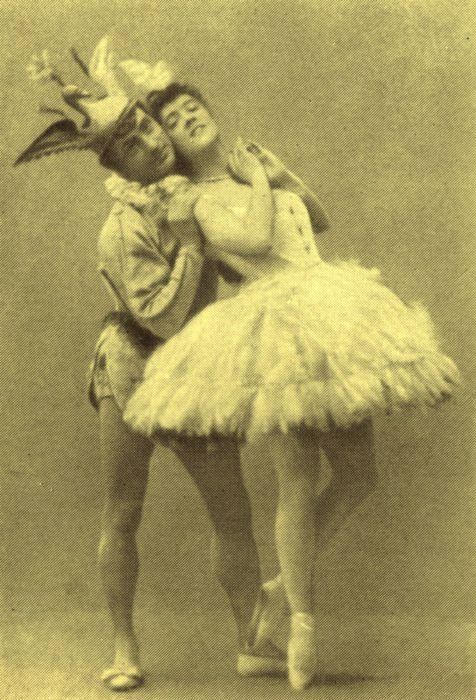
At the height of his career, Cecchetti moved to St Petersburg and became a formative figure in the Imperial Russian ballet world as performer, ballet master and teacher. His dual roles in the 1890 premiere of Marius Petipa's *The Sleeping Beauty* — the airborne Bluebird and the character-mime role of Carabosse — remain the sharpest evidence of his technical and theatrical range. These sharply contrasting assignments demonstrate that his legacy encompasses both virtuoso dancing and mime rather than fitting a narrow image of the classical male danseur.
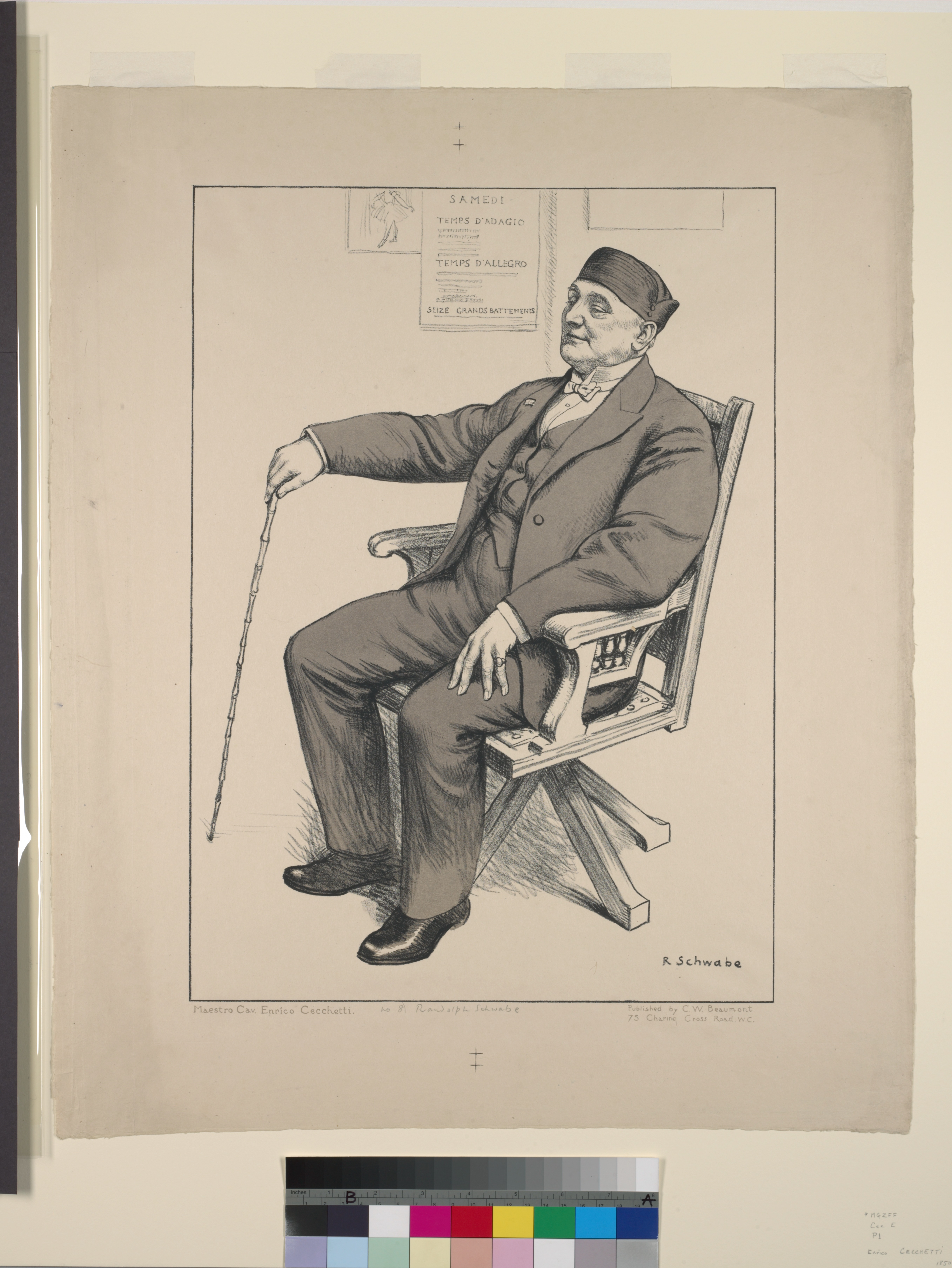
From 1909, Cecchetti worked with Serge Diaghilev's Ballets Russes as teacher and mime, bringing daily classical training into a company known for rapid artistic change. His students during this period and beyond included Anna Pavlova, Tamara Karsavina and Vaslav Nijinsky. In 1918, Cecchetti opened a school in London, where he became a formative teacher for Ninette de Valois and Marie Rambert. Working with Cyril Beaumont, Stanislas Idzikowski and collaborators, he helped record the method in the 1922 *Manual of the Theory and Practice of Classical Theatrical Dancing*. That same year, the Cecchetti Society was founded in London with Cecchetti as president, converting his personal teaching into a transmittable international system.
Cecchetti returned to Italy in 1923 and taught at La Scala in Milan until his death in 1928. His lifetime connected late-nineteenth-century Italian virtuosity, Imperial Russian ballet, the Ballets Russes and the emerging institutions of British ballet—distinct worlds too often narrated separately. His achievement rests in the students, teachers, manuals and organizations that continued to interpret his principles.
Career Highlights
Enrico Cecchetti was born in Rome on 21 June. Source Source
He made his celebrated La Scala debut at about age twenty after touring in his late teens. Source Source
Cecchetti entered a major St Petersburg phase as premier danseur, ballet master and Imperial Ballet School teacher. Source Source
He created both the Bluebird and Carabosse in the premiere of Petipa and Tchaikovsky's The Sleeping Beauty. Source Source
He began a period of concentrated private teaching with Anna Pavlova, documented by the Cecchetti tradition as lasting to 1909. Source Source
He joined Diaghilev's Ballets Russes as teacher and mime artist. Source Source
Cecchetti opened a school at 160 Shaftesbury Avenue in London. Source Source
Beaumont, Idzikowski and collaborators published the method's principal manual, and the Cecchetti Society was founded with Cecchetti as president. Source Source
He returned to Italy and took a teaching leadership role at La Scala. Source Source
Cecchetti died in Milan after collapsing while teaching, according to the institutional tradition. Source Source
Gallery
Works
One stage work credited to Enrico Cecchetti.
- Cinderella (1893)Ballet · Choreographer
Credits sourced from Wikidata (CC0), one citation per field. Works without a recorded premiere date are listed last. Titles link to the work in Limelight.
Legacy & Impact
Cecchetti matters because he joined virtuoso Italian technique to a deliberately structured system of classical-ballet training that spread through major twentieth-century teachers and institutions. His method gave teachers a progressive architecture for daily work, while his pupils carried its values into companies and schools across multiple continents. The durable legacy is a teacher lineage supported by written principles and institutional stewardship, connecting several ballet traditions that remain vital to dancers now.


Explore More Legends
Discover the dancers, teachers, choreographers, and cultural icons who shaped how the world moves.
Keep the thread going
Dance history, technique, and the occasional rabbit hole — in your inbox. Thoughtful, infrequent, unsubscribe anytime.
Free. No spam. One click to leave.