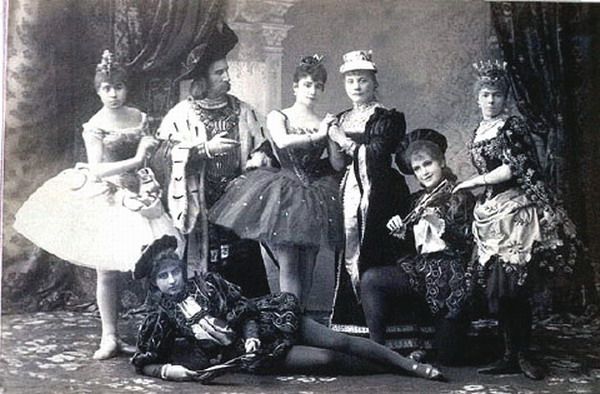
Unknown authorUnknown author · Public domain
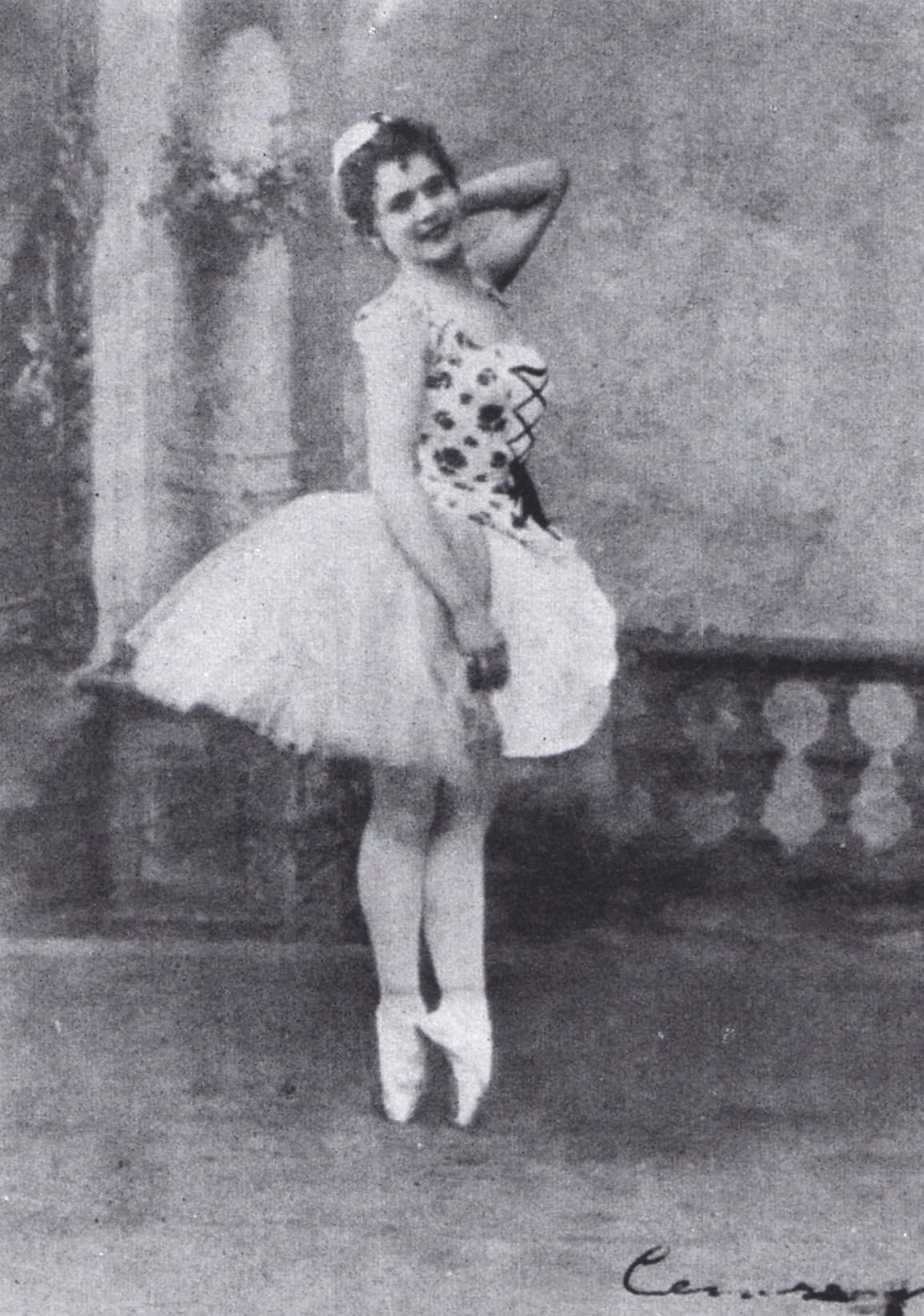
This is the first Cinderella ballet given by the Imperial Ballet, staged at the Mariinsky Theatre in St Petersburg in 1893 as a three-act ballet-féerie: a genre built around magical transformation, scenic spectacle and divertissement rather than tight dramaturgy. The choreography was split between two of the era's leading names, Enrico Cecchetti (Acts I and III) and Lev Ivanov (Act II), with Marius Petipa overseeing the production; the score was by Baron Boris Fitinhoff-Schell (rendered on our record as Vietinghoff-Scheel).
What it contains
- Classical Ballet — Grand pas d'action · Act II, the Grand Pas d'action during the ball — A full classical ensemble structure — principal couple (Cinderella and the Prince), soloists and corps de ballet — staged as the ball's centrepiece before the midnight transformation. Source: "which included an elaborate Grand Pas d'action for the characters Cinderella, the Prince, soloists and the corps de ballet"
- Classical Ballet · Act III, Legnani's variation in the last act — A solo variation built entirely around 32 consecutive fouettés en tournant performed without travelling — a virtuosic, technique-forward classical showpiece repeated by audience demand. Source: "in the last act Legnani positively outdid herself...In her variation Legnani performed 32 of them without stopping, and without traveling one inch!"
What is danced
The article documents two set pieces in real technical detail. Act II centres on an 'elaborate Grand Pas d'action for the characters Cinderella, the Prince, soloists and the corps de ballet' during the ball in the throne room — a full ensemble structure of the kind that anchors Petipa-era grand ballets, built to display the principal ballerina against massed corps and demi-soloists. Act III (called 'the last act' in the contemporary account) held the ballet's single most consequential moment of pure technique: Pierina Legnani's variation of 32 consecutive fouettés en tournant, executed 'without stopping, and without traveling one inch,' repeated on demand and counted aloud by the audience — the first time this feat had been seen in a ballet performed in Russia.
Beyond these two anchors, the printed résumé lists a run of demi-caractère and divertissement numbers — a 'Jeu dansant des marmitons' (kitchen-staff dance with pots and pans), a 'Danse russe' and 'Danse polonaise' among the Act II guests, a 'Danse des quatre éléments' (Earth, Water, Air, Fire) and a trio of 'Night' tableaux (Nile, Granada, Paris) in Act III — but the article gives only titles and stage-effect description for these (dancers and scenery 'rising out of a lake' at the Fairy's wand), not vocabulary, so no further technique claims can be made for them.
For a company or dancer approaching this piece today, the two facts to hold onto are that it is a virtuoso vehicle first (the fouetté sequence is the reason it is remembered at all) and that its Act II grand pas is a textbook example of the classical pas d'action form — principal couple, soloists, corps — rather than an experimental or character piece.
Context
The production sits at the height of the Imperial Ballet's Petipa-supervised era at the Mariinsky, the same institutional and artistic environment that produced The Sleeping Beauty (1890) and The Nutcracker (1892, also choreographed in part by Ivanov). Splitting the choreography between Cecchetti and Ivanov under Petipa's supervision was standard practice for the company at the time, and the ballet-féerie form itself — heavy on transformation scenes, apparitions and stage machinery — was a house specialty. The article notes the libretto was criticized on exactly these grounds, for privileging spectacle over dramatic construction, which the historical record treats as characteristic of the genre rather than a failure specific to this production.
Staging history
After its 1893 Mariinsky premiere, the ballet was restaged at the Bolshoi Theatre in Moscow by Lev Ivanov in 1898. Ivanov also supervised a revival of Act II alone for Pierina Legnani's farewell benefit performance in 1901 — which the article states was the last time any part of the ballet was performed. The full score was never published, and the only surviving trace of the music in current repertoire is a female variation in polka rhythm, absorbed into the Mariinsky's version of the 'Le Corsaire Pas de Deux.'
How to watch it
There is no performable version to attend; the interest here is historiographic. If reconstructing or discussing the Act II Grand Pas d'action, treat it as a display structure — principal couple plus soloists plus corps — built to carry a showcase variation, and treat the Act III fouetté sequence as the ballet's real center of gravity, a moment the original audience treated as a countable feat of endurance and control rather than as expressive dance.
Structure
- Act IIn the kitchen, Cinderella is mocked and left behind by her stepfamily; the Good Fairy appears and transforms her for the ball.
- Act IIIn the castle throne room, the unknown princess (Cinderella) captivates the Prince at the ball until she flees at the stroke of midnight.
- Act II · Grand pas d'actionThe central danced set piece of the ball, built for Cinderella, the Prince, soloists and the corps de ballet.
- Act II · Danse russe / Danse polonaiseNational divertissements danced by the assembled guests during the ball.
- Act IIIIn the palace garden, the slipper trial takes place and Cinderella is revealed as the Prince's bride; described in the historical record as the act containing Legnani's celebrated fouetté variation.
- Act III · Night tableaux (Nile, Granada, Paris)Three scenic divertissements in which dancers and scenery rise out of a lake at the Good Fairy's wand.
Structure read from an encyclopaedia article, not from a libretto or score we hold. Confirm against a programme before treating the numbering as authoritative.
Credits
- composer: Boris von Vietinghoff-Scheel
More from Lev Ivanov
Other staged works in the register connected to this one by author or lineage.
 Swan LakeBallet · 1877Ivanov · video
 The NutcrackerBallet · 1892Ivanov · video
 Le Réveil de FloreBallet · 1894Ivanov · video
 Swan LakeBallet · 1895Ivanov · video
 CoppéliaBallet · 1870Same lineage · video
 The Sleeping BeautyBallet · 1890Same lineage · video
 Theme and VariationsBallet · 1947Same lineage · video
 MovesBallet · 1959Same lineage · video