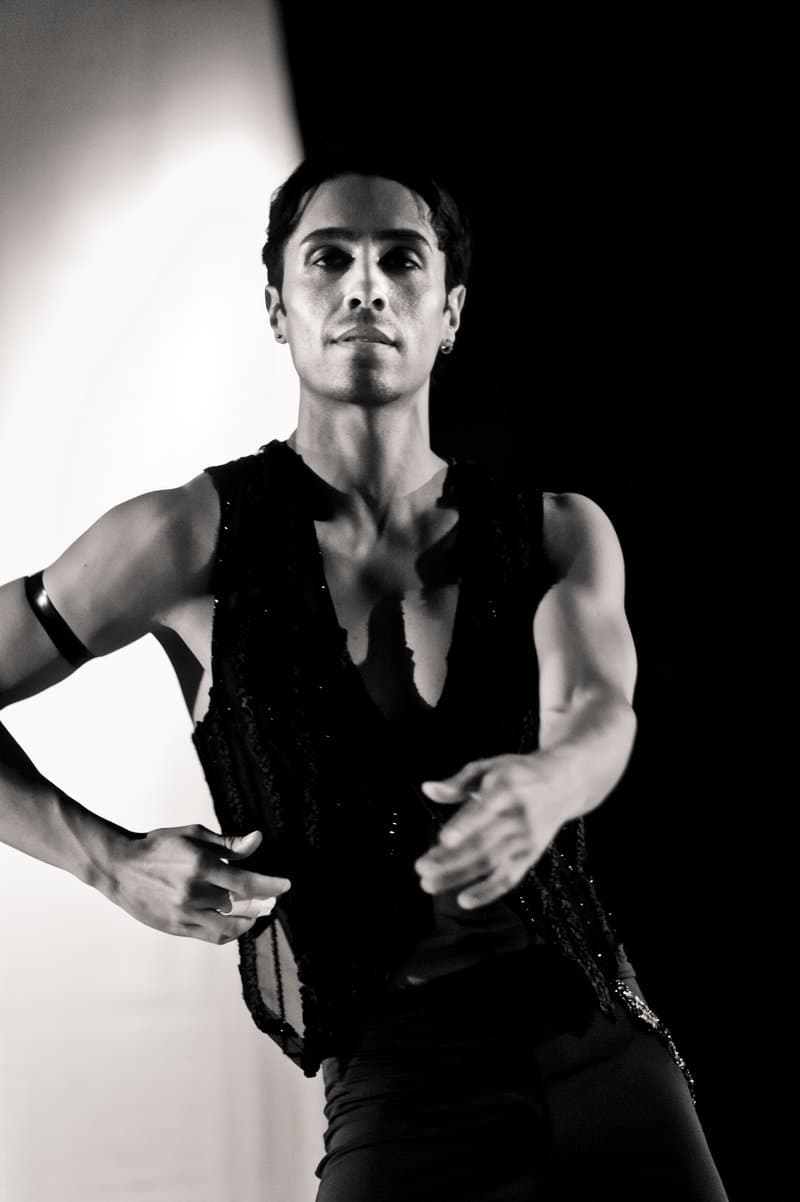
Performer · Innovator · Teacher
Frankie Martinez
GhettoTek Salsa Innovator
Why They Matter
He pushed salsa beyond its traditional boundaries by incorporating hip-hop and Afro-Caribbean roots, inspiring a generation of dancers to explore salsa as a vehicle for personal expression.
Known For
Styles Frankie Martinez shaped
Each one links to the style’s own page — its origins, music, tempo and video.
Watch
Abakuá Afro-Latin Dance Company Official Promo Trailer, Pt.1
ABAKUADance
First-party overview of the company and its framing of Afro Latin Funk.
Frankie Martinez - Abakua @ Lincoln Center Out of Doors 2015
ABAKUADance
Documents Abakuá in a named Lincoln Center Out of Doors program and shows concert treatment of popular-dance material.
Frankie Martinez's Ache Performance Project - Summer 2016
ABAKUADance
Shows Martinez’s pedagogy moving from class practice into a staged student work.
Frankie Martinez's Aché Perfomance Project - Jan 2017
ABAKUADance
Provides a second first-party sample for comparing how the Aché format develops over time.
Frankie Martinez's Aché Student Perfomance Project - Jan 2020
ABAKUADance
Documents the continuity of Martinez’s student-performance model into 2020.
Frankie Martinez 20th Aché Student Performance Project 360
ABAKUADance
The 360-degree presentation is useful for examining floor patterns and the audience relationship.
Biography
Frankie Martinez is a dancer, choreographer, educator and method founder who expanded the artistic and pedagogical possibilities of New York mambo through his Abakuá Afro-Latin Dance Company and the Afro Latin Funk training system. Born in Queens on September 25, 1975, Martinez grew up in a Puerto Rican family where his father's collection of Latin music and concert visits shaped his early relationship to orchestration and sound. He trained in Shotokan karate from childhood, an experience he credits with developing the discipline and body control that would later define his approach to dance.
Martinez became serious about mambo after encountering trained dancers at a Florida nightclub and began formal study at Dance Club International on Metropolitan Avenue in Queens. He learned by watching dancers in New York clubs and started dancing mambo in 1996, teaching by 1997. Eddie Torres became an important mentor; Martinez studied with Torres and joined the Eddie Torres Dancers, making early appearances at Roseland Ballroom, Madison Square Garden, the New York World Salsa Congress, and performances connected with Tito Puente and José Alberto "El Canario."
In 2000, Martinez founded the Abakuá Afro-Latin Dance Company, moving mambo beyond nightclub and congress showcases into concert-dance structures while maintaining close engagement with social-dance vocabulary, Latin music and Afro-Caribbean movement. The company's official estimates place it in more than 50 cities and 20 countries, with performances at Madison Square Garden, Lincoln Center, Aaron Davis Hall, Jacob's Pillow and SummerStage.
The Afro Latin Funk method emerged as a formal training system, established in 2002. Rather than treating Afro-Latin forms as incomplete, Martinez structured a curriculum that separates interconnected practices: Afro-Caribbean body movement and isolations, mambo openwork and partnerwork, turns and spins, gestures and armwork, cha-cha-cha, boogaloo and pachanga. The method aims to give dancers the kind of technical, rhythmic and interpretive education expected of musicians while preserving the cultural identity of these source practices.
The 2005 documentary *Frankie's Mambo: El Ritmo Diablo*, directed by Gavin and Helene Macaulay, brought Martinez and the developing Abakuá company to public television audiences through screenings on PBS affiliates including WNET in New York and WGBH in Boston. By 2009, Abakuá had entered a clearly documented concert phase with summer appearances at Lincoln Center Out of Doors and performances at BMCC Tribeca Performing Arts Center. In November 2009, the company premiered Martinez's *The Life & Death of Suzy Q* alongside *Raices* and *Children of a Groove*. Throughout the following years, the company continued to develop performance-training projects and student showcase opportunities, documented in part through an official YouTube channel.
Martinez's contribution extends beyond a catalog of choreographic works. His ongoing teaching practice in New York—offering classes in Salsa On2 fundamentals, mambo partnerwork, Afro Latin Funk openwork and Afro-Caribbean body movement—represents an evolving way to train dancers to listen to rhythm, organize the body across multiple layers, and improvise within culturally rooted movement vocabularies.
Career Highlights
Martinez was born on September 25 in Queens, New York, according to his first-person 2008 interview.
He began dancing mambo, first studying at Dance Club International in Queens and then seeking instruction and club experience in New York.
Martinez began teaching mambo and appeared at Madison Square Garden’s “Concierto del Amor,” as recorded in his 2001 interview.
He performed at the New York World Salsa Congress and in Tito Puente’s “Mambo Birdland” music video.
He founded the Abakuá Afro-Latin Dance Company and danced onstage with Tito Puente at Manhattan Center.
Martinez established the Afro Latin Funk formal training method, according to the method’s current official academy.
Frankie’s Mambo: El Ritmo Diablo, directed by Gavin and Helene Macaulay, aired through PBS affiliates including WNET and WGBH.
Abakuá appeared at Lincoln Center Out of Doors and premiered Martinez’s The Life & Death of Suzy Q at BMCC Tribeca Performing Arts Center.
Abakuá and Areytos Performance Works appeared in a SummerStage program at St. Mary’s Park.
The official Abakuá channel documented the company performing at Lincoln Center Out of Doors in the boogaloo program “We Like It Like That!”
Abakuá’s official channel documented a January Aché Student Performance Project led and choreographed by Martinez.
Martinez continued offering New York instruction and performance training through his official curriculum and class program.
Gallery
Legacy & Impact
Frankie Martinez matters because he joined three arenas often treated separately: social mambo, salsa-congress performance, and concert dance. His Abakuá repertory demonstrated that Afro-Latin popular dance could sustain named choreographic works and full evening programs, while Afro Latin Funk gave students a repeatable practice for body articulation, rhythmic literacy, partner communication and improvisation. His approach insists that Afro-Caribbean and Afro-Latin forms possess their own complete technical and aesthetic systems. For dancers today, Martinez's work and curriculum model how to honor source traditions while creating new performance contexts and passing knowledge to the next generation.


Explore More Legends
Discover the dancers, teachers, choreographers, and cultural icons who shaped how the world moves.
Keep the thread going
Dance history, technique, and the occasional rabbit hole — in your inbox. Thoughtful, infrequent, unsubscribe anytime.
Free. No spam. One click to leave.