Hip-Hop & Street Dance
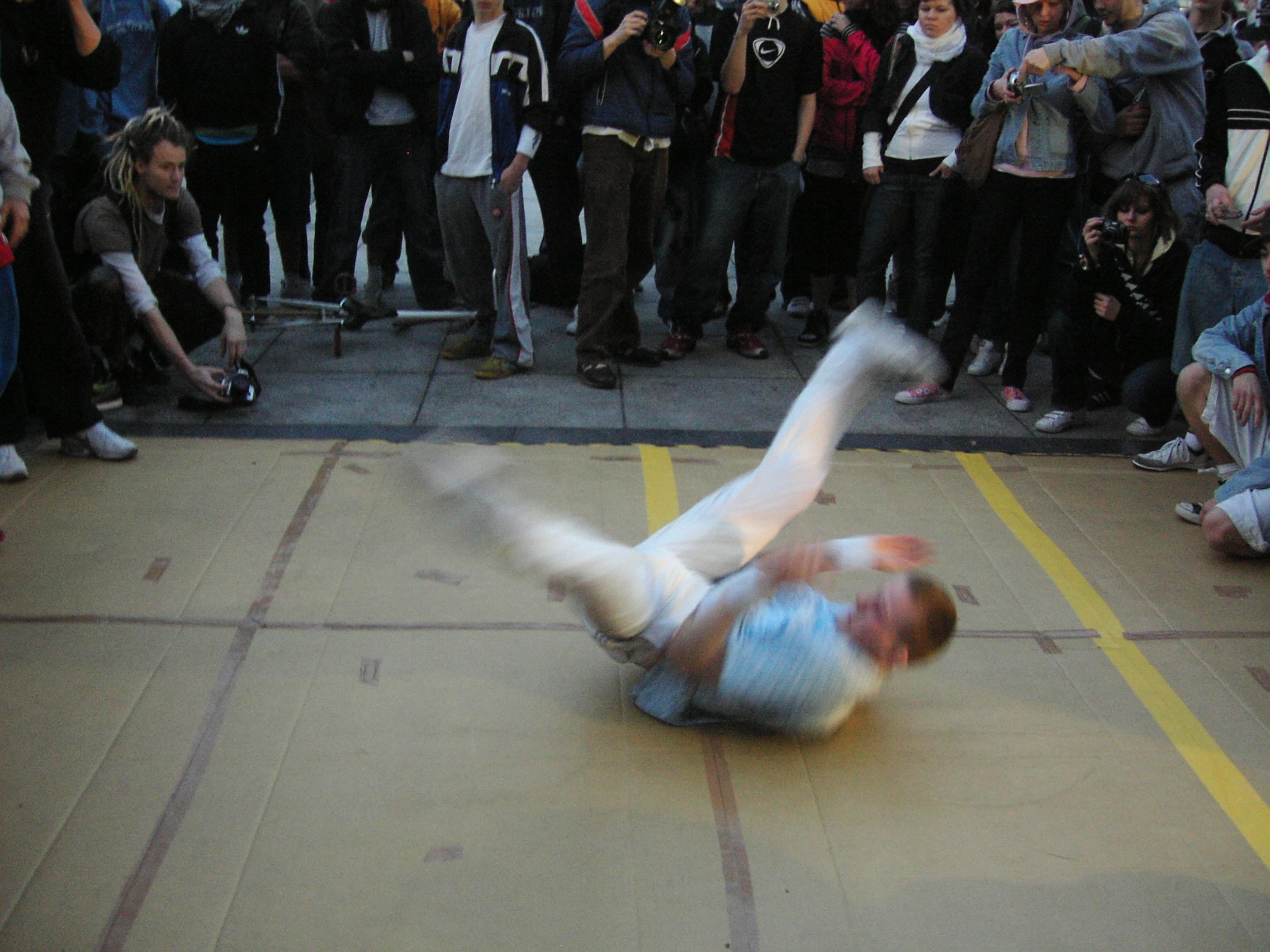
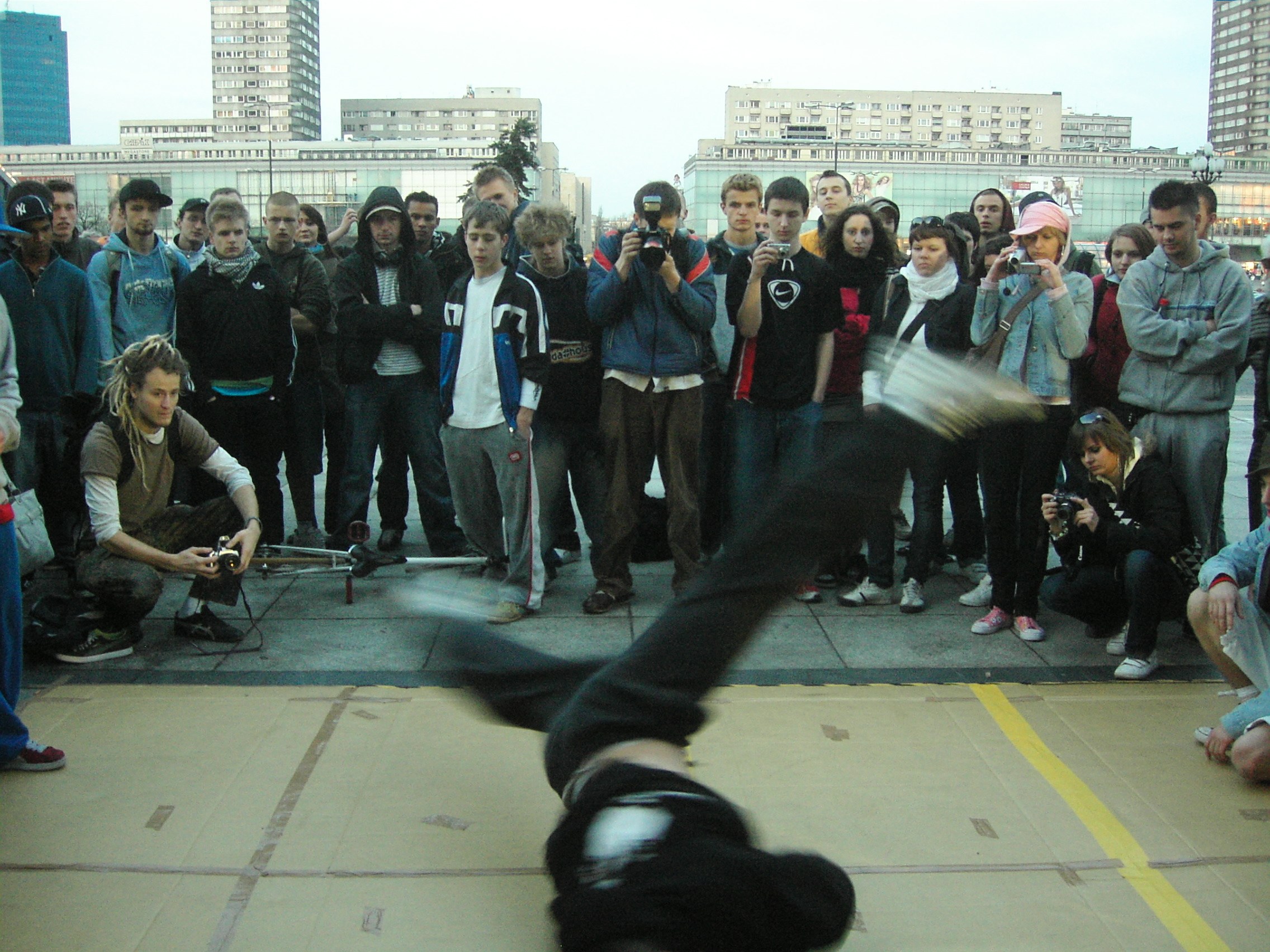
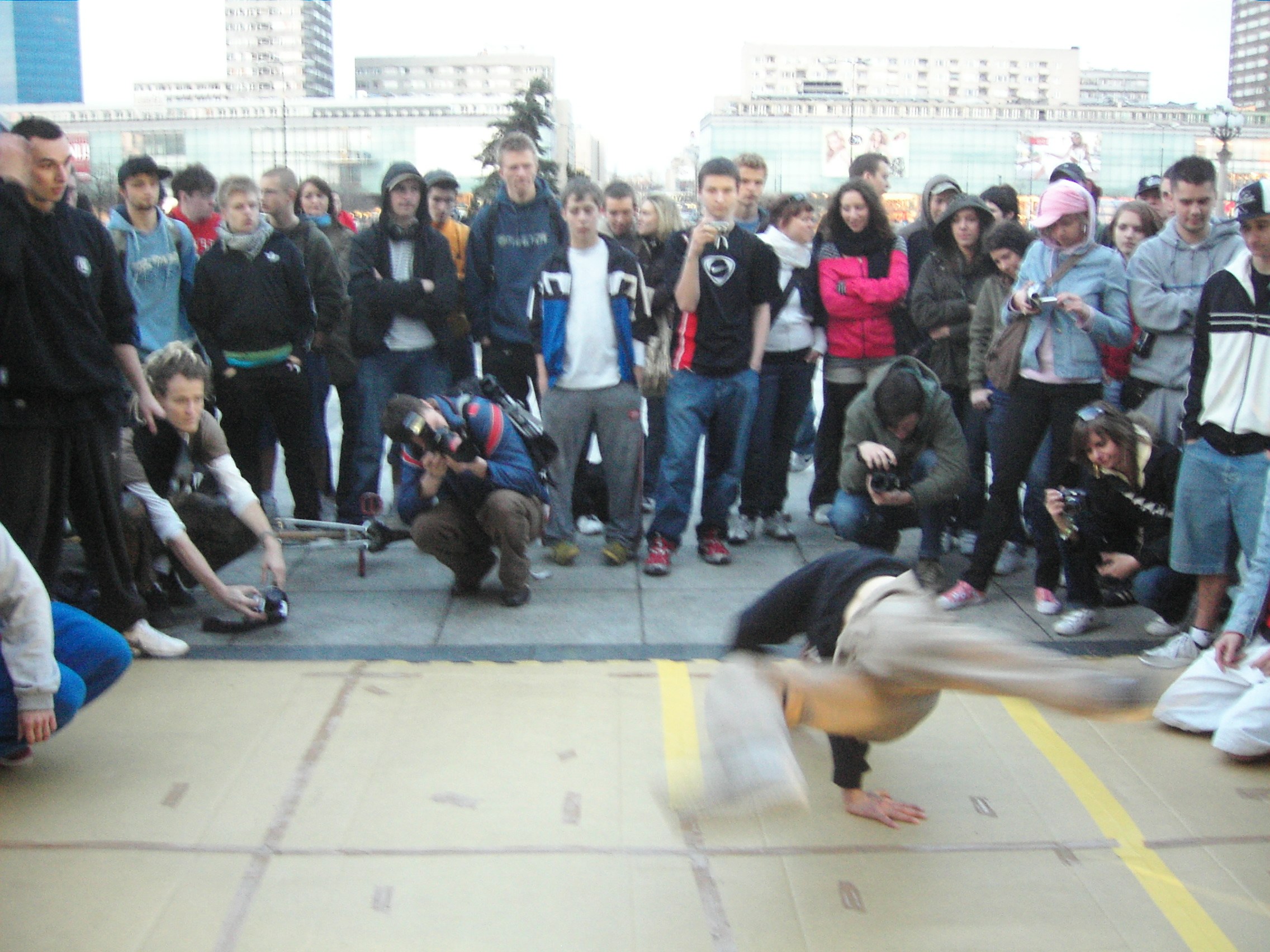
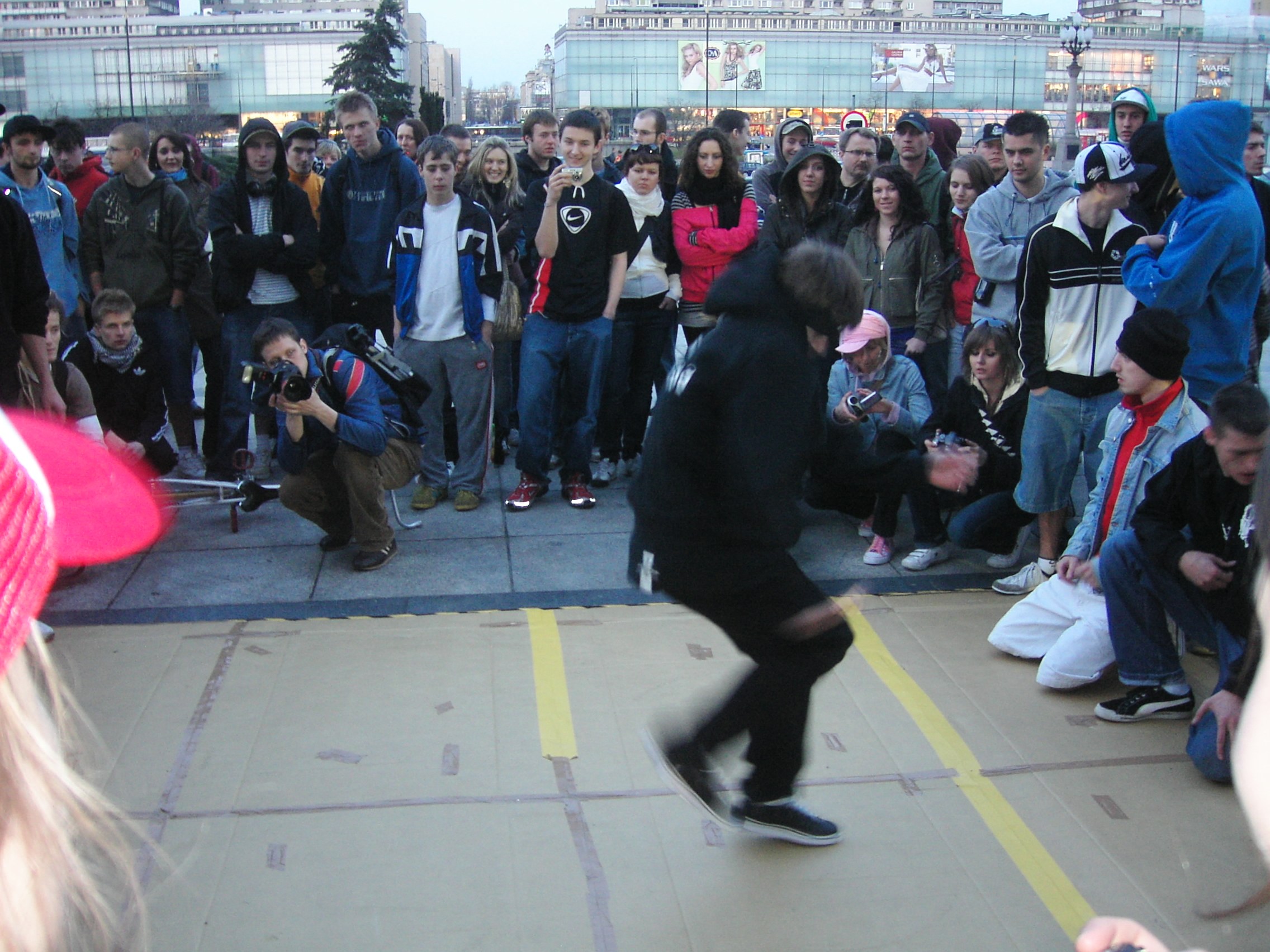
Hip-Hop & Street Dance gathers the freestyle vernacular forms born in Black and Latino American neighborhoods from the 1970s onward: breaking in the Bronx, the party-dance layer that ran alongside it, and the city-specific styles of Memphis, Chicago, Oakland, Brooklyn, Harlem, Detroit and New Orleans.
10 dance styles in this genre
Historical Origins
The through-line begins in the Bronx, where on 11 August 1973 Cindy Campbell threw a back-to-school party at 1520 Sedgwick Avenue and her brother DJ Kool Herc looped the drum breaks of funk records so dancers could keep going. Around that core grew a national field of independently rooted forms: the McGhee brothers' jit in 1970s Detroit; gangsta walking at Memphis skating rinks in the 1980s; footwork on Chicago's South and West Sides in the late 1980s; bruk-up-derived flexing in Brooklyn's reggae clubs; bounce in New Orleans housing projects in 1991; turfing in West Oakland in the mid-1990s; litefeet in Harlem in the early 2000s.
Cultural Significance
These dances were built by Black and Latino young people with almost no institutional support, and they carry the identity of specific blocks, projects, rinks and train lines. Battles substitute competition for conflict; crews function as chosen family. The forms also do public grief work — YAK Films' 2009 turfing piece 'RIP RichD' mourned a dancer's brother, and Reggie Gray and Peter Sellars staged FLEXN at the Park Avenue Armory in 2015 in the aftermath of the Michael Brown and Eric Garner decisions. Breaking's arrival as an Olympic medal event at Paris 2024 marked the widest institutional recognition any of them has received.
Musical Characteristics
Each form is welded to a local sound. Breaking rides funk and soul breakbeats around 90–135 BPM. Party dances and new style sit on rap and R&B near 95–115 BPM. Memphis jookin moves to the dark, 808-heavy drum-machine rap DJ Spanish Fly and DJ Squeeky built. Chicago footwork runs at 150–165 BPM over skipping kicks and chopped vocals. Detroit jit lives near 150 BPM in electro and ghettotech. Litefeet producers make purpose-built tracks at 100–110 BPM. Bounce loops the 'Triggerman' beat from The Showboys' 'Drag Rap.' Flexing is the outlier: its Flex Dance Music descends from reggae and dancehall, not hip-hop.
Core Movement Principles
Everything starts from a groove — a weighted bounce or rock that keeps the body conversing with the drums before any step is added. Dancing happens in a cypher or ring, one at a time, with the crowd as judge. Improvisation outranks repertoire: a dancer is expected to answer the music and the opponent in real time, and 'biting' another's material is the cardinal offence. Beyond that the genre splits into distinct technical logics — floorwork and power in breaking, feet-only subdivision in footwork and jit, balance and glide in jookin, illusion and pantomime in turfing and flexing, and hip-driven percussion in bounce.
Modern Usage
Breaking is contested internationally under the World DanceSport Federation and at events like Red Bull BC One, and debuted as an Olympic medal event at Place de la Concorde in Paris in 2024. Red Bull Dance Your Style, Battlefest, Memphis Jookin Warz and neighbourhood turf battles keep the freestyle circuits running. The forms also hold the concert stage: Lil Buck has performed jookin with Yo-Yo Ma, The Era tours Chicago footwork, HardCore Detroit carries jit through Europe and Asia. Studio hip-hop classes, subway 'Showtime' sets and TikTok now function as the main recruiting grounds, with originators actively contesting how their work is credited.
Dance Styles
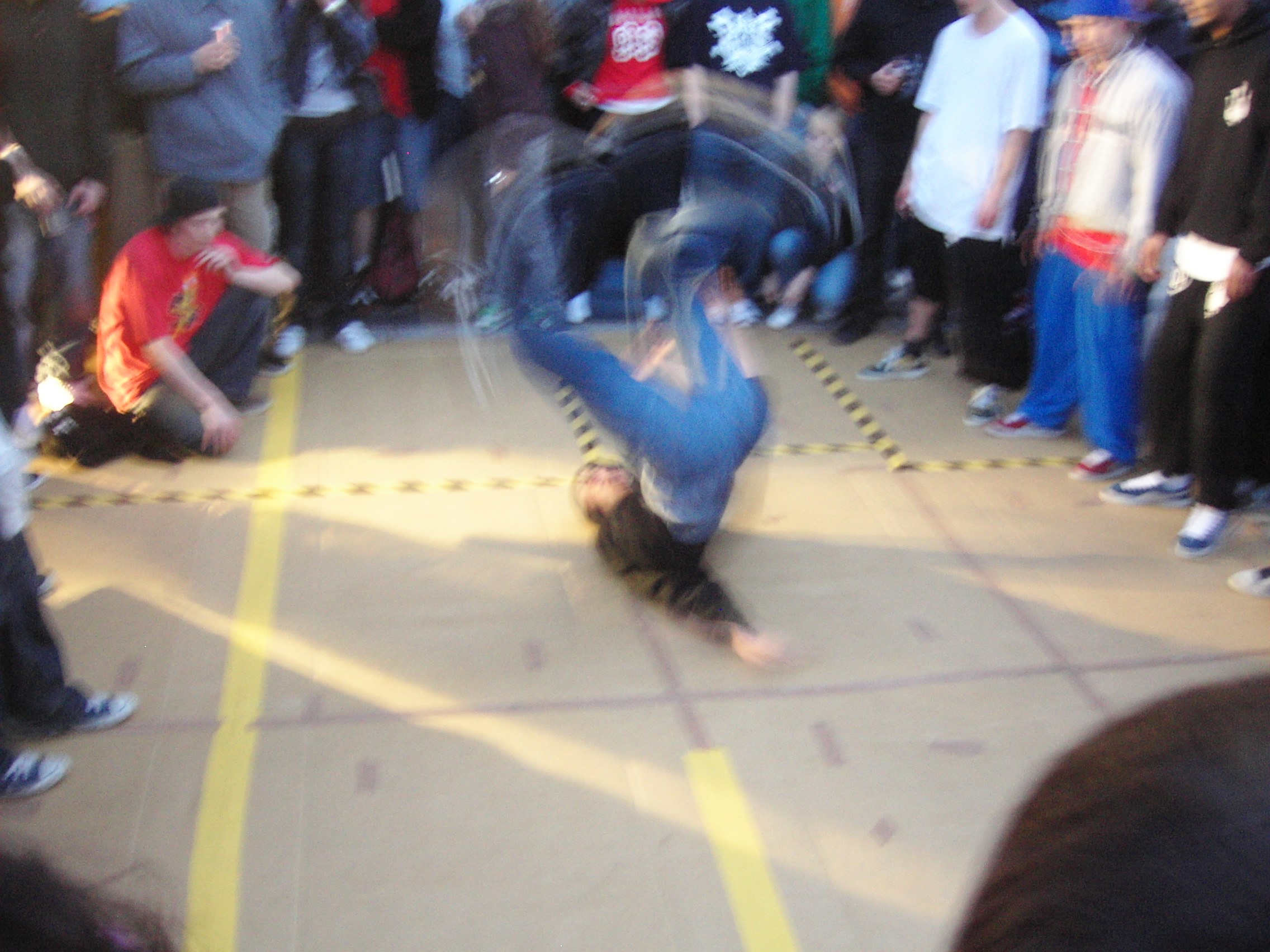
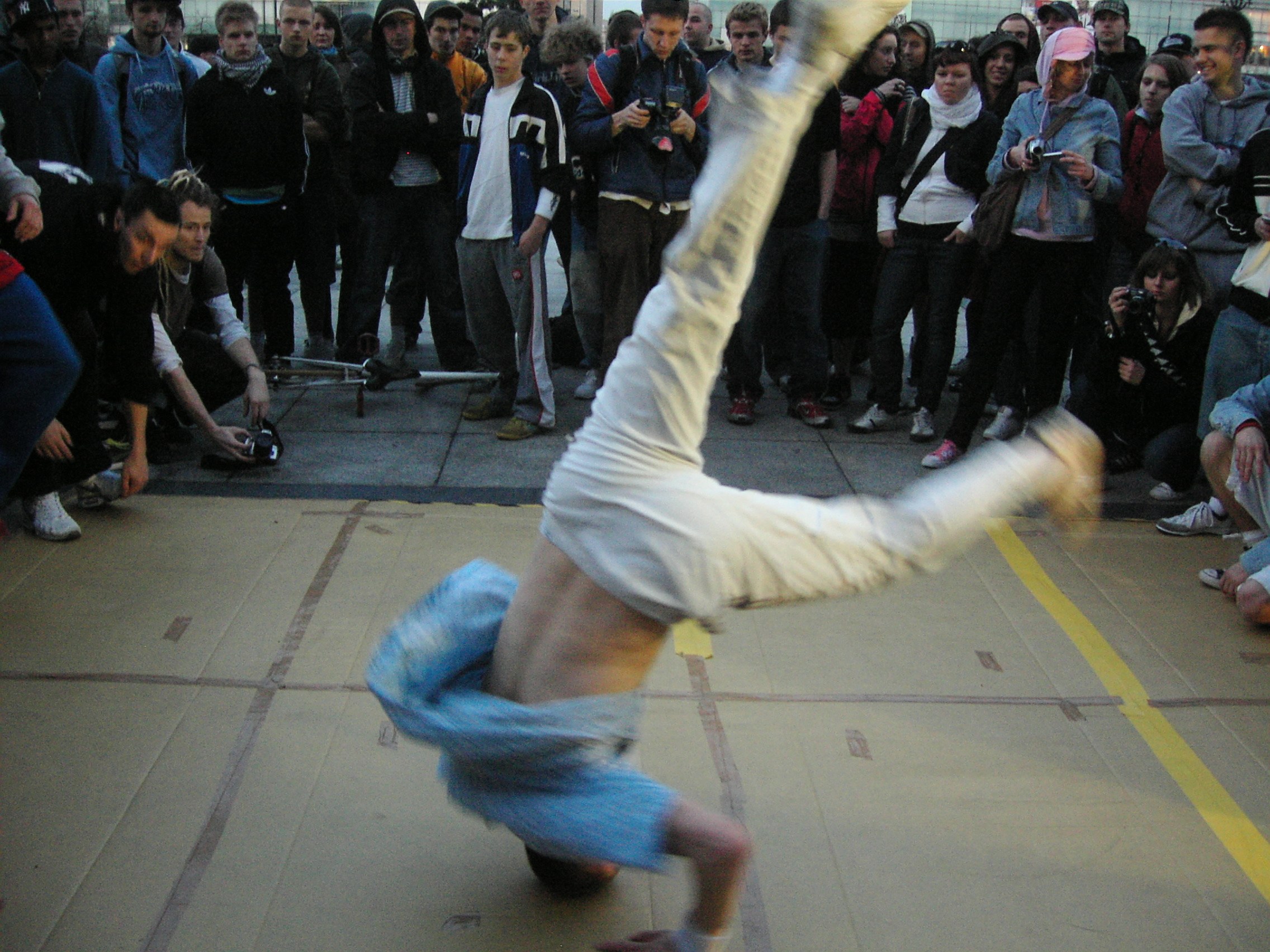
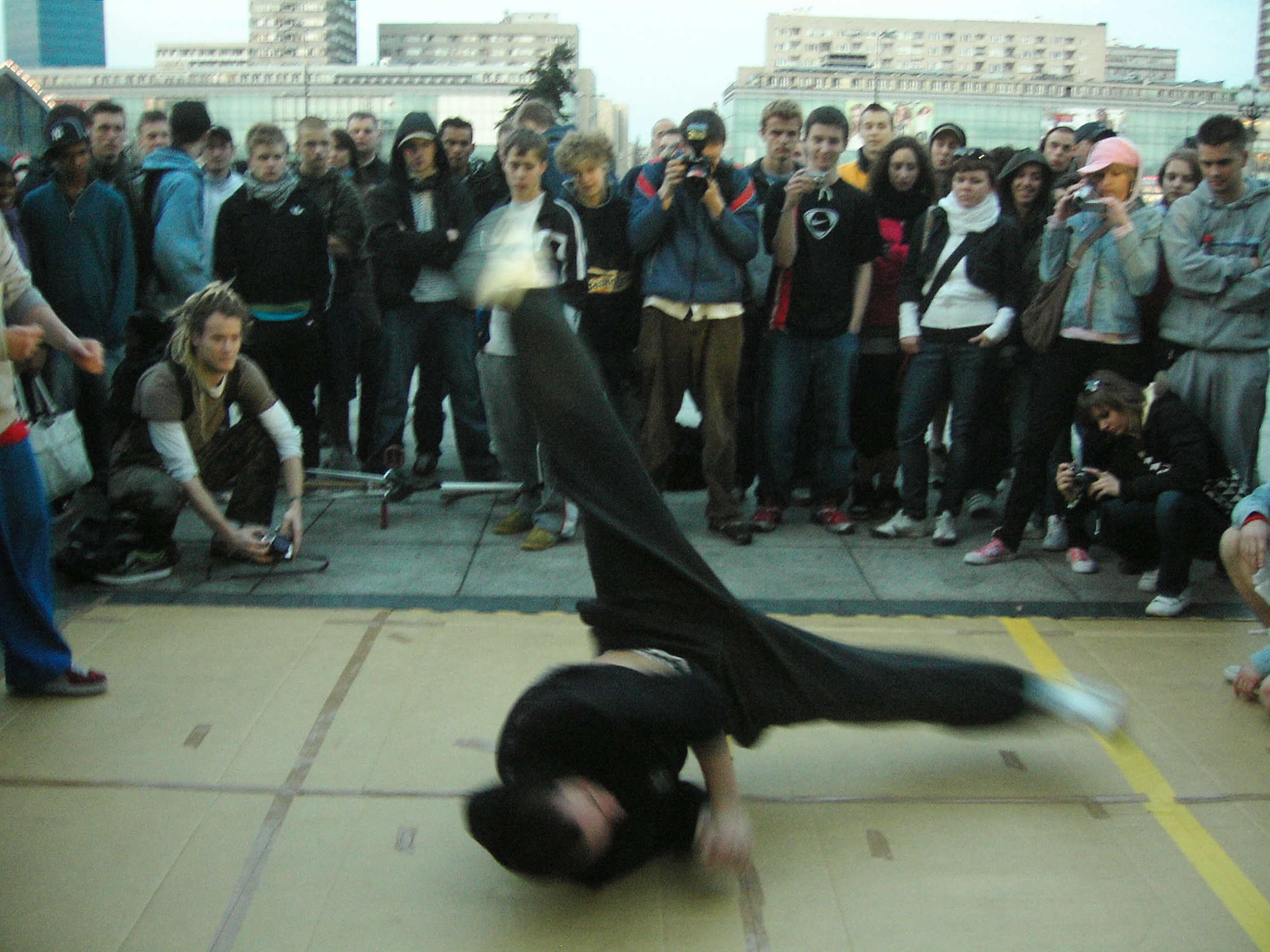
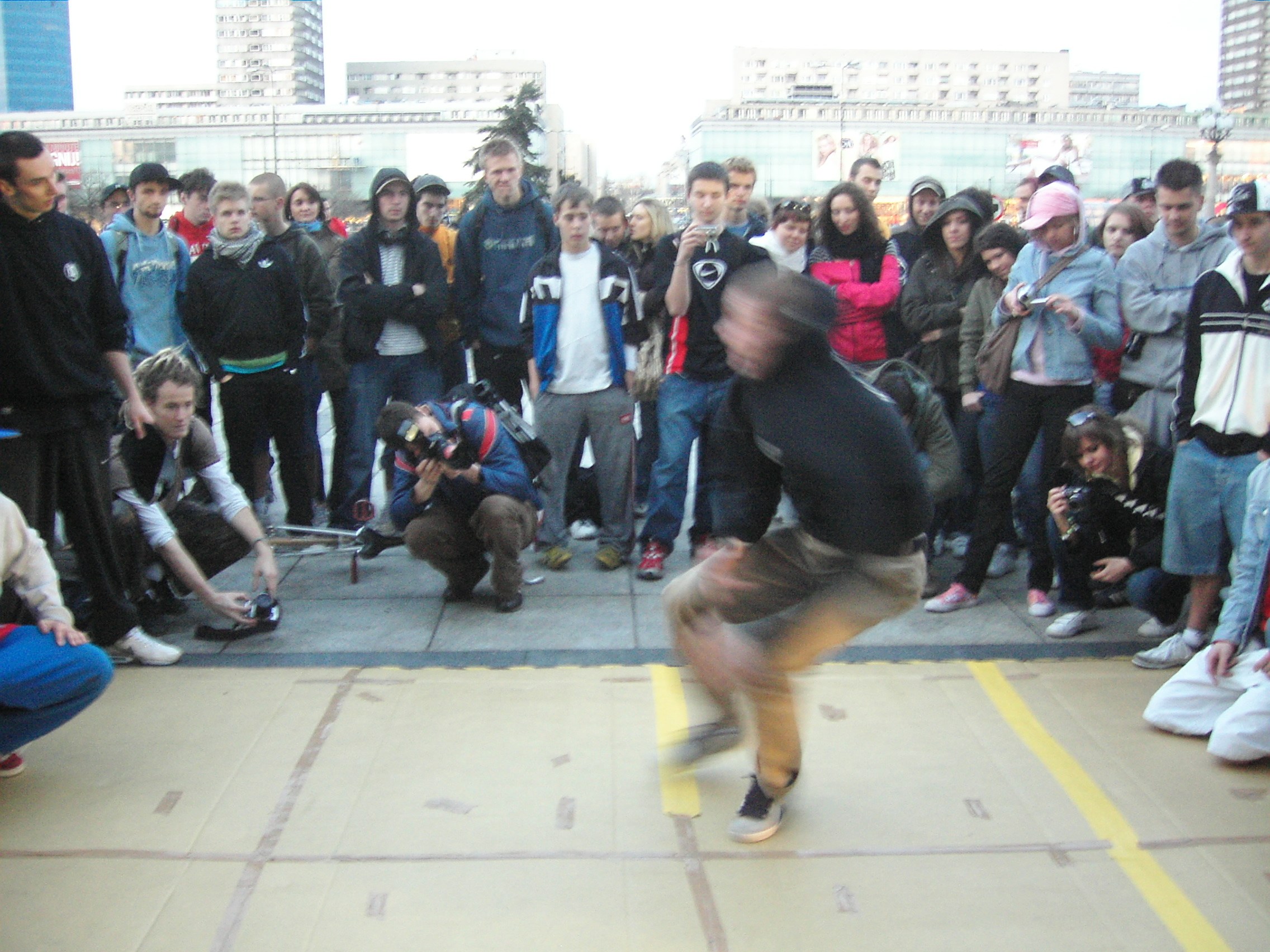
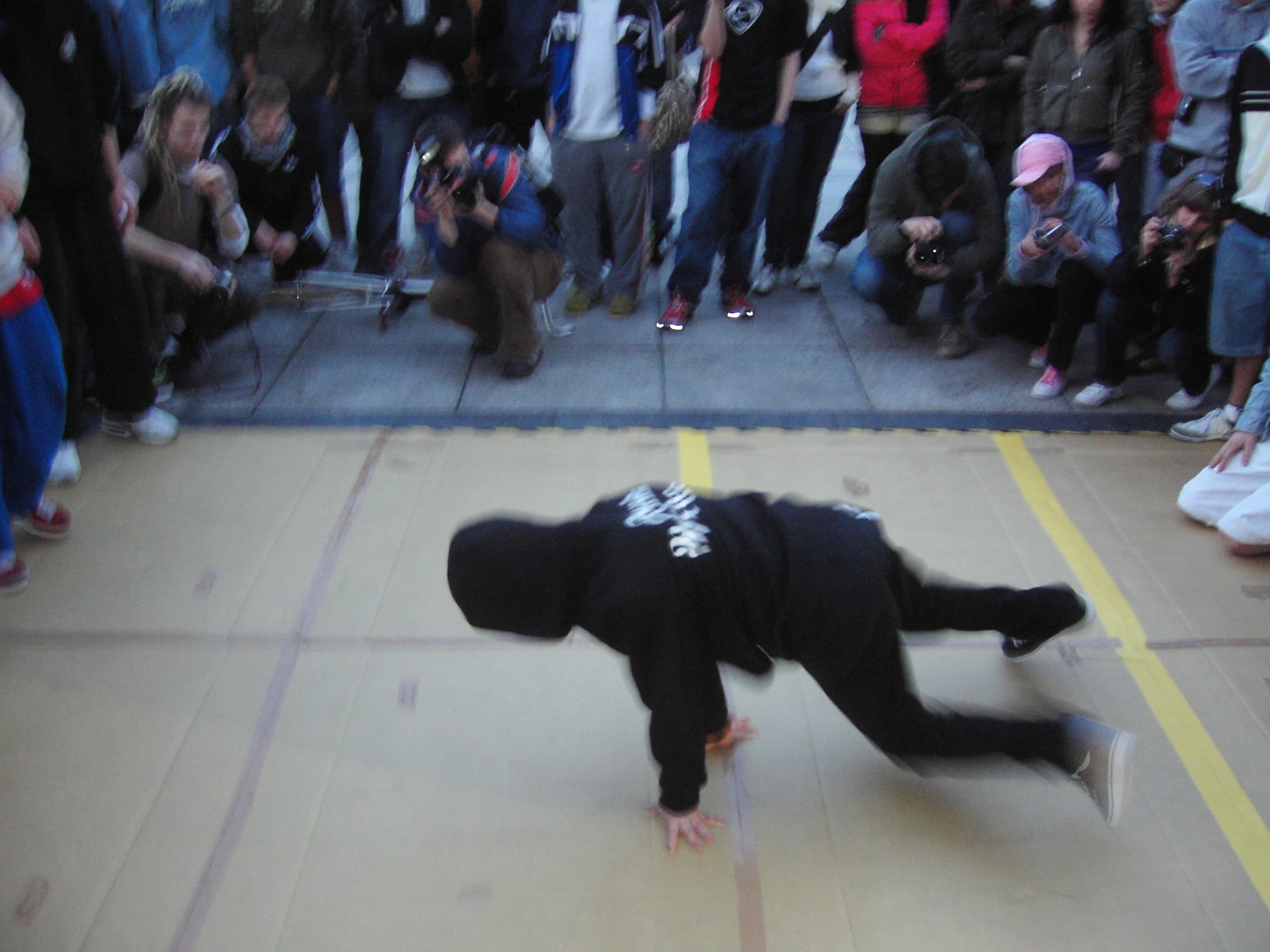
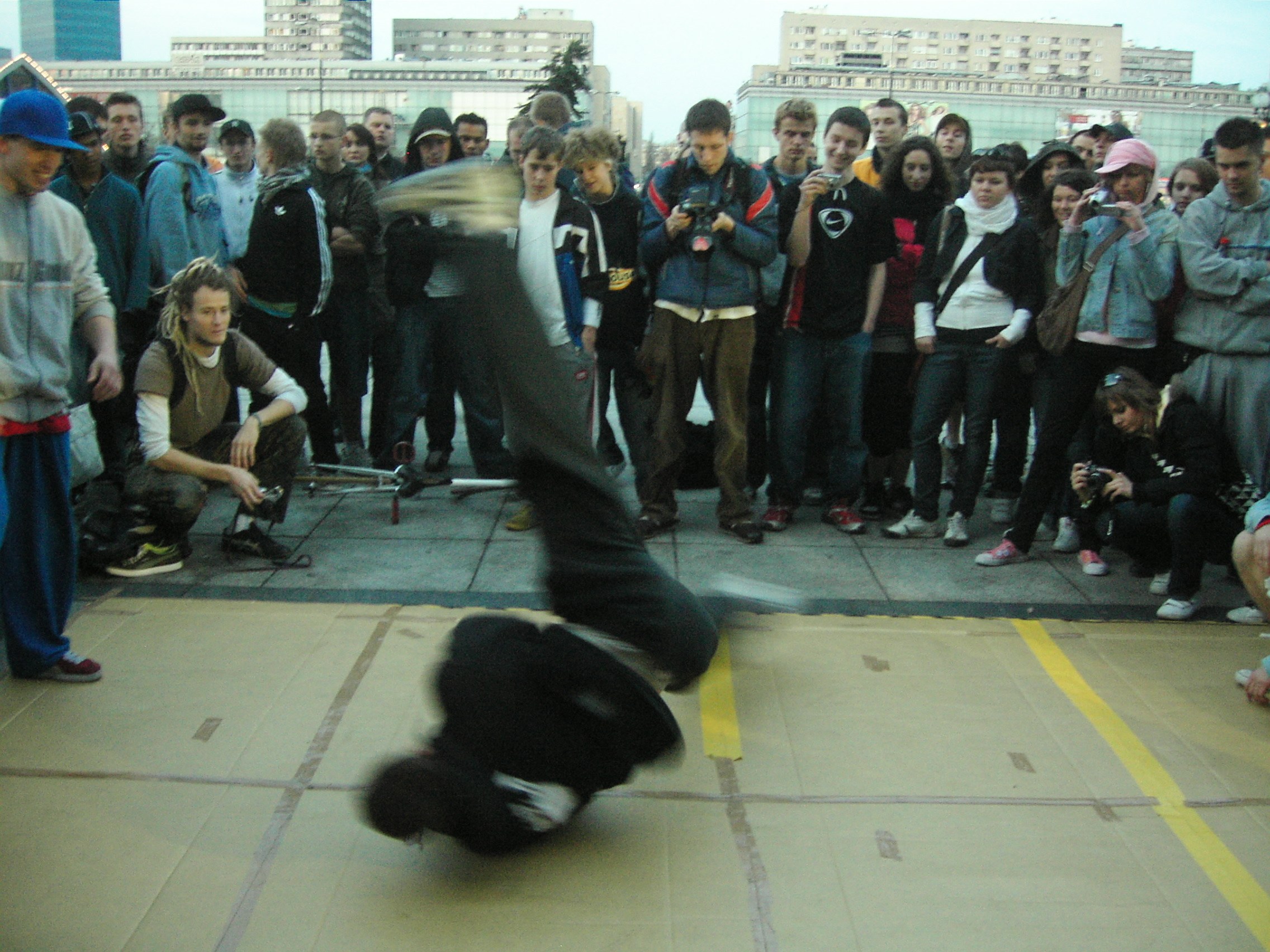
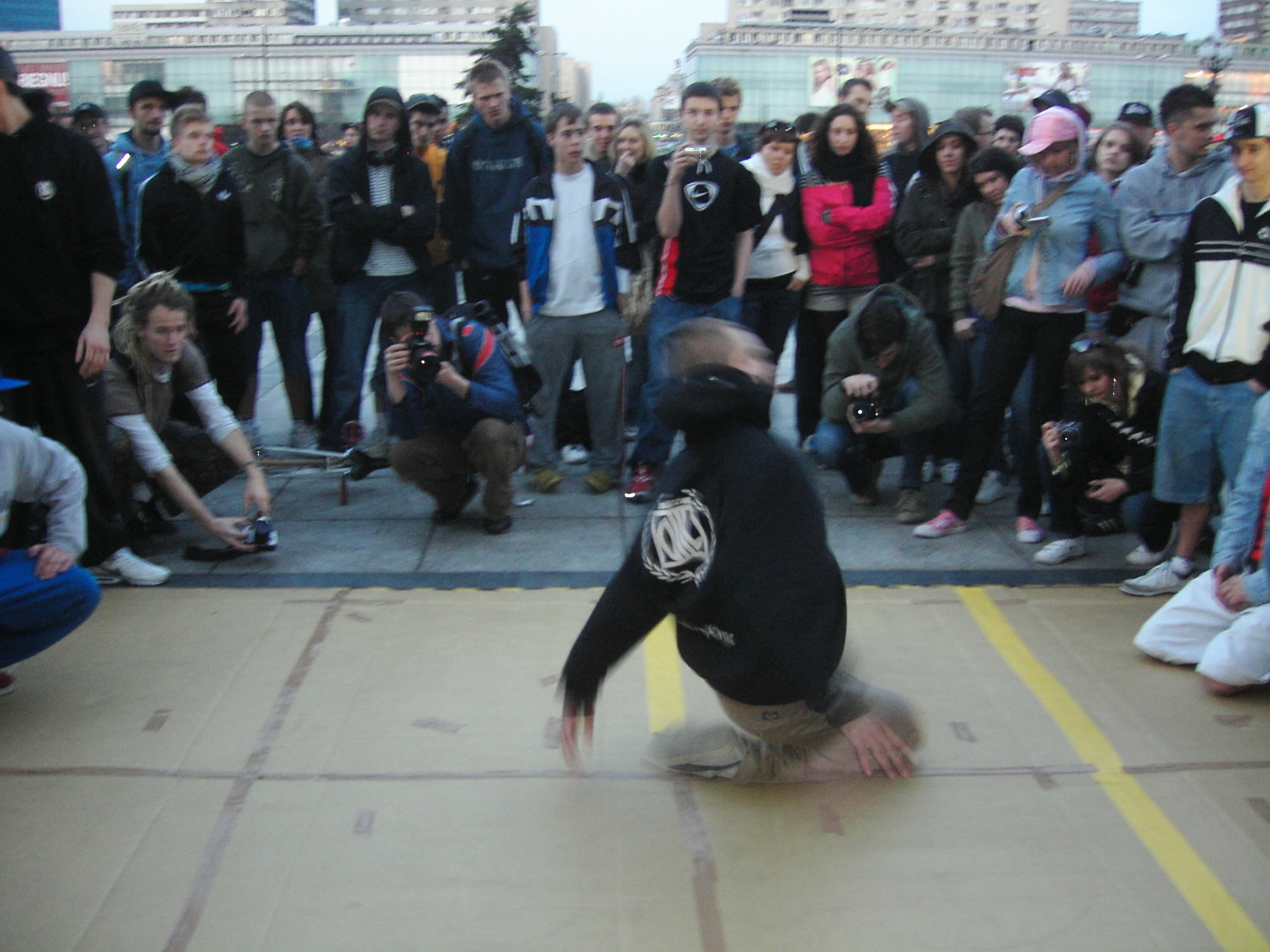
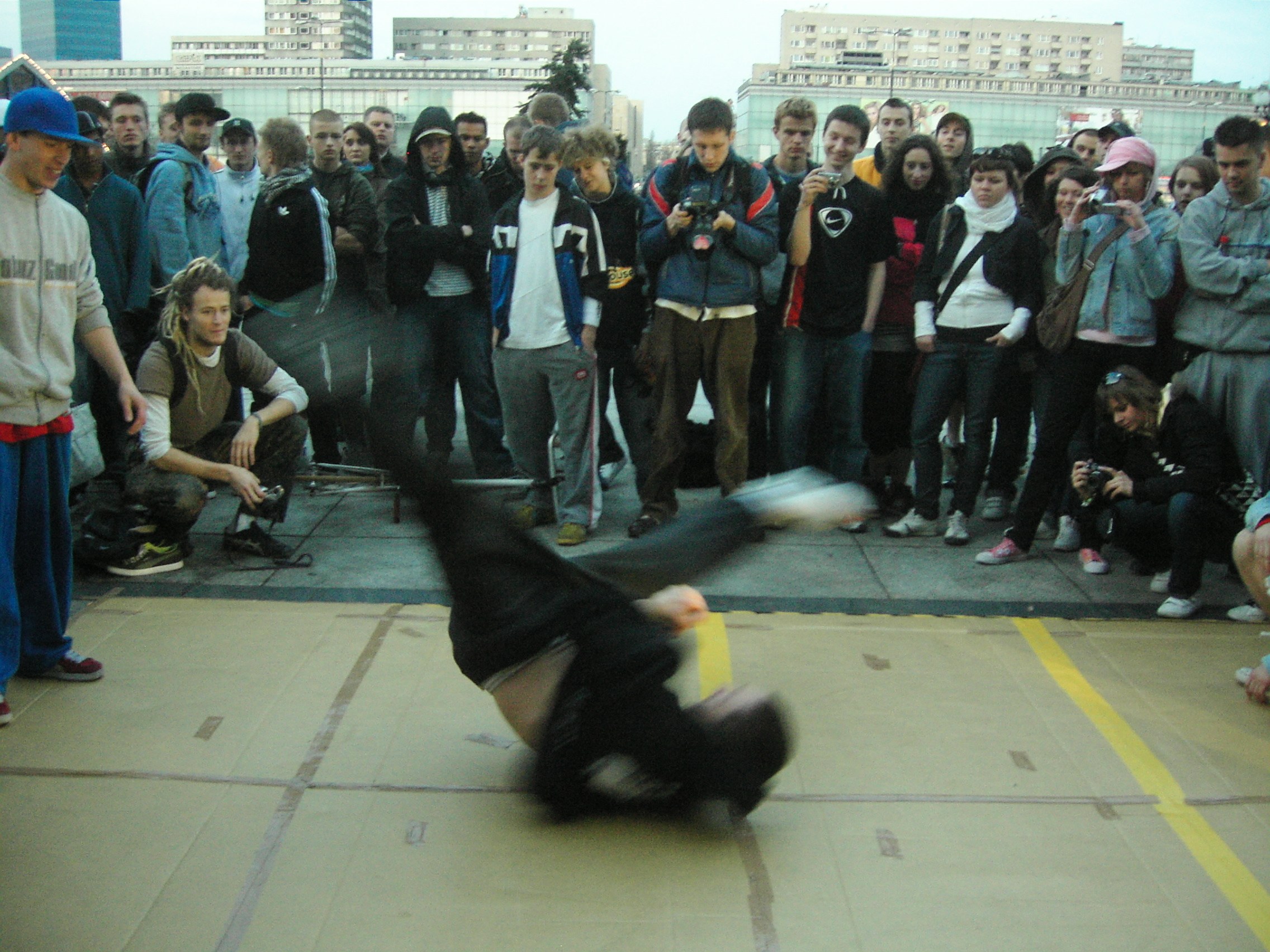
Breaking (B-Boying / B-Girling)
Also known as: B-Boying, B-Girling, Breakin', Breakdancing
The foundational dance of hip-hop culture, built in the Bronx on looped drum breaks and organised into toprock, footwork, power moves and freezes.
Hip-Hop Party Dances (Old School Social)
Also known as: Old School Social Dances, Hip-Hop Social Dances, Party Rocking, Fad Dances
The social layer of hip-hop: named, repeatable party steps such as the Wop, Cabbage Patch, Running Man, Roger Rabbit and Steve Martin, learned by watching rather than counting.
New Style Hip-Hop
Also known as: Hip-Hop Freestyle, New York Style, Hip-Hop Choreography, Studio Hip-Hop
The studio and choreography form that grew out of the party dances, keeping their groove as its base while adding isolations, texture and eight-count structure.
Memphis Jookin
Also known as: Jookin', Gangsta Walking, G-Walk, Buckin', Choppin'
Memphis's gliding, toe-standing street dance, evolved from 1980s gangsta walking at the city's skating rinks into a balance-driven form danced in sneakers.
Chicago Footwork (Juke)
Also known as: Footwork, Juke, Chicago Juke, Ghetto House dancing
Chicago's double-time battle dance, danced almost entirely from the knees down inside a ring at 150–165 BPM over ghetto-house-derived footwork tracks.
Turfing
Also known as: Turf Dancing, T.U.R.F., Gigging
Oakland's storytelling street dance, mixing gliding, waving, tutting, contortion and bone-breaking with pantomime, named T.U.R.F. by Jeriel Bey in the early 2000s.
Flexing (Bone Breaking / Bruk Up)
Also known as: FlexN, Flex Dance, Bone Breaking, Bruk Up
Brooklyn's contortionist street dance, descended from Jamaican bruk up and danced to reggae-rooted Flex Dance Music rather than hip-hop breakbeats.
Litefeet
Also known as: Lite Feet, Litefeet Dancing, Showtime
Harlem's fast, buoyant, trick-driven street dance of named steps, hat and shoe tricks, performed to purpose-built 100–110 BPM tracks and on subway 'Showtime' sets.
Detroit Jit
Also known as: Jit, Jitting, The Jit
Detroit's high-speed footwork dance, created by the McGhee brothers as The Jitterbugs in the 1970s and later fused with electro, techno and ghettotech.
Bounce
Also known as: New Orleans Bounce, Sissy Bounce, Bounce Dancing
New Orleans' call-and-response party music and its hip-driven dance culture, built on the looping 'Triggerman' beat and neighbourhood roll calls.
Legends of Hip-Hop & Street Dance
Dancers, choreographers and teachers whose work shaped the styles in this genre.
Hip-Hop & Street Dance on screen
Films and television where hip-hop & street dance appears, with the sequences worth watching for.
 Honey (2003)12 sequences indexedBenny challenges Honey's counted combination · 00:09:36 · chor. Luther Brown; Laurieann GibsonBenny's juvie footwork demonstration · 01:20:13 · chor. Luther Brown; Laurieann GibsonBenny and Raymond's street cypher · 00:05:35 · chor. Luther Brown; Laurieann Gibson
 Shake the Dust (2014)7 sequences indexedTibisay and Kings of the Floor in BogotáB-Girl Killer uses breaking as releaseBreakdance Project Uganda cypher on a handmade floor
 Step Up (2006)7 sequences indexedClub line dance and Tyler–Nora freestyle · 01:00:03 · chor. Anne Fletcher; Jamal Sims; Rosero McCoyCamille teaches Tyler and Malcolm the Running Man · 01:06:27 · chor. Anne Fletcher; Jamal Sims; Rosero McCoyOpening cross-cut — Baltimore street-party crew · chor. Anne Fletcher
 High Strung (2016)6 sequences indexedSubway showdown: Werk Crew vs. Reapers · chor. Dave ScottSubway dance showdown · chor. Dave ScottSwitchSteps apartment roll call · 00:14:28 · chor. Dave Scott
 Save the Last Dance (2001)6 sequences indexedFinal Stepps celebration · chor. Fatima RobinsonFirst night at Stepps · 00:27:52 · chor. Fatima RobinsonClosing Stepps celebration · chor. Fatima Robinson
 Breakin' (1984)4 sequences indexedVenice Beach circle — Kelly meets Ozone and Turbo · 00:08:37 · chor. Jaime RogersKelly learns to break with Ozone and Turbo · chor. Jaime RogersRadio-Tron club circle
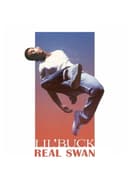 Lil' Buck: Real Swan (2019)4 sequences indexedM.I.A. “Paper Planes” soloCrystal Palace roller-rink and parking-lot jookin originsYo-Yo Ma — “The Swan” · chor. Lil Buck (self-devised performance)Planet B-Boy (2007)4 sequences indexedGamblerz divided-Korea showcaseInternational crew rehearsal montageIchigeki turntable showcase and Katsu's tribute
 Take the Lead (2006)4 sequences indexedLaRhette's after-hours basement solo · chor. Rich Talauega; Tone TalauegaOpening cross-cut — John Drake school dance · 00:04:10 · chor. Rich Talauega; Tone TalauegaDetention students answer with their own freestyle · chor. Rich Talauega; Tone Talauega
 Battle of the Year (2013)3 sequences indexedDream Team training montage · chor. Dave ScottInternational competition ensemble round · chor. Dave ScottPenultimate competition round · chor. Dave Scott
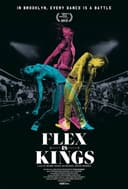 Flex Is Kings (2013)3 sequences indexedBattlefest season battlesJay Donn's Flex Wars illusion routineFlizzo's live-bird Battlefest punchline
 America's Best Dance Crew (2008–2015)2 sequences indexedKinjaz and KRNFX beatbox routineSuper Cr3w — “i” breaking showcase
Poster artwork from TMDB.
 This site uses TMDB and the TMDB APIs but is not endorsed, certified, or otherwise approved by TMDB.
Showing the 12 most-documented of 35 titles — browse the full library.
Hip-Hop & Street Dance FAQs
Hip-Hop & Street Dance in art
Browse the gallery →Works our catalogue identifies as depicting hip-hop & street dance.