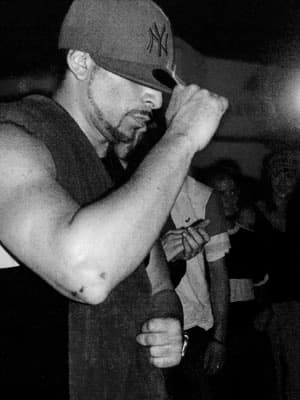
Performer · Teacher · Cultural Preserver · Innovator
Mr. Wiggles
Godfather of Hip-Hop Dance
Why They Matter
He helped define hip-hop dance as a legitimate art form and has been teaching and preserving its culture for over four decades.
Watch
Mr Wiggles Juste Debout Solo 2008 Japan
MRWIGGLES
First-party upload of a widely circulated solo showing timing, angles and character.
Mr Wiggles Workshop Reel "Feel the beat" Italy 2011
MRWIGGLES
Shows pedagogy and how he relates technique to musical feel.
Mr WIGGLES Judge Demo — Battle Urbanation, Bondy 2013
MRWIGGLES
Documents later battle-stage performance and audience communication.
Mr Wiggles BLACK BOOK JOURNAL 5 — is Graffiti Hip Hop
MRWIGGLES
Connects his dance and graffiti practice in his own voice.
Mr Wiggles interview for CHINA FUNK
MRWIGGLES
Useful practitioner testimony on lineage and terminology.
Mr Wiggles BLACK BOOK JOURNAL 1 JAMS
MRWIGGLES
Explains social settings in which street-dance knowledge circulates.
Biography
Steffan Clemente, known as Mr. Wiggles, was born in 1965 in the Bronx and describes himself as a South Bronx Puerto Rican raised inside hip-hop culture from the 1970s. His artistic formation brought together graffiti writing, rocking, breaking, MCing, popping and beatmaking as interconnected practices rather than isolated specialties. By most accounts, he experimented with robot movement early on, encouraged by his sister Wanda, before moving into breaking—a formation documented in his faculty biography at Broadway Dance Center but without precise dates.
Under the name Mr. Wiggles, Clemente built a reputation through battles and became associated with historically important groups spanning both coasts: Rock Steady Crew and Zulu Nation in New York, and California's Electric Boogaloos. His affiliations also included the graffiti crew TC5. These connections locate his work across New York breaking and rocking as well as the West Coast funk styles—popping and boogaloo—historically developed through the Electric Boogaloos' lineage.
Clemente's visibility in early hip-hop cinema came through appearances in *Wild Style* (1983) and *Beat Street* (1984), films that brought breaking and hip-hop culture to wider audiences. His stage work expanded into theater through collaborations with choreographers including Graciela Daniele, Savion Glover, Bill Irwin, Lynne Taylor-Corbett and Anne Marie D'Angelo, with performances at venues such as the Apollo Theater and Kennedy Center. In 1992, the Rhythm Technicians and Rock Steady Crew received a Bessie Award for collective work. A year later, in 1993, the Foundation for Contemporary Arts awarded Clemente a Grants to Artists award in Dance. He performed in *Jam on the Groove*, a mid-1990s theatrical production that brought hip-hop dance into extended choreographic form.
Clemente's practice also encompasses music production. The Foundation for Contemporary Arts records a commission for him to create a piece for *September Songs*, a 1997 Kurt Weill tribute project. His Bandcamp page documents a substantial catalog of funk, electrofunk, hip-hop and break-oriented music made as a beatmaker and composer. The album *Mr Wiggles Breaks vol 2*, released in 2018, mixes edits and chop-ups with instruments played by Clemente, drawing on material created during the 1990s and early 2000s.
Teaching and documentation have become central to his later career. Broadway Dance Center identifies him as one of its early mainstream hip-hop faculty members, where he teaches movement vocabulary associated with popping and boogaloo—including the angular "King Tut" style. His YouTube channel preserves workshops, judge demonstrations, interviews, movement instruction and commentary on graffiti and hip-hop history. A still-active online training program and store, alongside documented workshop activity in 2025, show continued public teaching practice.
Career Highlights
Born in the Bronx, New York City, according to the Foundation for Contemporary Arts. Foundation for Contemporary Arts
Credited by his first-party biography with an appearance in Wild Style; the exact role requires a screen-credit check. first-party biography
Credited by the same first-party source with an appearance in Beat Street; do not upgrade “appearance” to a principal role without a primary credit.
The Bessie Awards archive records the Rhythm Technicians and Rock Steady Crew for collective work. Bessie Awards archive
Received a Grants to Artists award in Dance from the Foundation for Contemporary Arts. Foundation for Contemporary Arts
Performed in the era of the Ghettoriginal production Jam on the Groove; the Drama Desk archive lists the production, not Clemente personally, among the 1996 choreography nominees. Drama Desk archive
Produced a commissioned piece for September Songs, a Kurt Weill tribute project, as documented by the Foundation for Contemporary Arts. Foundation for Contemporary Arts
Rock Steady Crew was recognized at the first VH1 Hip Hop Honors; this is a group honor and should not be phrased as an individual award.
His official channel preserves a Juste Debout Japan solo centered on popping, groove and King Tut vocabulary. Juste Debout Japan solo
The digital album Mr Wiggles Funk Classics 2 was released on 17 December, with Steffan Clemente credited as composer on Deezer. Deezer
Released the 12-track Mr Wiggles Breaks vol 2 through his artist Bandcamp. artist Bandcamp
His official channel documented a China workshop, evidence of continuing teaching rather than a competition title. China workshop
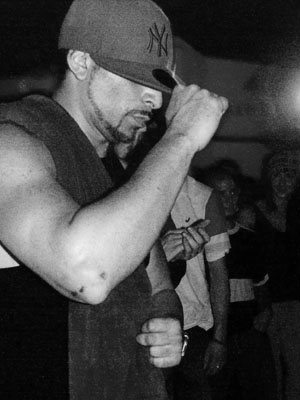
Gallery
Legacy & Impact
Mr. Wiggles matters because his career makes visible the connections among forms that commercial dance history often separates: South Bronx breaking, rocking and graffiti; the Electric Boogaloos' funk-style lineage; theater and filmed work; pedagogy; and music made for dancers. His archive is especially valuable as practitioner testimony—workshops, instructional videos and interviews that document both technique and hip-hop history from inside the culture. That combination presents him not as a solitary inventor, but as a consequential transmitter, performer and maker working across multiple communities and media.


Explore More Legends
Discover the dancers, teachers, choreographers, and cultural icons who shaped how the world moves.
Keep the thread going
Dance history, technique, and the occasional rabbit hole — in your inbox. Thoughtful, infrequent, unsubscribe anytime.
Free. No spam. One click to leave.