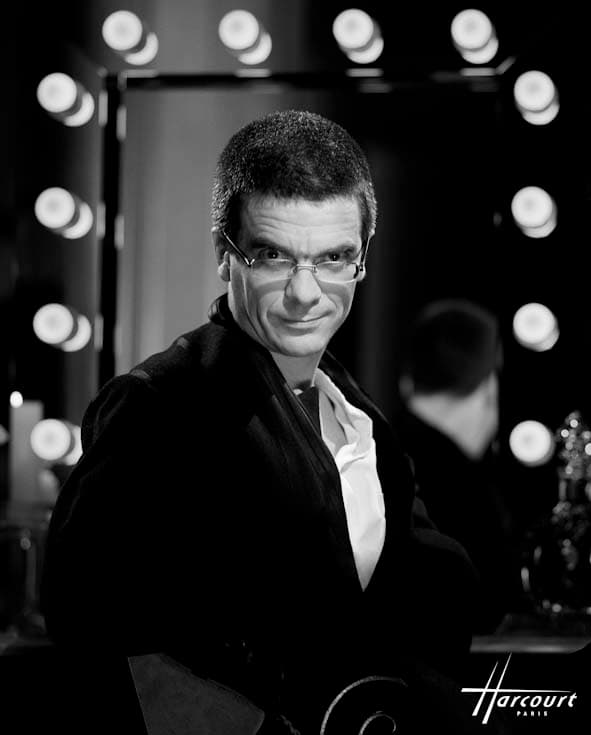
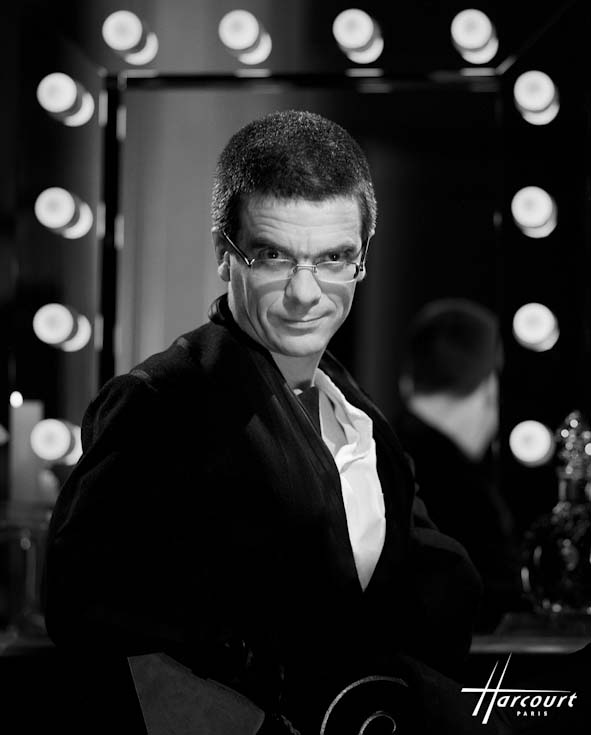
Philippe Decoufle
Legend of Dance
Why They Matter
Decouflé matters because he broadened what contemporary dance could look like without surrendering the body's centrality. He made optical illusion, film grammar, circus risk, nightclub energy, comic error, costume, and stage machinery function as choreographic materials. His Olympic ceremonies carri
Watch
TRAILER 2025 - Cie DCA / Philippe Decouflé
Compagnie DCA Philippe Decouflé
Current official-company overview of DCA's visual and choreographic world
Teaser Entre Temps · Cie DCA / Philippe Decouflé
Compagnie DCA Philippe Decouflé
Direct visual context for the 2025 work and its cross-generational cast
Nouvelles Pièces Courtes (2017)
Compagnie DCA Philippe Decouflé
Shows how DCA organizes contrasting short pieces and visual ideas
Biography
Philippe Decouflé, born 22 October 1961 in the Paris region, trained across circus, mime, and contemporary dance before studying at the Centre national de danse contemporaine in Angers. He identified Alwin Nikolais as a decisive teacher in the use of light and costume, and credited Merce Cunningham's video teaching with sharpening his understanding of distance, geometry, optics, and movement. In 1983 he founded Compagnie DCA, establishing a recognizable vocabulary in which the body interacts with apparatus, moving images, graphic shapes, exaggerated costumes, and comic timing. *Codex*, created in the 1980s, became a defining work: bodies and stage images behave like specimens from an impossible illustrated encyclopedia rather than characters in conventional narrative.
Decouflé's international profile expanded dramatically when he choreographed the opening and closing ceremonies of the 1992 Winter Olympic Games in Albertville, translating his taste for scale, visual surprise, suspended bodies, and playful geometry into a stadium environment and global broadcast. He later directed other civic spectacles, including the fiftieth-anniversary ceremony of the Cannes Film Festival in 1997 and *La Mêlée des mondes* for the 2007 Rugby World Cup.
His work moved continually between concert dance and popular image culture. Alongside repertory for Compagnie DCA, he directed films, music videos, advertising, and cabaret. *Désirs*, first presented at the Crazy Horse in 2009, adapted his optical and choreographic sensibility to revue. *Octopus*, created in 2010, combined dancers, live musicians, video, lighting effects, and contrasting choreographic tableaux.
Decouflé extended his methods into large commercial theatre through commissions with Cirque du Soleil. He created *Iris*, a cinema-themed resident production in Los Angeles in 2011, and in 2016 created and directed *Paramour*, a Broadway musical with thirty-eight performers, identified as the first Broadway staging by a French director on 42nd Street.
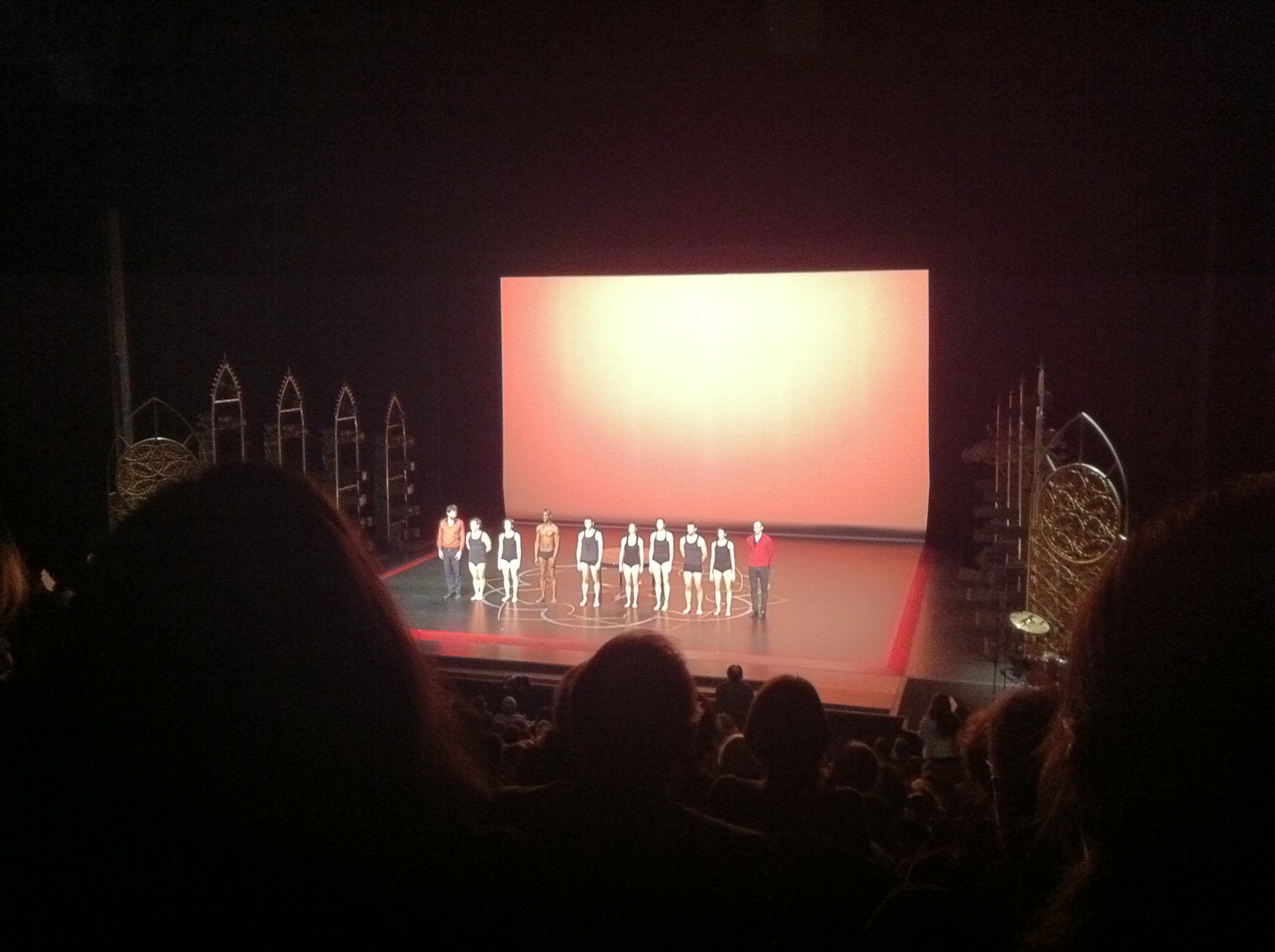
Recent work continues to revisit memory and the accumulated history of bodies. *Stéréo* (2022) used five dancers and three musicians in a high-energy, rock-oriented format. *Entre-Temps* (2025) brought together nine dancers of different ages and histories, drawing on classical ballet, cabaret, traditional, and contemporary dance while examining time, repetition, and recollection.
Career Highlights
Founded Compagnie DCA after training in circus, mime, and contemporary dance. Numeridanse Numeridanse
Created Codex, an early landmark of his hybrid movement-and-image theatre. Numeridanse Numeridanse
Choreographed the opening and closing ceremonies of the Albertville Winter Olympic Games and received the Silver Olympic Order. Dance Reflections · Olympedia Dance Reflections
Directed the fiftieth-anniversary ceremony of the Cannes Film Festival. Numeridanse Numeridanse
Presented L’Autre défilé at La Villette, using costumes from the Paris Opéra and Comédie-Française, and created Sombrero. Numeridanse Numeridanse
First presented Désirs, his reinterpretation of the Crazy Horse revue. Numeridanse Numeridanse
Created Octopus, a multidisciplinary work built as eight contrasting choreographic sequences with live music and screen effects. Compagnie DCA Compagnie DCA
Created the cinema-themed Iris for Cirque du Soleil at the Kodak Theatre in Los Angeles. Numeridanse Numeridanse
Created Panorama, revisiting DCA repertory from 1983 onward, and Opticon, an interactive exhibition devoted to optics. Numeridanse Numeridanse
Created and directed Cirque du Soleil's Broadway musical Paramour at the Lyric Theatre. Numeridanse Numeridanse
Created Stéréo for five dancers and three musicians. Numeridanse Numeridanse
Created Entre-Temps, bringing nine dancers of different ages into a work about time, memory, repetition, and choreographic inheritance. La Villette La Villette

Works
One stage work credited to Philippe Decoufle.
- IIrisBallet · Choreographer
Credits sourced from Wikidata (CC0), one citation per field. Works without a recorded premiere date are listed last. Titles link to the work in Limelight.
Legacy & Impact
Decouflé matters because he broadened what contemporary dance could look like without surrendering the body's centrality. He made optical illusion, film grammar, circus risk, nightclub energy, comic error, costume, and stage machinery function as choreographic materials. His Olympic ceremonies carried experimental visual imagination to an enormous audience, while Compagnie DCA sustained a repertory in which popular pleasure and formal inquiry coexist. His influence is clearest in artists who treat choreography as the organization of bodies, images, technologies, and audience attention together.


Explore More Legends
Discover the dancers, teachers, choreographers, and cultural icons who shaped how the world moves.
Keep the thread going
Dance history, technique, and the occasional rabbit hole — in your inbox. Thoughtful, infrequent, unsubscribe anytime.
Free. No spam. One click to leave.