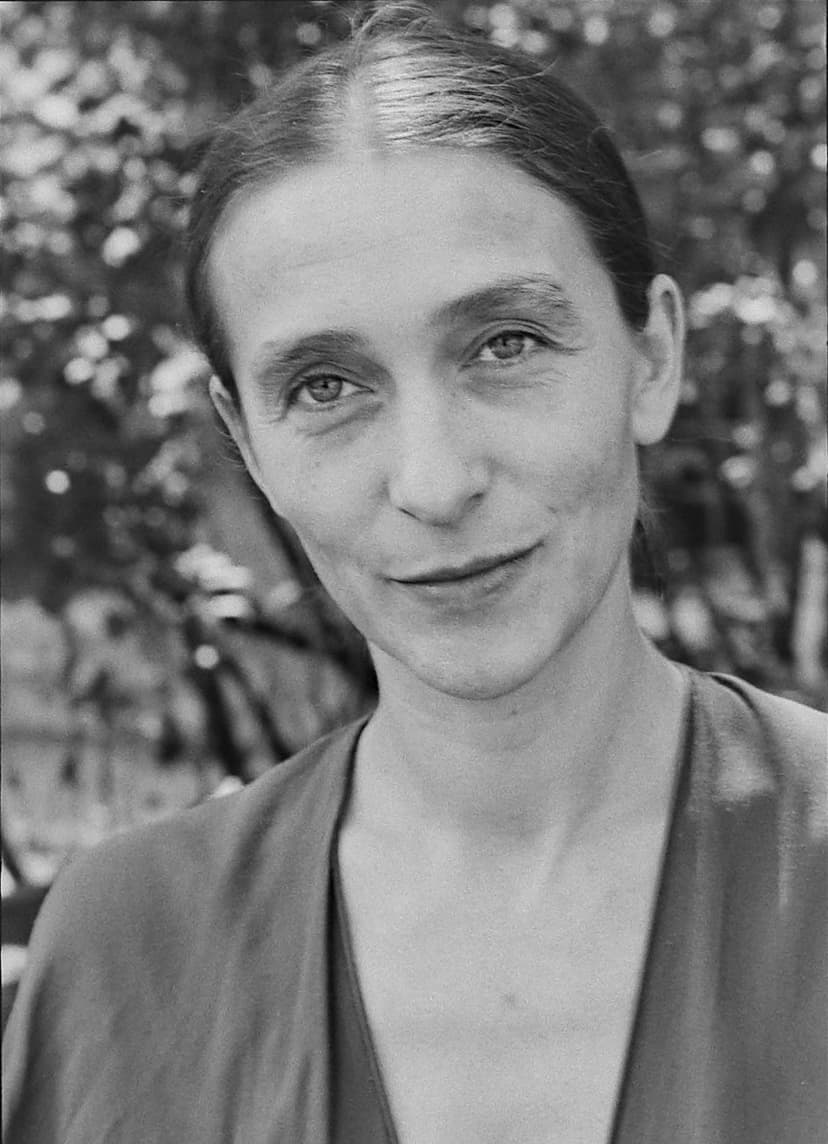
Choreographer · Innovator · Stage Icon
Pina Bausch
Inventor of Tanztheater
Why They Matter
She invented an entirely new art form and proved that dance could explore the depths of human relationships with the complexity of great literature.
Watch
Tanztheater Wuppertal Pina Bausch – Vollmond. Ein Stück von Pina Bausch
ImPulsTanz – Vienna International Dance Festival
Shows how Peter Pabst's flooded environment and Bausch's choreography make risk, weight, abandon, and play materially visible.
Pina Bausch's The Rite of Spring | The evolution of an epic
Sadler's Wells
Provides an authoritative introduction to the history, transmission, and continuing force of Bausch's 1975 choreography.
Pina - Official Trailer | HD | IFC Films
IFC Films
A concise, rights-aware doorway into Wim Wenders's film and several major Bausch works.
Trailer | The Rite of Spring / common ground[s]
Sadler's Wells
Connects Bausch's repertory to Germaine Acogny, Malou Airaudo, École des Sables, and a new ensemble of African dancers without treating the double bill as one choreographic work.
Tanztheater Wuppertal Pina Bausch: Vollmond at BAM
BAM (Brooklyn Academy of Music)
Documents the company's 2010 BAM presentation and offers a compact view of the physical environment of Vollmond.
Tanztheater Wuppertal Pina Bausch at BAM: Two Cigarettes in the Dark
BAM (Brooklyn Academy of Music)
Adds a less frequently embedded work and demonstrates Bausch's repertory beyond the best-known quartet of titles.
Biography
Pina Bausch was a German choreographer and director who transformed what dance could contain and what audiences might feel. Born Philippine Bausch on July 27, 1940, in Solingen, she grew up in her family's restaurant attached to a small hotel—an environment of arrivals, departures, music, conversation, and longing that shaped her lifelong attentiveness to fundamental human impulses. At fourteen she entered the Folkwang School in Essen, where she studied with Kurt Jooss, a major figure in German expressive dance who sought a disciplined meeting between ballet's formal clarity and the freer discoveries of Ausdruckstanz. The school's proximity of dance to music, opera, theatre, photography, painting, and sculpture gave the young artist a model of the stage as a meeting place for many forms.
In 1958, Bausch received the Folkwang Leistungspreis and a German Academic Exchange Service scholarship for study at the Juilliard School in New York. There, teachers including Antony Tudor, José Limón, Alfredo Corvino, and Margret Craske exposed her to ballet, modern dance, jazz, opera, and popular culture without the rigid hierarchy between "serious" and popular music she had encountered in Germany. She performed with Paul Taylor, Paul Sanasardo, and Donya Feuer, and worked in the ballet company at the Metropolitan Opera. That openness to plural sources remained audible throughout her career.
Jooss invited Bausch back to Essen in 1962. She returned as a soloist in the Folkwang Dance Studio, danced in Jooss's repertory, and began making work when the ensemble needed new pieces. Her early choreographies included *Fragment* and *Im Wind der Zeit*; the latter won first prize at the International Choreographic Workshop in Cologne in 1969. Guest projects in Wuppertal followed, establishing her as both a formidable dancer and a maker able to give precise form to elusive emotional states.
In the 1973/74 season, Wuppertal theatre director Arno Wüstenhöfer appointed Bausch to lead the city's ballet ensemble. She renamed it Tanztheater Wuppertal, signaling a commitment to dramatic and choreographic means beyond conventional ballet. Her earliest Wuppertal works tested different forms at remarkable speed: *Fritz*; Gluck's dance operas *Iphigenie auf Tauris* and *Orpheus und Eurydike*; the Brecht-Weill double bill *The Seven Deadly Sins* and *Don't Be Afraid*; and, in 1975, her epochal staging of Stravinsky's *The Rite of Spring*. Danced on a thick field of peat designed by Rolf Borzik, *The Rite of Spring* made exhaustion, weight, group pressure, fear, and sacrifice materially present. Early Wuppertal audiences did not always welcome Bausch's unsettling departures, but the intensity that provoked resistance ultimately helped transform international expectations of dance.
During the later 1970s, Bausch's art became unmistakably its own. In *Bluebeard. While Listening to a Tape Recording of Béla Bartók's Opera "Duke Bluebeard's Castle"* (1977), recorded music is stopped, rewound, and replayed until repetition becomes a dramatic action. *Café Müller* (1978), set to Purcell and performed in Borzik's room of chairs and tables, turned collision, care, compulsion, and sleepwalking vulnerability into an enduring stage image; Bausch herself danced in its original cast. *Kontakthof* (1978) examined social presentation and the uneasy bargaining of intimacy, later returning in versions performed by adults over sixty-five and by teenagers. These works exemplify her conviction that ordinary actions—walking, laughing, touching, displaying the body—can be as choreographically charged as a technically difficult step.
Bausch's method made the performers' humanity part of the material. Rather than arrive with every sequence fixed, she posed questions and tasks; dancers answered in speech, gesture, memory, action, or movement. She then selected, transformed, ordered, and refined this material into tightly composed works. The dancers were not anonymous instruments. Their ages, accents, histories, temperaments, and physical particularities remained visible. The authorship was unmistakably Bausch's in its selection and composition, yet it was relational and depended on the ensemble. So did the visual and musical worlds. Her life partner Rolf Borzik designed sets and costumes until his death in 1980. Peter Pabst subsequently created the transformative environments of twenty-six productions; Marion Cito shaped the costumes; dramaturge Raimund Hoghe and musical collaborators Matthias Burkert and Andreas Eisenschneider were also central to the mature Wuppertal language.
From the 1980s onward, Tanztheater Wuppertal became one of the world's defining performance ensembles. *1980 — A Piece by Pina Bausch*, *Nelken (Carnations)*, *Two Cigarettes in the Dark*, and *Viktor* expanded her gallery of social ritual, memory, comedy, tenderness, and danger. *Viktor*, developed in Rome in 1986, opened a long sequence of works arising from residencies and international collaborations. Later projects engaged encounters with Palermo, Los Angeles, Hong Kong, Lisbon, Budapest, Istanbul, Saitama, Seoul, India, Brazil, and Chile. Works such as *Der Fensterputzer*, *Masurca Fogo*, *Água*, *Nefés*, *Ten Chi*, *Bamboo Blues*, *Vollmond*, and *Sweet Mambo* kept renewing the vocabulary. Water crashed across Peter Pabst's stage in *Vollmond*; carnations covered it in *Nelken*; a wall fell in *Palermo Palermo*. The environment changed the performers' actions, risk, timing, and physical truth.
International honors eventually matched Bausch's influence. She received Japan's Praemium Imperiale in 1999, the Golden Lion for Lifetime Achievement in Dance at the Venice Biennale in 2007, and the Kyoto Prize in Arts and Philosophy the same year. Her presence crossed into cinema: Federico Fellini cast her in *And the Ship Sails On*; Pedro Almodóvar placed excerpts from *Café Müller* and *Masurca Fogo* in *Talk to Her*; and Bausch wrote, choreographed, and directed the film *The Complaint of the Empress*. In 2009 she completed the Chile-inspired *…como el musguito en la piedra, ay si, si, si…*. She died in Wuppertal on June 30 of that year, aged sixty-eight. Wim Wenders and the company subsequently completed *Pina*, a 3-D film tribute that premiered in 2011 and brought her work to a vast new audience.
Career Highlights
Began professional dance studies with Kurt Jooss at the Folkwang School in Essen. Source Source
Received the Folkwang Leistungspreis and a DAAD scholarship for further study in New York. Source Source
Returned to Essen as a soloist with the Folkwang Dance Studio and worked with Jooss while developing her own choreography. Source Source
Won first prize at the Cologne choreography competition for Im Wind der Zeit. Source Source
Took leadership of Wuppertal's ballet ensemble and renamed it Tanztheater Wuppertal. Source Source
Premiered The Rite of Spring, with collaboration by Hans Pop and set and costume design by Rolf Borzik, at Opernhaus Wuppertal. Source Source
Premiered Café Müller and Kontakthof, two works that became touchstones of Tanztheater. Café Müller; Kontakthof Café Müller
Premiered Nelken (Carnations), with set design by Peter Pabst, costumes by Marion Cito, dramaturgy by Raimund Hoghe, and credited collaborators. Source Source
Created Viktor through a Rome residency, initiating a major strand of internationally developed works. Source Source
Received the Praemium Imperiale for Theatre/Film. Source Source
Received both the Kyoto Prize in Arts and Philosophy and the Venice Biennale's Golden Lion for Lifetime Achievement in Dance. Kyoto Prize; La Biennale Kyoto Prize
Completed …como el musguito en la piedra, ay si, si, si…, her final work; died in Wuppertal on June 30. Work record; death notice Work record
Gallery
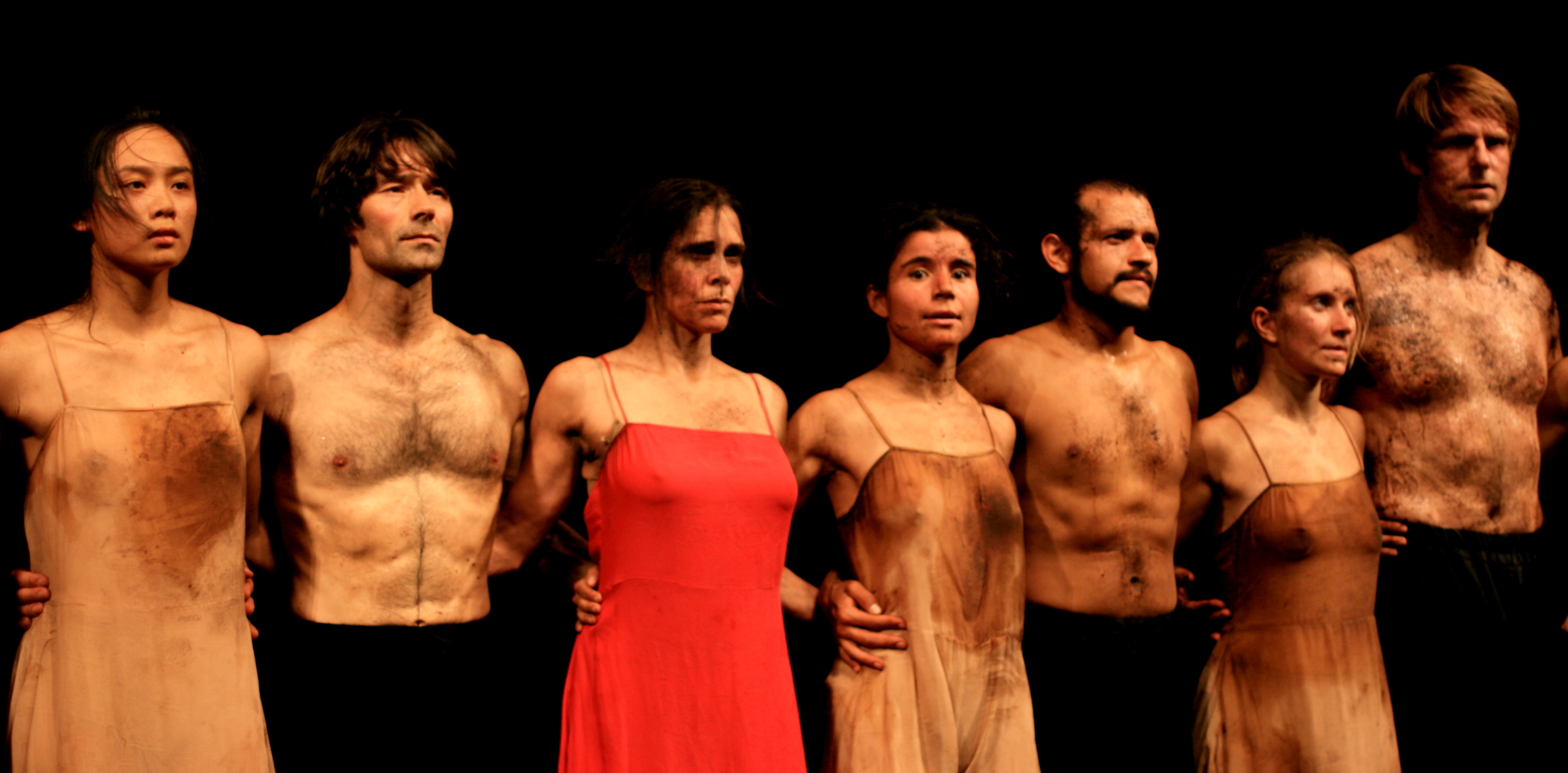
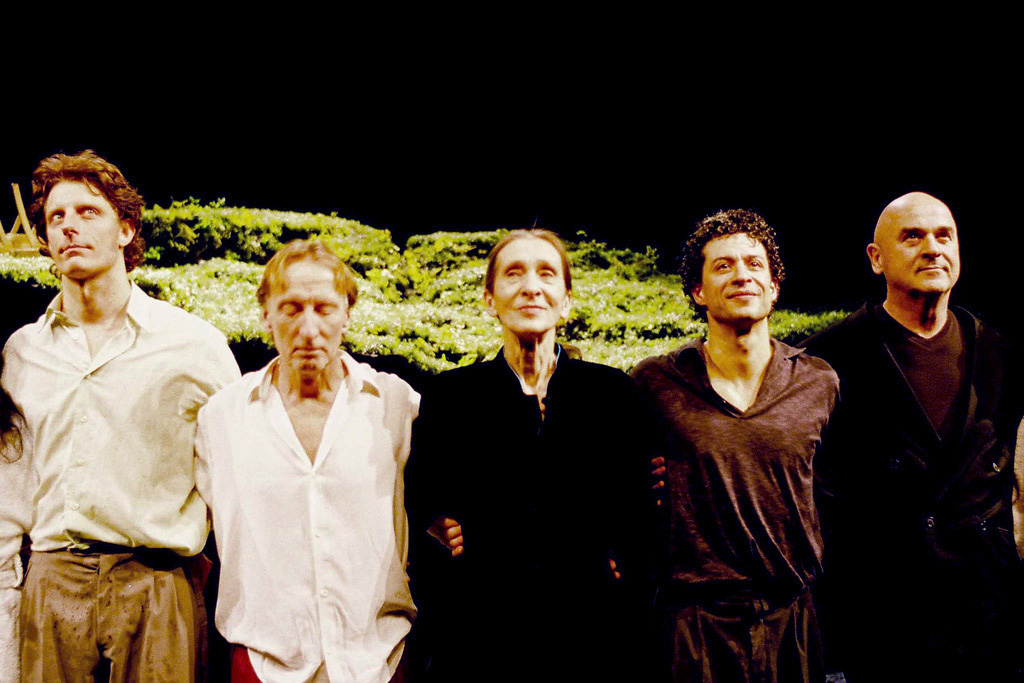
Works
2 stage works credited to Pina Bausch, 1978.
- Café Müller (1978)Ballet · Choreographer
- Kontakthof (1978)Musical theatre · Choreographer
Credits sourced from Wikidata (CC0), one citation per field. Works without a recorded premiere date are listed last. Titles link to the work in Limelight.
Pina Bausch on screen
Films and television featuring Pina Bausch, with the sequences we have indexed.
 Pina (2011)17 sequences indexedCafé Müller · chor. Pina BauschThe Rite of Spring · chor. Pina BauschKontakthof · chor. Pina Bausch
 Dancing Dreams (2010)11 sequences indexedFirst Kontakthof rehearsals · chor. Pina BauschPartner-contact exercises · chor. Pina BauschKontakthof dress rehearsal · chor. Pina Bausch
Poster artwork from TMDB.
 This site uses TMDB and the TMDB APIs but is not endorsed, certified, or otherwise approved by TMDB.
Legacy & Impact
Pina Bausch's legacy is not a single step or pose but a widened field of possibility for what choreography could contain. She demonstrated that dance could hold the contradictions of lived experience without resolving them into neat plots: beauty beside embarrassment, tenderness beside domination, celebration beside grief. Her work erased inherited borders among dance, theatre, opera, performance art, music, and visual design while refusing to abandon the trained body. It made performer individuality, age, cultural difference, and personal memory visible within a major repertory company. Tanztheater Wuppertal continues to perform her works; the Pina Bausch Foundation, created in 2009, preserves the archive and supports responsible transmission. The continuing life of *The Rite of Spring*, *Café Müller*, *Kontakthof*, *Nelken*, and other works across generations and continents is evidence of an oeuvre that remains both historically specific and urgently alive.


Explore More Legends
Discover the dancers, teachers, choreographers, and cultural icons who shaped how the world moves.
Keep the thread going
Dance history, technique, and the occasional rabbit hole — in your inbox. Thoughtful, infrequent, unsubscribe anytime.
Free. No spam. One click to leave.