Choreographer · Innovator · Cultural Preserver · Community Builder
Rennie Harris
Hip-Hop's Concert Pioneer
Why They Matter
He proved that street dance could sustain full theatrical works with the same depth as ballet or modern dance.
Styles Rennie Harris shaped
Each one links to the style’s own page — its origins, music, tempo and video.
Watch
Rennie Harris Puremovement | Jacob's Pillow Dance Festival 2009
Jacob's Pillow
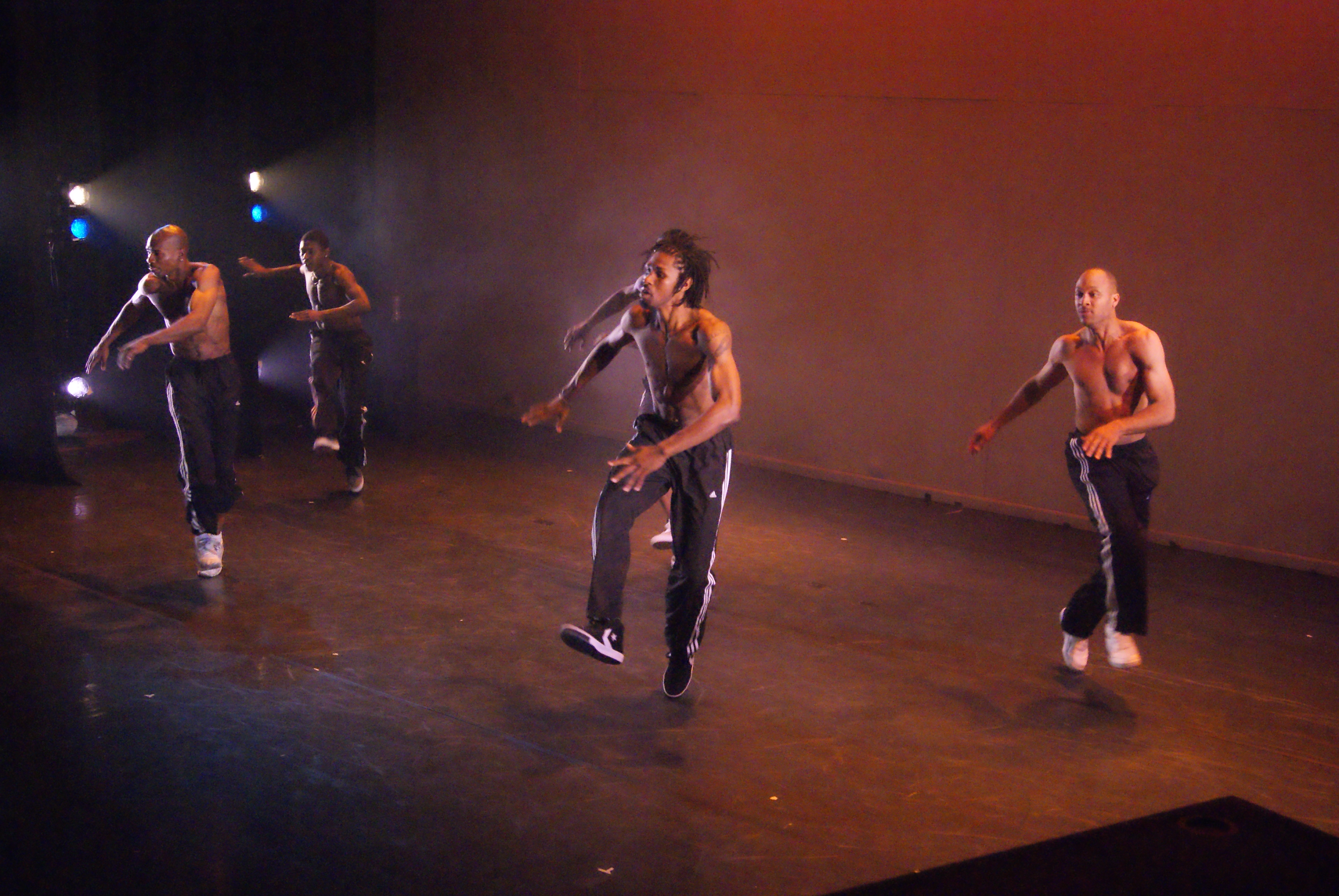
Institutional festival footage gives performance evidence of RHPM's ensemble architecture.
Rennie Harris on the power of the choreographer | Ailey
American Masters / PBS
Harris articulates the ethical responsibility of a choreographer in relation to dancers.
Home by Rennie Harris
Alvin Ailey American Dance Theater
Documents Harris's 2011 commission for Ailey and the meeting of social-dance vocabulary with Ailey dancers.
Exodus by Rennie Harris
Alvin Ailey American Dance Theater
Shows Harris creating a large-ensemble work for a major repertory company.
LAZARUS by Rennie Harris
Alvin Ailey American Dance Theater
Primary company material for Ailey's first two-act work and Harris's largest Ailey commission.
Behind the Scenes of Rennie Harris' Lazarus — Part 3
Alvin Ailey American Dance Theater
Reveals process and collaboration behind Lazarus rather than only the finished stage image.
Biography
Lorenzo "Rennie" Harris grew up in North Philadelphia within the social world from which his art would emerge. His formation came through an African American community steeped in hip-hop—not as a style he discovered later, but as lived environment: music, language, fashion, dance, and neighborhood exchange. Televised performances by Don Campbell and the Lockers sparked his early interest. As a young teenager he organized and danced with local groups including Cobra III, the Step Masters, and later the Scanner Boys, crews whose exact chronologies and membership are best understood as formative stages in oral-dance history.
During the 1980s Harris worked in the commercial hip-hop circuit. He toured on the Fresh Festival in 1984, a landmark national hip-hop tour documented in Alvin Ailey's records, and took work on Philadelphia dance television and with recording artists. Those jobs taught him stagecraft and production. But his larger ambition was more historically urgent: to build concert work from street and club vocabularies while naming their creators, lineages, and social meanings. He returned to Philadelphia late in the decade and performed with the Scanner Boys until the group's final appearance in 1992.
In 1992 Harris founded Rennie Harris Puremovement. The company joined performance to preservation, lecture-demonstrations, and teaching, asserting that hip-hop dance deserved both theatrical resources and serious historical study. Harris later described this as "Street Dance Theater"—a theatrical framework in which popping, locking, breaking, house, and Philadelphia street-dance vocabularies could carry narrative, abstraction, character, and social commentary without severing those forms from their communities. RHPM's early work established a model for a street-dance company operating in the nonprofit concert field.
*Rome & Jewels*, recorded at Jacob's Pillow in 2000, became a defining example. Harris's reimagining of Shakespeare's tragedy through hip-hop language, male street-dance crews, and Darrin Ross's sound design demonstrated how battle, gesture, rhythm, and group identity could function as dramaturgical systems. His later works—*P-Funk*, *Facing Mekka*, and *Nuttin' But a Word*—continued testing how social dancing could hold spiritual, political, and interpersonal ideas on a proscenium stage. In 1998 Harris began the Illadelph Legends of Hip-Hop Festival, bringing street-dance pioneers into teaching, discussion, and performance contexts.
Harris built educational infrastructure alongside his theatrical work. In 2007 he founded Rennie Harris Awe-Inspiring Works as a youth-focused second company centered on mentorship and performance discipline. That same year United States Artists selected him for a USA Fellowship. His teaching has extended to universities, professional companies, and a teacher-training program that stresses technique alongside cultural and historical knowledge. Rennie Harris University codifies foundations in hip-hop and house without claiming ownership of those forms. The University of Colorado Boulder lists him as an artistic director and choreographer.
Commissions for major repertory companies widened his reach. Alvin Ailey American Dance Theater premiered *Home* in 2011, and in 2018 presented *Lazarus*—the company's first two-act work, created with Darrin Ross's original score and sound design. Ailey named Harris its first artist in residence. He has also received commissions from Philadanco, Dayton Contemporary Dance Company, Ballet Memphis, Colorado Ballet, Pennsylvania Ballet, and Hubbard Street Dance Chicago, among others. In 2023 the American Dance Festival presented him with the Samuel H. Scripps/ADF Award for lifetime achievement in choreography. A multi-year Penn Live Arts residency has combined new creation, repertory reconstruction, and work with Philadelphia students—an effort to reconnect his creative process with the city and preserve knowledge held in bodies, relationships, and oral history. Performance, pedagogy, and historical correction remain inseparable in his work.
Career Highlights
Harris toured on the Fresh Festival, which Alvin Ailey’s biography identifies as the first national hip-hop tour in the United States. Source Source
After the Scanner Boys’ final Philadelphia performance, Harris founded Rennie Harris Puremovement. Source Source
He made his Jacob’s Pillow debut during the Jazz Tap/Hip Hop Festival. Source Source
Harris established the Illadelph Legends of Hip-Hop Festival as an education-centered gathering of street-dance pioneers, students and practitioners. Source Source
Jacob’s Pillow recorded Rome & Jewels, Harris’s hip-hop reworking of Romeo and Juliet, with choreography credited to Harris and sound design to Darrin Ross. Source Source
United States Artists named Harris a USA Fellow. Source Source
Harris conceived RHAW as a youth-oriented second company emphasizing mentorship, outreach and street-dance theater. Source Source
Alvin Ailey American Dance Theater premiered Harris’s Home. Source Source
Alvin Ailey American Dance Theater premiered Lazarus, its first two-act work; the company also identified Harris as its first artist in residence. Sources, Dance Magazine Sources
American Dance Festival presented Harris with the Samuel H. Scripps/ADF Award for lifetime achievement in choreography. Source Source
Jacob’s Pillow recorded RHPM performing Nuttin’ But a Word in its “Hip Hop Across the Pillow” program. Source Source
RHPM premiered American Street Dancer, a large-scale work tracing regional United States street-dance forms with a live hip-hop orchestra. Source Source
Gallery
Legacy & Impact
Harris matters because he built institutions around a foundational argument: street dance is not raw material awaiting concert legitimacy. It already possesses histories, aesthetics, authorship, community protocols, and intellectual depth. Through Rennie Harris Puremovement, Rennie Harris Awe-Inspiring Works, the Illadelph Legends Festival, university teaching, and commissioned repertory, he gave that argument multiple durable forms. His most consequential achievement is therefore not a single crossover success, but a sustained practice that lets hip-hop and street-dance artists enter theaters while insisting that theaters learn where the movement came from—and acknowledge the communities that made it.


Explore More Legends
Discover the dancers, teachers, choreographers, and cultural icons who shaped how the world moves.
Keep the thread going
Dance history, technique, and the occasional rabbit hole — in your inbox. Thoughtful, infrequent, unsubscribe anytime.
Free. No spam. One click to leave.