Tatsumi Hijikata
Legend of Dance
Why They Matter
Hijikata matters because he changed what could count as dance. He made age, illness, rural memory, taboo, eroticism, weakness, asymmetry and metamorphosis into compositional forces, while developing an image-based process that could transmit movement without reducing it to steps. His impact extends
Watch
Gallery Talk: A Story of Smallpox
Keio University Art Center
Institutional interpretation of Hijikata's 1972 work and its archive
Butoh: A Body Over the Edge — PSi 2015 TOHOKU
PSi 2015 TOHOKU / Keio University Art Center and Aomori Museum of Art
Connects Hijikata scholarship with a KUAC-cohosted international conference
Biography
Tatsumi Hijikata was born in Akita in northern Japan on 9 March 1928 and became the principal originator of Ankoku Butoh, a postwar Japanese performance practice that fundamentally transformed what dance could be. He studied modern dance with Katsuko Masumura around 1946 and encountered Kazuo Ohno's work during a 1949 visit to Tokyo. After joining Mitsuko Ando's studio in 1953, he met Ohno there and developed the training and intellectual environment he would later challenge. His northern childhood became an equally important imaginative resource for his mature work.
In May 1959, Hijikata presented *Kinjiki* (*Forbidden Colours*) with Yoshito Ohno, drawing on Yukio Mishima's novel. The work is often cited as the first butoh performance, though the form emerged through collaboration with Kazuo and Yoshito Ohno and a broader postwar avant-garde rather than through single invention. A revised version followed in September with Kazuo Ohno. The scandal surrounding *Kinjiki* established Hijikata as an iconoclast, but its lasting importance lies in his refusal of both inherited Japanese stage conventions and imported Western modern-dance ideals.
During the 1960s, Hijikata developed a succession of works at Asbestos Hall, the studio associated with him and Akiko Motofuji. He created pieces including *Three Phases of Leda* (1962), *Masseur: A Story That Supports Passion* (1963), *Rose-Coloured Dance: To Mr. Shibusawa's House* (1965) and *Tomato* (1966). He worked across dance, theater, photography and film. The photographer Eikoh Hosoe's *Kamaitachi* project placed Hijikata's body in the rural landscapes of northern Japan, while artists and intellectuals gathered around Asbestos Studio as an avant-garde salon.
The 1968 solo *Tatsumi Hijikata and the Japanese: Revolt of the Body* marked a major statement of his theatrical and corporeal philosophy. Hijikata made the body appear unstable: human form could seem to decay, harden, sag, crawl, become animal, become landscape or be invaded by an image. The aim was a sustained attack on the assumption that theatrical bodies should be youthful, symmetrical, efficient, upright or socially proper. In 1972, Hijikata and his dancers presented *Twenty-Seven Nights for Four Seasons*, a cycle that included *Hosotan* (*A Story of Smallpox*), later described as an epoch-making sequence in butoh history.
In the 1970s, Hijikata increasingly developed choreography through image-rich verbal notation now discussed as *butoh-fu*. Rather than prescribing steps, these image chains gave dancers conditions and transformations to embody. Yoko Ashikawa became a crucial interpreter in this period, and her labor and artistry were essential to the realization of this method. Hijikata's later influence also flowed through directing: he directed Kazuo Ohno's *Admiring La Argentina* (1977), *My Mother* (1981) and *The Dead Sea* (1985). He died in Tokyo on 21 January 1986. The Tatsumi Hijikata Archive, established by Keio University in 1998 from materials associated with Asbestos Studio, preserves performance films, photographs, posters, notebooks, scrapbooks and butoh illustrations, making responsible scholarship possible for this ephemeral work.
Career Highlights
Studies modern dance with Katsuko Masumura in Akita. Dance Archive Network Dance Archive Network
Encounters Kazuo Ohno's first performance during a Tokyo visit. Dance Archive Network Dance Archive Network
Joins the Mitsuko Ando Dance Studio. Dance Archive Network Dance Archive Network
Presents Kinjiki (Forbidden Colours) with Yoshito Ohno; the work is often cited as the first butoh performance. Dance Archive Network Dance Archive Network
Directs and writes Three Phases of Leda at the First Leda Recital at Asbestos Hall. Dance Archive Network Dance Archive Network
Writes, directs, choreographs and performs Masseur: A Story That Supports Passion. Dance Archive Network Dance Archive Network
Presents Tatsumi Hijikata and the Japanese: Revolt of the Body. Dance Archive Network Dance Archive Network
Mounts Twenty-Seven Nights for Four Seasons, including Hosotan. Japan Foundation Japan Foundation
Hijikata and Ankoku Butoh-ha receive the fourth Dance Critics Association Award for 1972. Dance Archive Network Dance Archive Network
Directs Kazuo Ohno's Admiring La Argentina and receives a second Dance Critics Association honor for 1976. Dance Archive Network Dance Archive Network
Directs Kazuo Ohno's My Mother. Dance Archive Network Dance Archive Network
Keio University establishes the Tatsumi Hijikata Archive from the Asbestos Studio collection. Japan Foundation Japan Foundation
Tatsumi Hijikata on screen
Films and television featuring Tatsumi Hijikata, with the sequences we have indexed.
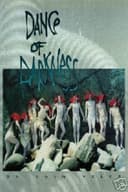
Poster artwork from TMDB.
 This site uses TMDB and the TMDB APIs but is not endorsed, certified, or otherwise approved by TMDB.
Legacy & Impact
Hijikata changed what could count as dance. He made age, illness, rural memory, taboo, eroticism, weakness, asymmetry and metamorphosis into compositional forces while developing an image-based process that transmits movement without reducing it to steps. His impact extends through Japanese and international butoh, contemporary dance, performance art, experimental theater, film and movement research. Rather than a single codified style, Hijikata's lineage is better understood as a set of questions and working methods that continue to shape how dancers engage with the body's capacity for transformation.


Explore More Legends
Discover the dancers, teachers, choreographers, and cultural icons who shaped how the world moves.
Keep the thread going
Dance history, technique, and the occasional rabbit hole — in your inbox. Thoughtful, infrequent, unsubscribe anytime.
Free. No spam. One click to leave.