Kazuo Ohno
Legend of Dance
Why They Matter
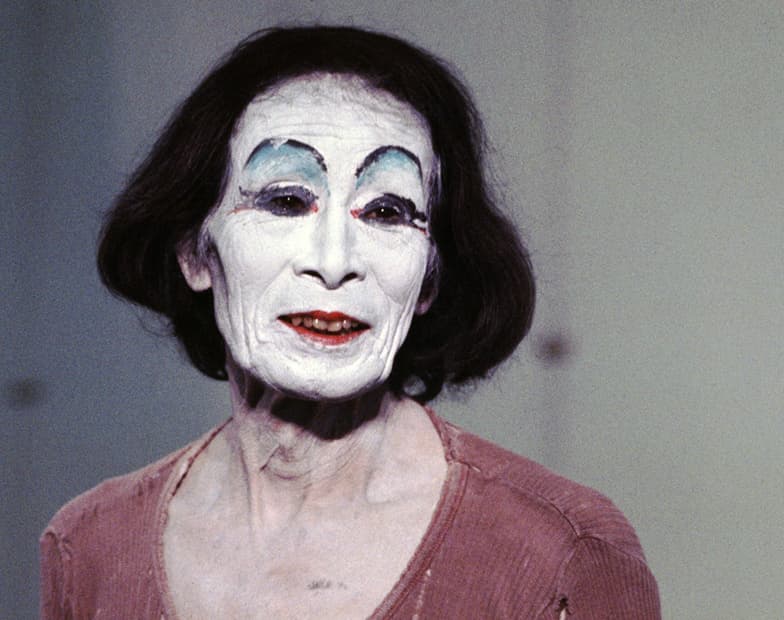
Ohno matters because he demonstrated that dance can be generated from attention, recollection and metamorphosis rather than from youthful virtuosity alone. His partnership with Hijikata helped establish butoh, while Admiring La Argentina and decades of touring carried a Japanese postwar avant-garde
Biography
Kazuo Ohno was born on 27 October 1906 in Hakodate, Hokkaido. He grew up in a large family and initially pursued athletics and physical education, teaching at a Christian school before dedicating himself fully to dance. A decisive moment came in 1929 when he saw the Spanish dancer Antonia Mercé, known as La Argentina, perform in Tokyo—an encounter he would later transform into art through memory rather than imitation. In the 1930s, Ohno studied the Japanese modern-dance currents associated with Baku Ishii and Takaya Eguchi. Military service interrupted his developing career; he served in China and New Guinea before being held as a prisoner of war.
Ohno established a dance studio and presented his first recital in 1949. His encounter with Tatsumi Hijikata in the 1950s placed him at the center of the emerging practice that became butoh. He performed in Hijikata's 1960 *Divine* and the two continued collaborating, though their relationship remained a dynamic partnership rather than a conventional choreographer-performer hierarchy. Hijikata's radical theatrical structures and Ohno's receptive, image-led performance intelligence remained distinct even as they converged creatively.
Ohno returned to solo prominence at seventy with *Admiring La Argentina*, premiered on 1 November 1977 at Dai-ichi Seimei Hall in Tokyo. Hijikata directed the production while Yoshito Ohno handled sound design. Rather than reconstructing flamenco technique, the work revisited the youthful memory of Antonia Mercé through a shifting, gender-crossing stage presence. The piece won the Dance Critics' Circle Award and became his defining touring work, eventually reaching 119 performances by 1994.
The 1980 International Theatre Festival in Nancy brought Ohno a major European breakthrough, followed by New York appearances in 1981 and extensive international touring. *My Mother* (1981), again directed by Hijikata, explored maternal memory and deepened his artistic reach. *The Dead Sea* (1983), performed with Yoshito, made their familial and artistic partnership visible to audiences. Later works sustained an unusually long career in which age was neither concealed nor treated as a limitation.
Ohno's last international appearance was in 1999. As mobility declined, he continued to perform with his hands, eyes and breath, making a final public stage appearance in 2007. He died in Yokohama on 1 June 2010. His studio and archive, closely associated with Yoshito Ohno, preserved records of a practice built through images, memories and encounters rather than a fixed technique. His late career permanently widened the range of bodies and ages through which theatrical dance could claim expressive authority.
Career Highlights
Saw Antonia Mercé (“La Argentina”) perform in Tokyo, an encounter later transformed into his signature tribute. Dance Archive Network
Began formal modern-dance study in the lineage of Baku Ishii and Takaya Eguchi while working as a physical-education teacher. The Independent
Served in the Japanese military; the war and captivity interrupted his dance career. Dance Archive Network
Opened a dance studio and presented his first recital. Dance Archive Network
Performed in Tatsumi Hijikata’s Divine, a formative event in their butoh collaboration. Dance Archive Network
Appeared with Hijikata in A Rose-Colored Dance. Dance Archive Network
Premiered Admiring La Argentina, directed by Hijikata, at Dai-ichi Seimei Hall in Tokyo. Dance Archive Network
Achieved an international breakthrough at the Nancy International Theatre Festival and toured Europe. Routledge Encyclopedia of Modernism
Premiered My Mother in Tokyo and performed in New York. (Dance Archive Network, Dance Archive Network chronology) Dance Archive Network
Performed The Dead Sea with Yoshito Ohno. The Independent
Made his final international appearance, in a performance of Requiem for the 20th Century. The Guardian
Made his final public stage appearance, continuing to dance through minimal gesture despite limited mobility. The Guardian
Legacy & Impact
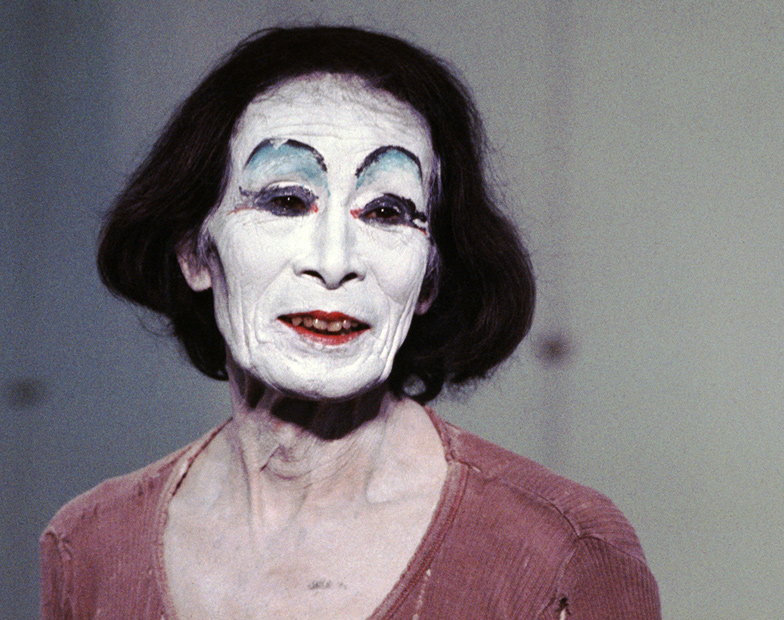
Ohno matters because he demonstrated that dance can emerge from attention, recollection and metamorphosis rather than from youthful virtuosity alone. His partnership with Tatsumi Hijikata helped establish butoh as a major postwar practice, while *Admiring La Argentina* and decades of international touring carried Japanese avant-garde work into global conversation. Just as importantly, his performances in advanced age refused the idea that expressive power diminishes with conventional physical capacity. That example continues to influence experimental dance, performance art and disability- and age-conscious approaches to embodiment worldwide.


Explore More Legends
Discover the dancers, teachers, choreographers, and cultural icons who shaped how the world moves.
Keep the thread going
Dance history, technique, and the occasional rabbit hole — in your inbox. Thoughtful, infrequent, unsubscribe anytime.
Free. No spam. One click to leave.