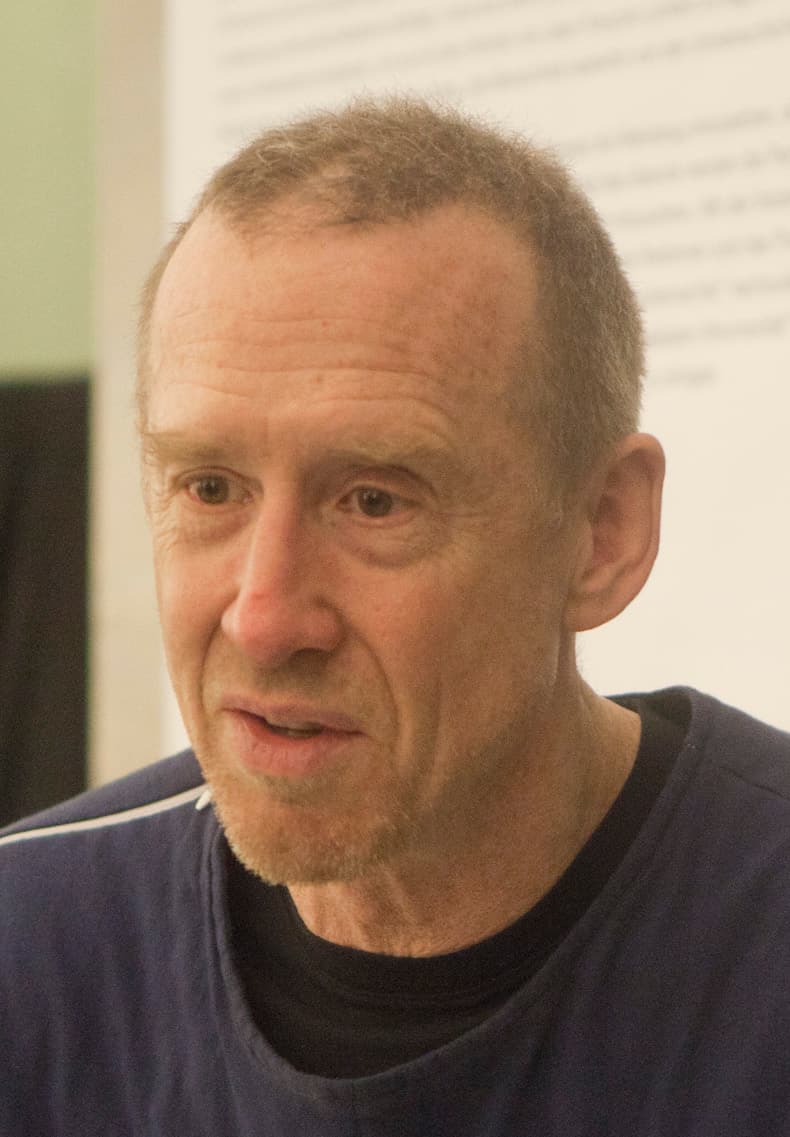
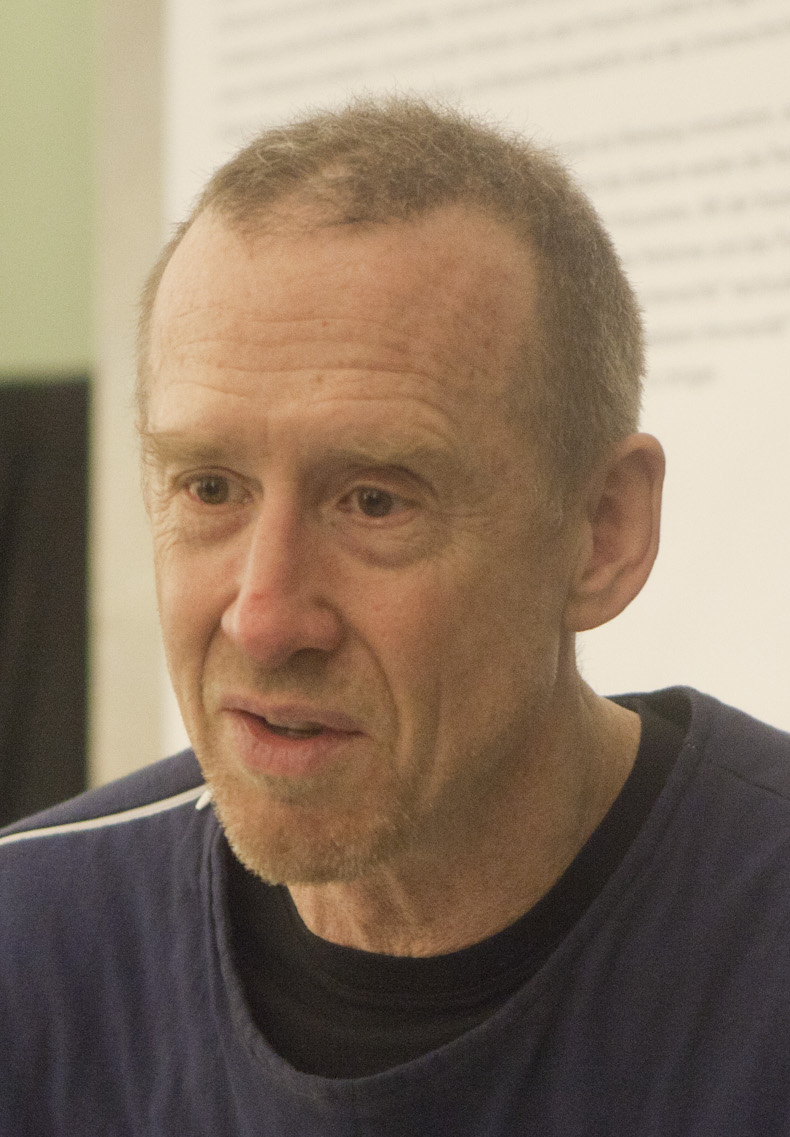
William Forsythe
Legend of Dance
Why They Matter
Forsythe’s central legacy is a change in what ballet and choreography can be understood to do. He showed that classical technique can be analyzed, redistributed, accelerated, interrupted, and opened to dancer agency without losing its historical intelligence. His digital tools helped make embodied k
Styles William Forsythe shaped
Each one links to the style’s own page — its origins, music, tempo and video.
Watch
Kyoto Prize Laureate Introduction: William Forsythe
Kyoto Prize / Inamori Foundation
Authoritative overview tied to the 2024 Kyoto Prize citation
An Interview with William Forsythe
The Australian Ballet
Provides a recent first-person account of Forsythe's process and The Barre Project
Biography
William Forsythe, born in New York in 1949, transformed ballet from a fixed tradition into an open system for spatial and temporal inquiry. He began classical training at Jacksonville University in Florida in 1967 with Nolan Dingman and Christa Long, received a scholarship to the Joffrey Ballet School in 1969, and danced with the Joffrey Ballet. This relatively late entry into ballet shaped his approach: rather than inheriting conventions as settled, he studied ballet's principles as a language to be analyzed and extended.
Forsythe joined Stuttgart Ballet in 1973. In 1976 he created *Urlicht*, his first professional work, and was appointed the company's Resident Choreographer. Over the next seven years he developed strategies that showed how classical dancers could use speed, displacement, and choice without abandoning technical specificity. In 1984 he became director of Ballet Frankfurt, a position he held through 2004. During these two decades he created major works including *Artifact*, *In the Middle, Somewhat Elevated*, *Impressing the Czar*, *Limb's Theorem*, *The Loss of Small Detail*, *Eidos:Telos*, and *Kammer/Kammer*. These pieces challenged expectations about proscenium space, authorship, and the stable "center" of a ballet phrase. *In the Middle, Somewhat Elevated*, created for Paris Opera Ballet in 1987, retained academic virtuosity while accelerating and extending its figures.
After Ballet Frankfurt closed in 2004, Forsythe founded The Forsythe Company, directing it from 2005 to 2015. This smaller, more independent ensemble became a laboratory for works such as *Three Atmospheric Studies*, *Human Writes*, *Heterotopia*, *I don't believe in outer space*, and *Sider*. Dancers participated in distributed decision-making and flexible timing, working with precise tasks, spatial rules, and timing systems rather than simply reproducing a centrally imposed sequence.
Parallel to stage work, Forsythe expanded choreography beyond trained performers. *Improvisation Technologies: A Tool for the Analytical Dance Eye* used graphic animation to show how bodies inscribe lines and relationships in space. His "Choreographic Objects"—including *White Bouncy Castle*, *Nowhere and Everywhere at the Same Time No. 2*, and *Black Flags*—give visitors, pendulums, or robots rule-based conditions that generate physical organization. These projects make choreography legible as a system of prompts and relations. Forsythe received the 2010 Venice Biennale Golden Lion for Lifetime Achievement in Dance and the 2024 Kyoto Prize in Arts and Philosophy. Recent commissions have included works for Paris Opera Ballet, English National Ballet, Boston Ballet, Dance Theatre of Harlem, La Scala Ballet, and digital projects such as *The Barre Project (Blake Works II)*.
Career Highlights
Began classical training at Jacksonville University. Kyoto Prize
Received a scholarship to the Joffrey Ballet School. Kyoto Prize
Joined Stuttgart Ballet. official biography
Created Urlicht and became Stuttgart Ballet Resident Choreographer. Kyoto Prize
Became director of Ballet Frankfurt and premiered Artifact; his directorship continued through 2004. official biography
Created In the Middle, Somewhat Elevated for Paris Opera Ballet. Kyoto Prize
Created Impressing the Czar. Kyoto Prize
Published Improvisation Technologies: A Tool for the Analytical Dance Eye on CD-ROM, following earlier development in 1994. Kyoto Prize
Began directing The Forsythe Company, a tenure lasting through 2015. official biography
Received the Venice Biennale Golden Lion for Lifetime Achievement in Dance. Kyoto Prize
Realized Nowhere and Everywhere at the Same Time No. 2, a pendulum-based Choreographic Object. Kyoto Prize
Received the Kyoto Prize in Arts and Philosophy, Theater/Cinema. Kyoto Prize
Gallery
Works
2 stage works credited to William Forsythe, 1988–2016.
- Impressing the Czar (1988)Ballet · Choreographer
- Blake Works I (2016)Ballet · Choreographer
Credits sourced from Wikidata (CC0), one citation per field. Works without a recorded premiere date are listed last. Titles link to the work in Limelight.
Legacy & Impact
Forsythe's legacy lies in demonstrating that classical ballet technique can be analyzed, redistributed, accelerated, interrupted, and opened to dancer agency without losing its historical depth. He showed that choreography extends beyond the stage into installations, digital tools, and public research. Later choreographers inherit not only a visual language but a permission to treat movement, staging, documentation, and authorship as investigation itself. His work remains foundational to how contemporary dance and ballet think about technique as inquiry rather than inheritance.


Explore More Legends
Discover the dancers, teachers, choreographers, and cultural icons who shaped how the world moves.
Keep the thread going
Dance history, technique, and the occasional rabbit hole — in your inbox. Thoughtful, infrequent, unsubscribe anytime.
Free. No spam. One click to leave.