Dance in Film · 2018
Yuli (2018)
Icíar Bollaín casts Carlos Acosta as himself inside María Rovira's present-day memory dances, intercutting them with his Havana training and Royal Ballet ascent so an Afro-Cuban career history becomes embodied autobiography rather than a conventional biopic.
Yuli is a 2018 dance feature film centred on ballroom and social dance. For dancers, it's a chance to see the style performed on screen — the phrasing, partnering, and musicality that the same dances carry onto a real floor.
Jump to the 5 indexed dance sequences ↓
Where to watch: Apple TV's U.S. catalog page was live on 2026-08-08; Plex's current availability index listed FlixLatino subscription access and purchase through Fandango at Home, Google Play, and YouTube. Availability and pricing may change.
The dance sequences in Yuli
5 sequences — what is danced, by whom, and where to find it.
Cuba National Ballet School training arc
Classical BalletDanced by Edilson Manuel Olbera Núñez; Keyvin Martínez · Choreography María Rovira
Young Carlos resisting ballet class before the academy's rigor begins to redirect his life.
The school passages make training visible as a long transformation rather than a miraculous leap: resistance, disciplined repetition, and growing command turn a street child into a dancer capable of an international career.
Open the film at this point · Stream or rental only — the timestamp is for when you have it playing. Film at Lincoln Center identifies the National Dance School story and present-day rehearsal frame; Oxford Brookes identifies Edilson Manuel Olbera Núñez and Keyvin Martínez as the child and young-man Carlos and credits María Rovira at film level. The sources do not publish a shot-by-shot performer or choreography split. Rotten Tomatoes reported current U.S. Fandango rental on 2026-08-15; no edition-specific timestamp was asserted because published runtimes vary.
Father-son belt duet
Contemporary danceDanced by Carlos Acosta; Mario Sergio Elías · Choreography María Rovira
The belt cracking against the studio floor, the younger dancer evading it, and Acosta hoisting him as past and present intercut.
The duet translates a childhood beating into bodily memory: Elías dodges and tumbles as Acosta, performing his own father, swings the belt and lifts him, allowing fear, violence, and conflicted love to coexist without showing a literal strike.
Open the film at this point · Stream or rental only — the timestamp is for when you have it playing. The Guardian identifies Carlos Acosta as Pedro, Mario Sergio Elías as young Carlos, and the exact belt-duet actions; Oxford Brookes credits María Rovira at film level, not as a separately published sequence assignment. Generic contemporary dance has no exact dance_key in the 381-style taxonomy, so the join is intentionally blank and style_not_in_taxonomy is true. Rotten Tomatoes reported current U.S. Fandango rental on 2026-08-15; no edition-specific timestamp was asserted because published runtimes vary.
Prix de Lausanne gold-medal variation (archival footage)
Classical BalletDanced by Carlos Acosta
The real young Acosta's prizewinning variation, followed by his family celebrating the result on a small television in Havana.
Using Acosta's real competition footage keeps the breakthrough physically verifiable: the film lets the dancer's teenage technique carry the biographical turning point instead of recreating it with an actor.
Open the film at this point · Stream or rental only — the timestamp is for when you have it playing. Pointe identifies the sequence as Acosta's actual Prix de Lausanne gold-medal performance footage rather than a recreation by Keyvin Martínez. A sequence-specific choreographer was not published and is left blank. Rotten Tomatoes reported current U.S. Fandango rental on 2026-08-15; no edition-specific timestamp was asserted because published runtimes vary.
Royal Ballet Romeo balcony pas de deux (archival footage)
Classical BalletDanced by Carlos Acosta; Tamara Rojo
Acosta and Tamara Rojo in the balcony pas de deux, representing his barrier-breaking Royal Ballet casting as Romeo.
The BBC performance excerpt supplies direct evidence of the career milestone the film repeatedly builds toward, preserving Acosta and Rojo's real partnering rather than substituting a dramatic reenactment.
Open the film at this point · Stream or rental only — the timestamp is for when you have it playing. Pointe identifies selections from the 2007 BBC-recorded Romeo and Juliet balcony pas de deux with Tamara Rojo. A sequence-specific choreographer was not published and is left blank. Rotten Tomatoes reported current U.S. Fandango rental on 2026-08-15; no edition-specific timestamp was asserted because published runtimes vary.
Young Carlos breakdancing in Havana
Breaking (B-Boying / B-Girling)Danced by Edilson Manuel Olbera Núñez · Choreography María Rovira
The slightly lost Havana boy suddenly becoming assured when he breakdances in the street.
The street sequence establishes Carlos's musicality before formal ballet training: his instinctive breaking reads as pleasure and self-definition, sharpening the later conflict between the dance he chooses and the discipline his father chooses for him.
Open the film at this point · Stream or rental only — the timestamp is for when you have it playing. The Guardian identifies Edilson Manuel Olbera Núñez and the exact street-breaking passage; Oxford Brookes' Cine/Mobility record supplies María Rovira's film-level choreography credit. That credit is not published as a sequence-specific split. Rotten Tomatoes reported current U.S. Fandango rental on 2026-08-15; Apple TV's U.S. catalog page was also opened. No edition-specific timestamp was asserted because published runtimes vary.
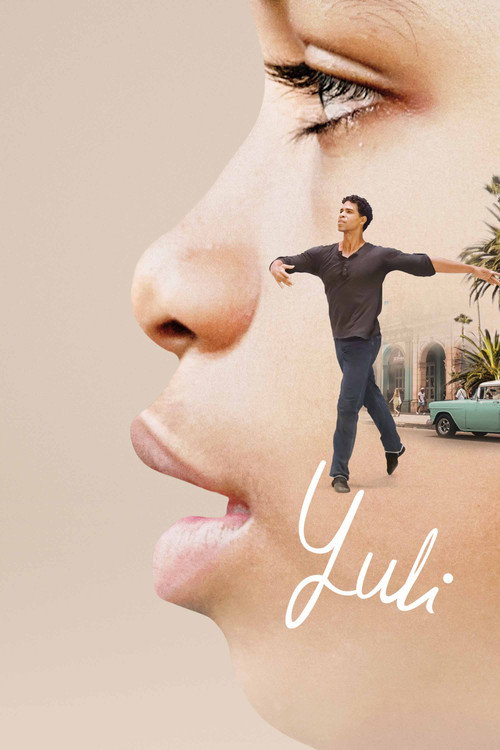
Poster artwork from TMDB.
 This site uses TMDB and the TMDB APIs but is not endorsed, certified, or otherwise approved by TMDB.