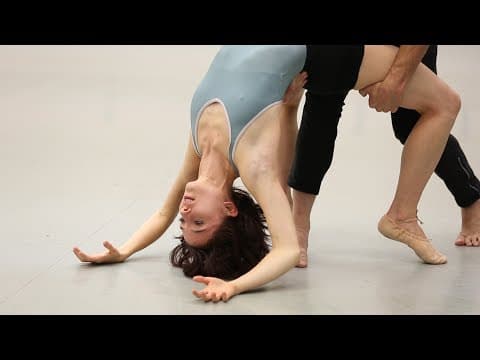
After the Rain is a two-part ballet made by Christopher Wheeldon for New York City Ballet, premiered on 22 January 2005 at the New York State Theater, Lincoln Center, as part of the company's New Combinations Evening (an annual programme marking George Balanchine's birthday). It sets an ensemble section for three couples against Arvo Pärt's Tabula Rasa (first movement, Ludus) and closes with a pas de deux danced to Pärt's Spiegel im Spiegel; that closing duet is now performed on its own, apart from the rest of the ballet, more often than the full work is staged.
What it contains
- Contemporary Ballet — pas de deux · the second part of the ballet, the closing pas de deux set to Spiegel im Spiegel — An intimate duet performed off pointe in flat shoes, with Wheeldon explicitly discouraging any theatrical 'acting' of it, favoring understated, personally-interpreted partnering over classical mime or pointe virtuosity. Source: "The female dancer wears flat shoes instead of pointe shoes, which Whelan was initially "miffed and confused" about as she had never been off pointe in any New York City Ballet performance"
What is danced
The article gives detail on only one of the two parts. The opening section, to Tabula Rasa, is described merely as being 'for three couples' — the source does not specify steps, formations or technique beyond that ensemble grouping, so no further claim about its vocabulary can be made from this text.
Context
The ballet was made for New York City Ballet's New Combinations Evening, an annual commissioning programme tied to Balanchine's birthday, placing Wheeldon's work explicitly inside the company's own commemorative tradition even as its choreographic choices (the flat shoes, the discouragement of overt 'acting') push against balletic convention associated with that legacy. It was also the last piece Wheeldon made for Jock Soto before Soto's retirement in June 2005, so the pas de deux doubles as a farewell portrait of a specific dancer, made in only three rehearsals from a score sent to Wheeldon by a friend when he said he was 'stressed out.'
Staging history
The pas de deux has circulated far beyond its originating company: the article names the Joffrey Ballet, Pacific Northwest Ballet, San Francisco Ballet, The Australian Ballet and The Royal Ballet as having danced it, and Wendy Whelan performed it, partnered by Craig Hall, at her final New York City Ballet performance in 2014. The Royal Ballet staged the entire ballet, not just the duet, for the first time in 2016. The duet also has a notable video afterlife: a 2013 filming atop 4 World Trade Center passed two million YouTube views, and NYCB and San Francisco Ballet both released recorded performances during the COVID-19 pandemic.
How to watch it
Watch the closing duet for what it withholds: Wheeldon asked dancers not to 'act' it, so the interest is in unadorned weight-sharing, quiet holds and the visible strangeness of flat shoes on a ballerina otherwise trained entirely on pointe. If you see the ballet performed complete rather than as the standalone duet, note the shift from the three-couple ensemble writing set to Tabula Rasa into the intimate two-body focus of the final section.
Structure
- pas de deuxA pas de deux, originated by Jock Soto and Wendy Whelan, danced to Pärt's Spiegel im Spiegel; the woman performs in flat shoes rather than pointe.
Structure read from an encyclopaedia article, not from a libretto or score we hold. Confirm against a programme before treating the numbering as authoritative.
More from Christopher Wheeldon
Other staged works in the register connected to this one by author or lineage.
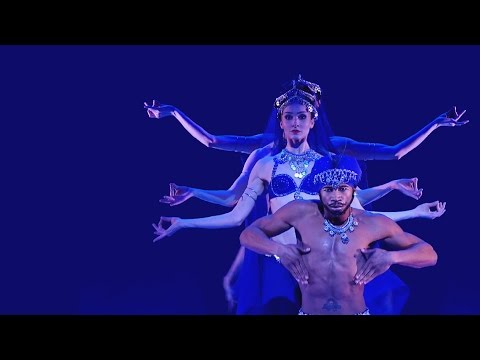 Alice's Adventures in WonderlandBallet · 2011Wheeldon · video
 The Winter's TaleBallet · 2014Wheeldon · video
 An American in ParisBallet · 2005Wheeldon · video
 Like Water for ChocolateBallet · 2022Wheeldon · video
 PolyphoniaBallet · 2001Wheeldon · video
 CarouselBallet · 2002Wheeldon · video
 Within the Golden HourBallet · 2008Wheeldon · video
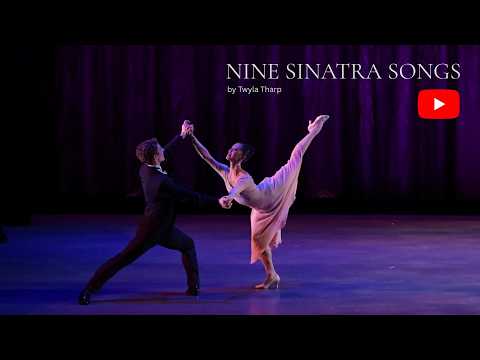 Nine Sinatra SongsBallet · 1982Same lineage · video